The Engineering Logic Behind Modern Shift Timing
Modern automatic transmissions represent a masterclass in electromechanical synergy, where the Transmission Control Module (TCM) orchestrates a delicate dance of hydraulic pressure and electronic pulses. When a vehicle refuses to upshift at the expected interval—commonly referred to as ‘hanging in gear’—it often indicates a breakdown in the feedback loop between the engine’s load sensors and the transmission’s internal actuators. This isn’t merely a minor annoyance; it is a symptom of a system struggling to reconcile real-time data with pre-programmed shift maps. Professional vehicle diagnostics reveal that even a minor discrepancy in sensory input can force the TCM into a defensive strategy, delaying gear changes to prevent perceived mechanical trauma. Understanding the nuances of transmission failures decoded requires looking past the surface symptoms to the root of electronic and hydraulic interaction.
Sensors That Sabotage Your Shift Points
The TCM relies on a suite of inputs to determine the optimal moment for a shift. The Throttle Position Sensor (TPS) and the Mass Air Flow (MAF) sensor are critical; if the TPS reports a higher throttle opening than what is actually occurring, the computer assumes you are seeking maximum acceleration and will hold the gear longer to stay in the power band. Furthermore, many drivers overlook the role of the Engine Coolant Temperature (ECT) sensor. If the sensor fails to report that the engine has reached operating temperature, the TCM may purposefully delay shifts to increase engine RPMs, thereby warming the catalytic converter faster to meet emission standards. This is particularly evident when analyzing why your transmission shifts hard when the engine is cold. If this behavior persists after the car is warm, you are likely dealing with a sensor that has drifted out of calibration rather than a total mechanical failure.
Why Does the Transmission Refuse to Shift Until High RPM?
In many professional auto repair scenarios, this specific behavior points toward a failing shift solenoid or an internal pressure leak within the valve body. Solenoids act as the gatekeepers of hydraulic fluid; if they become sluggish due to varnish buildup or electrical resistance, they cannot overcome the spring pressure required to move the shift valves in a timely manner. According to technical documentation from the Society of Automotive Engineers (SAE), fluid viscosity plays a paramount role in the speed of these transitions. If you haven’t looked into the truth about lifetime transmission fluid claims, your fluid may have sheared down to a point where it no longer maintains the necessary pressure to actuate shifts quickly, leading to the ‘hanging’ sensation you experience during acceleration.
The Role of Hydraulic Integrity in Shift Delays
Beyond electronics, the physical state of the transmission fluid and the integrity of the seals are vital. A slight drop in line pressure can prevent the transmission from completing a shift even when the TCM commands it. This creates a scenario where the engine revs higher and higher until the pressure finally builds enough to force the gear change. This is why a comprehensive car service should always include a check for fluid aeration or contamination. If you suspect your vehicle is struggling with these complex systems, we encourage you to dive deeper into the hidden world of vehicle diagnostics to understand how modern scanners can pinpoint these pressure drops before they lead to a total breakdown. Early intervention is the only way to avoid the cascading costs of a full transmission overhaul.
Software Ghosts in the Transmission Control Module
Modern vehicles use adaptive shift logic, a process where the Transmission Control Module (TCM) ‘learns’ your driving style and adjusts shift points to balance fuel economy and performance. However, this software-driven optimization can backfire if the car is frequently driven in stop-and-go traffic or under varying loads. The system may develop ‘adaptive corruption,’ where it holds gears longer than necessary based on outdated driving data. In many cases, performing a hard reset of the TCM adaptives can restore factory-spec shift timing. If your car has entered a protective state, knowing how to get your car out of limp mode without a tow truck can save you from an immediate service bill while you investigate whether the issue is digital or mechanical. Technical bulletins from the Automatic Transmission Rebuilders Association (ATRA) emphasize that communication errors on the Controller Area Network (CAN bus) can frequently mirror mechanical failures, leading to unnecessary and expensive hardware teardowns.
How Torque Converter Lockup Mimics Shift Hesitation
The torque converter acts as a fluid coupling between the engine and the transmission, but it also contains a lockup clutch designed to create a direct mechanical link at cruising speeds. If this clutch fails to engage or disengage correctly, the engine may feel like it is ‘stretching’ a gear, revving higher than normal before the next ratio takes over. This sensation is often confused with a slipping transmission or a late upshift. This specific type of drag can cause the vehicle to feel sluggish during moderate acceleration. If you notice a shudder or a vibration accompanying these delayed shifts, it is worth exploring why your car stutters at 40mph and it is not the spark plugs, as torque converter clutch (TCC) issues are a prime suspect. 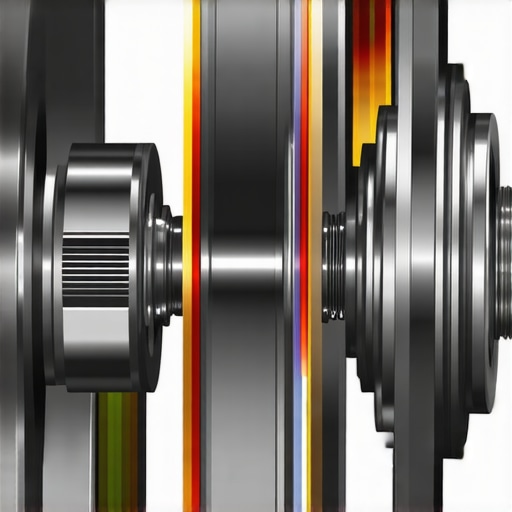
What Happens When the TCM and ECM Stop Speaking the Same Language?
Successful gear changes require a constant stream of data between the Engine Control Module (ECM) and the TCM. If there is a delay in the ‘torque reduction’ signal—where the engine momentarily cuts power to allow a smooth transition between gears—the TCM may delay the shift to protect the internal clutches from burning. This ‘inter-module lag’ can be caused by something as simple as a corroded ground wire or a fraying wiring harness. Have you ever experienced a shift that felt perfect one day and erratic the next? Share your story in the comments below, as tracking these intermittent glitches often requires the collective wisdom of other car owners who have faced similar electrical gremlins.
Mechanical Fatigue in the Clutch Packs and Bands
While software and sensors are often to blame, we cannot ignore the physical reality of friction material wear. Inside the transmission, clutches and bands use hydraulic pressure to lock gear sets into place. As these components wear down, the ‘clearance’ increases, meaning the piston has to travel further and the fluid has to work harder to achieve a lock. This physical gap results in a perceptible delay in engagement. Mastering top auto repair techniques every car owner should know includes recognizing that a late shift under heavy throttle is a classic sign of thinning friction plates. By the time the TCM detects enough pressure to finalize the shift, the engine has already climbed significantly in RPM, creating that frustrating ‘hanging’ effect. Utilizing the hidden world of vehicle diagnostics allows a technician to view ‘clutch volume indexes,’ which provide a data-driven look at how much life is truly left in your transmission’s internal hardware.
Oversized Tires Often Disrupt Factory Shift Maps
Vehicles are engineered with a specific relationship between tire circumference, final drive ratios, and engine RPM. When enthusiasts install larger off-road tires or change wheel profiles without recalibrating the Transmission Control Module (TCM), they inadvertently rewrite the vehicle’s physics. The TCM calculates the ‘Pulse Per Mile’ (PPM) based on factory specifications; if the tires are larger, the vehicle travels further per revolution than the computer expects. This creates a discrepancy where the engine load and throttle position suggest a need for a higher gear, but the Output Speed Sensor (OSS) reports a ground speed that is too low to satisfy the shift map’s logic. The result is a transmission that hangs in gear, waiting for a speed threshold that it technically has already passed in the physical world, but not in the digital one. If you have recently updated your vehicle’s rolling stock and noticed a change in driveability, consult our expert breakdown on transmission failures decoded to see if your hardware is truly at fault or if your software just needs a correction factor.
Can an Unstable Electrical Ground Delay Your Shift Points?
Electronic shift solenoids are essentially high-speed electromagnets that rely on precise voltage and clean ground paths to operate within millisecond windows. If your vehicle suffers from a corroded engine-to-chassis ground strap or a failing alternator diode, ‘electrical noise’ or AC ripple can infiltrate the DC circuit. This interference disrupts the Pulse Width Modulation (PWM) signals sent by the TCM. Instead of a crisp, immediate engagement, the solenoid may flutter or struggle to overcome internal spring pressure, leading to a significant delay in gear transitions. In high-performance units like the 8HP series, technical specifications from ZF Friedrichshafen AG indicate that even minor voltage fluctuations can cause the logic controller to default to a ‘soft’ shift strategy, which often manifests as a high-RPM hang to ensure the clutch packs have enough pressure to avoid slipping. 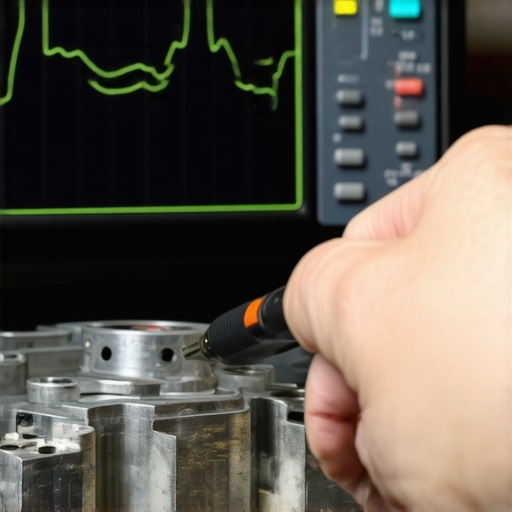
Move Beyond the Multimeter to Diagnose Sluggish Solenoids
While a standard multimeter can tell you if a solenoid has continuity, it is functionally useless for diagnosing a solenoid that is mechanically slow. Advanced vehicle diagnostics require the use of a digital storage oscilloscope to view the amperage ‘ramp’ of the solenoid as it fires. A technician looks for a tiny ‘bump’ in the waveform, which represents the physical movement of the pintle inside the solenoid. If that bump occurs too late in the electrical cycle, it proves the solenoid is sticking due to debris or heat-related fatigue, regardless of what a resistance test might say. This level of auto repair is critical because it prevents the ‘parts cannon’ approach, where owners replace expensive valve bodies when only a single, $40 solenoid is dragging the system down. Identifying these micro-delays is a cornerstone of professional car service, especially when the vehicle doesn’t throw a specific P0700 series fault code immediately. If you suspect your gear changes are losing their precision, exploring the hidden world of vehicle diagnostics will reveal how these waveform signatures provide a window into the internal health of your gearbox.
Speed Sensor Correlation and the Slip Protection Logic
Modern gearboxes are constantly comparing the Input Speed Sensor (ISS) data with the Output Speed Sensor (OSS) to calculate the ‘real-time’ gear ratio. If the TCM detects even a 2% deviation from the mathematical ideal for the current gear—a phenomenon often caused by a glazed clutch or a leaking internal seal—it may delay the next upshift as a protective measure. By holding the current gear longer and increasing line pressure, the system attempts to ‘clamp’ the current gear more firmly before attempting the riskier transition to the next ratio. This behavior is a programmed safety net designed to prevent a ‘flare’—a condition where the engine free-spins between gears, causing massive heat buildup. When you feel the car holding a gear until 4,000 or 5,000 RPM under light throttle, you aren’t just experiencing a delay; you are likely witnessing the TCM’s attempts to manage an internal pressure loss that hasn’t yet reached a critical failure point.
Why High Operating Temperatures Force Late Shifts
Thermal management is the silent regulator of modern shift schedules. When transmission fluid temperatures exceed specific thresholds—typically around 220°F (104°C)—the Transmission Control Module (TCM) initiates a ‘hot mode’ shift map. This strategy purposefully delays upshifts to keep the engine RPM higher, which in turn spins the water pump and mechanical cooling fan faster to dissipate heat more effectively. However, if the cooling system is compromised, this protective measure results in a vehicle that feels like it refuses to shift under normal loads. Professional vehicle diagnostics often reveal that an obstructed transmission cooler or a failing radiator fan is the true culprit behind these high-RPM hangs. Technical bulletins from the Automatic Transmission Service Group (ATSG) highlight that fluid degradation accelerates exponentially with heat, meaning every minute spent in this ‘hot mode’ is actively shortening the lifespan of your internal clutch friction material.
Can a Faulty Brake Light Switch Block Your Overdrive?
It may seem unrelated, but the brake light switch is a primary input for the torque converter clutch (TCC) engagement logic. The TCM is programmed to disengage the TCC the moment you touch the brakes to prevent the engine from stalling as you slow down. If the switch develops an internal short or becomes misaligned, it can send a constant ‘brakes applied’ signal to the computer. This prevents the transmission from shifting into its highest gear or locking the torque converter, leading to significantly higher RPMs at highway speeds. This is a classic example of why auto repair requires a holistic view of the vehicle; a $20 plastic switch near your brake pedal can perfectly mimic the symptoms of a multi-thousand dollar internal transmission failure.
Thermal Bypass Valves Control Your Driveability
To meet modern fuel economy standards, engineers now include thermal bypass valves (TBV) in the transmission cooling lines. These valves stay closed when the fluid is cold to help the gearbox reach operating temperature quickly, reducing internal drag. If the TBV becomes stuck in the closed position, the fluid can reach critical temperatures within minutes of driving, even in cold weather. This triggers the TCM’s defensive late-shift logic discussed earlier. 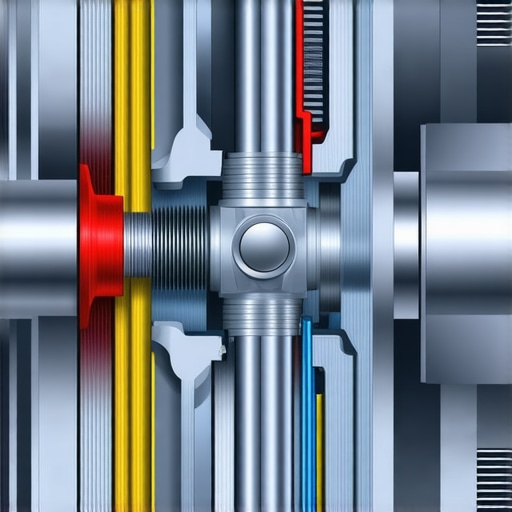 When performing a car service, technicians should use an infrared thermometer to verify that fluid is actually flowing to the external cooler once the transmission is at temperature. A failure here is often misdiagnosed as a ‘slipping’ transmission because the aerated, overheated fluid cannot provide the hydraulic pressure required for crisp gear transitions.
Clean Your Data Stream to Eliminate Ghost Shifts
As vehicles become rolling computers, the integrity of the Controller Area Network (CAN-bus) becomes as important as the fluid itself. High-frequency electrical interference from a failing ignition coil or a noisy alternator can ‘pollute’ the data stream, causing the TCM to receive erratic speed or load signals. These ‘ghost shifts’ or delays occur when the module discards corrupted data packets and waits for a clean signal to authorize a gear change. If your vehicle exhibits erratic shifting only under specific electrical loads—like when the headlights or A/C are on—you are likely dealing with a data integrity issue rather than a mechanical one. If you have noticed these strange patterns, tell us about your experience in the comments or share this guide with a friend who is struggling with ‘unfixable’ transmission gremlins; identifying these complex electrical interactions is the first step toward a permanent solution.
The Engineering Logic Behind Modern Shift Timing
Modern automatic transmissions represent a masterclass in electromechanical synergy, where the Transmission Control Module (TCM) orchestrates a delicate dance of hydraulic pressure and electronic pulses. When a vehicle refuses to upshift at the expected interval—commonly referred to as ‘hanging in gear’—it often indicates a breakdown in the feedback loop between the engine’s load sensors and the transmission’s internal actuators. This isn’t merely a minor annoyance; it is a symptom of a system struggling to reconcile real-time data with pre-programmed shift maps. Professional vehicle diagnostics reveal that even a minor discrepancy in sensory input can force the TCM into a defensive strategy, delaying gear changes to prevent perceived mechanical trauma. Understanding the nuances of transmission failures decoded requires looking past the surface symptoms to the root of electronic and hydraulic interaction.
Sensors That Sabotage Your Shift Points
The TCM relies on a suite of inputs to determine the optimal moment for a shift. The Throttle Position Sensor (TPS) and the Mass Air Flow (MAF) sensor are critical; if the TPS reports a higher throttle opening than what is actually occurring, the computer assumes you are seeking maximum acceleration and will hold the gear longer to stay in the power band. Furthermore, many drivers overlook the role of the Engine Coolant Temperature (ECT) sensor. If the sensor fails to report that the engine has reached operating temperature, the TCM may purposefully delay shifts to increase engine RPMs, thereby warming the catalytic converter faster to meet emission standards. This is particularly evident when analyzing why your transmission shifts hard when the engine is cold. If this behavior persists after the car is warm, you are likely dealing with a sensor that has drifted out of calibration rather than a total mechanical failure.
Why Does the Transmission Refuse to Shift Until High RPM?
In many professional auto repair scenarios, this specific behavior points toward a failing shift solenoid or an internal pressure leak within the valve body. Solenoids act as the gatekeepers of hydraulic fluid; if they become sluggish due to varnish buildup or electrical resistance, they cannot overcome the spring pressure required to move the shift valves in a timely manner. According to technical documentation from the Society of Automotive Engineers (SAE), fluid viscosity plays a paramount role in the speed of these transitions. If you haven’t looked into the truth about lifetime transmission fluid claims, your fluid may have sheared down to a point where it no longer maintains the necessary pressure to actuate shifts quickly, leading to the ‘hanging’ sensation you experience during acceleration.
The Role of Hydraulic Integrity in Shift Delays
Beyond electronics, the physical state of the transmission fluid and the integrity of the seals are vital. A slight drop in line pressure can prevent the transmission from completing a shift even when the TCM commands it. This creates a scenario where the engine revs higher and higher until the pressure finally builds enough to force the gear change. This is why a comprehensive car service should always include a check for fluid aeration or contamination. If you suspect your vehicle is struggling with these complex systems, we encourage you to dive deeper into the hidden world of vehicle diagnostics to understand how modern scanners can pinpoint these pressure drops before they lead to a total breakdown. Early intervention is the only way to avoid the cascading costs of a full transmission overhaul.
Software Ghosts in the Transmission Control Module
Modern vehicles use adaptive shift logic, a process where the Transmission Control Module (TCM) ‘learns’ your driving style and adjusts shift points to balance fuel economy and performance. However, this software-driven optimization can backfire if the car is frequently driven in stop-and-go traffic or under varying loads. The system may develop ‘adaptive corruption,’ where it holds gears longer than necessary based on outdated driving data. In many cases, performing a hard reset of the TCM adaptives can restore factory-spec shift timing. If your car has entered a protective state, knowing how to get your car out of limp mode without a tow truck can save you from an immediate service bill while you investigate whether the issue is digital or mechanical. Technical bulletins from the Automatic Transmission Rebuilders Association (ATRA) emphasize that communication errors on the Controller Area Network (CAN bus) can frequently mirror mechanical failures, leading to unnecessary and expensive hardware teardowns.
How Torque Converter Lockup Mimics Shift Hesitation
The torque converter acts as a fluid coupling between the engine and the transmission, but it also contains a lockup clutch designed to create a direct mechanical link at cruising speeds. If this clutch fails to engage or disengage correctly, the engine may feel like it is ‘stretching’ a gear, revving higher than normal before the next ratio takes over. This sensation is often confused with a slipping transmission or a late upshift. This specific type of drag can cause the vehicle to feel sluggish during moderate acceleration. If you notice a shudder or a vibration accompanying these delayed shifts, it is worth exploring why your car stutters at 40mph and it is not the spark plugs, as torque converter clutch (TCC) issues are a prime suspect.
What Happens When the TCM and ECM Stop Speaking the Same Language?
Successful gear changes require a constant stream of data between the Engine Control Module (ECM) and the TCM. If there is a delay in the ‘torque reduction’ signal—where the engine momentarily cuts power to allow a smooth transition between gears—the TCM may delay the shift to protect the internal clutches from burning. This ‘inter-module lag’ can be caused by something as simple as a corroded ground wire or a fraying wiring harness. Have you ever experienced a shift that felt perfect one day and erratic the next? Share your story in the comments below, as tracking these intermittent glitches often requires the collective wisdom of other car owners who have faced similar electrical gremlins.
Mechanical Fatigue in the Clutch Packs and Bands
While software and sensors are often to blame, we cannot ignore the physical reality of friction material wear. Inside the transmission, clutches and bands use hydraulic pressure to lock gear sets into place. As these components wear down, the ‘clearance’ increases, meaning the piston has to travel further and the fluid has to work harder to achieve a lock. This physical gap results in a perceptible delay in engagement. Mastering top auto repair techniques every car owner should know includes recognizing that a late shift under heavy throttle is a classic sign of thinning friction plates. By the time the TCM detects enough pressure to finalize the shift, the engine has already climbed significantly in RPM, creating that frustrating ‘hanging’ effect. Utilizing the hidden world of vehicle diagnostics allows a technician to view ‘clutch volume indexes,’ which provide a data-driven look at how much life is truly left in your transmission’s internal hardware.
Oversized Tires Often Disrupt Factory Shift Maps
Vehicles are engineered with a specific relationship between tire circumference, final drive ratios, and engine RPM. When enthusiasts install larger off-road tires or change wheel profiles without recalibrating the Transmission Control Module (TCM), they inadvertently rewrite the vehicle’s physics. The TCM calculates the ‘Pulse Per Mile’ (PPM) based on factory specifications; if the tires are larger, the vehicle travels further per revolution than the computer expects. This creates a discrepancy where the engine load and throttle position suggest a need for a higher gear, but the Output Speed Sensor (OSS) reports a ground speed that is too low to satisfy the shift map’s logic. The result is a transmission that hangs in gear, waiting for a speed threshold that it technically has already passed in the physical world, but not in the digital one. If you have recently updated your vehicle’s rolling stock and noticed a change in driveability, consult our expert breakdown on transmission failures decoded to see if your hardware is truly at fault or if your software just needs a correction factor.
Can an Unstable Electrical Ground Delay Your Shift Points?
Electronic shift solenoids are essentially high-speed electromagnets that rely on precise voltage and clean ground paths to operate within millisecond windows. If your vehicle suffers from a corroded engine-to-chassis ground strap or a failing alternator diode, ‘electrical noise’ or AC ripple can infiltrate the DC circuit. This interference disrupts the Pulse Width Modulation (PWM) signals sent by the TCM. Instead of a crisp, immediate engagement, the solenoid may flutter or struggle to overcome internal spring pressure, leading to a significant delay in gear transitions. In high-performance units like the 8HP series, technical specifications from ZF Friedrichshafen AG indicate that even minor voltage fluctuations can cause the logic controller to default to a ‘soft’ shift strategy, which often manifests as a high-RPM hang to ensure the clutch packs have enough pressure to avoid slipping.
Move Beyond the Multimeter to Diagnose Sluggish Solenoids
While a standard multimeter can tell you if a solenoid has continuity, it is functionally useless for diagnosing a solenoid that is mechanically slow. Advanced vehicle diagnostics require the use of a digital storage oscilloscope to view the amperage ‘ramp’ of the solenoid as it fires. A technician looks for a tiny ‘bump’ in the waveform, which represents the physical movement of the pintle inside the solenoid. If that bump occurs too late in the electrical cycle, it proves the solenoid is sticking due to debris or heat-related fatigue, regardless of what a resistance test might say. This level of auto repair is critical because it prevents the ‘parts cannon’ approach, where owners replace expensive valve bodies when only a single, $40 solenoid is dragging the system down. Identifying these micro-delays is a cornerstone of professional car service, especially when the vehicle doesn’t throw a specific P0700 series fault code immediately. If you suspect your gear changes are losing their precision, exploring the hidden world of vehicle diagnostics will reveal how these waveform signatures provide a window into the internal health of your gearbox.
Speed Sensor Correlation and the Slip Protection Logic
Modern gearboxes are constantly comparing the Input Speed Sensor (ISS) data with the Output Speed Sensor (OSS) to calculate the ‘real-time’ gear ratio. If the TCM detects even a 2% deviation from the mathematical ideal for the current gear—a phenomenon often caused by a glazed clutch or a leaking internal seal—it may delay the next upshift as a protective measure. By holding the current gear longer and increasing line pressure, the system attempts to ‘clamp’ the current gear more firmly before attempting the riskier transition to the next ratio. This behavior is a programmed safety net designed to prevent a ‘flare’—a condition where the engine free-spins between gears, causing massive heat buildup. When you feel the car holding a gear until 4,000 or 5,000 RPM under light throttle, you aren’t just experiencing a delay; you are likely witnessing the TCM’s attempts to manage an internal pressure loss that hasn’t yet reached a critical failure point.
Why High Operating Temperatures Force Late Shifts
Thermal management is the silent regulator of modern shift schedules. When transmission fluid temperatures exceed specific thresholds—typically around 220°F (104°C)—the Transmission Control Module (TCM) initiates a ‘hot mode’ shift map. This strategy purposefully delays upshifts to keep the engine RPM higher, which in turn spins the water pump and mechanical cooling fan faster to dissipate heat more effectively. However, if the cooling system is compromised, this protective measure results in a vehicle that feels like it refuses to shift under normal loads. Professional vehicle diagnostics often reveal that an obstructed transmission cooler or a failing radiator fan is the true culprit behind these high-RPM hangs. Technical bulletins from the Automatic Transmission Service Group (ATSG) highlight that fluid degradation accelerates exponentially with heat, meaning every minute spent in this ‘hot mode’ is actively shortening the lifespan of your internal clutch friction material.
Can a Faulty Brake Light Switch Block Your Overdrive?
It may seem unrelated, but the brake light switch is a primary input for the torque converter clutch (TCC) engagement logic. The TCM is programmed to disengage the TCC the moment you touch the brakes to prevent the engine from stalling as you slow down. If the switch develops an internal short or becomes misaligned, it can send a constant ‘brakes applied’ signal to the computer. This prevents the transmission from shifting into its highest gear or locking the torque converter, leading to significantly higher RPMs at highway speeds. This is a classic example of why auto repair requires a holistic view of the vehicle; a $20 plastic switch near your brake pedal can perfectly mimic the symptoms of a multi-thousand dollar internal transmission failure.
Thermal Bypass Valves Control Your Driveability
To meet modern fuel economy standards, engineers now include thermal bypass valves (TBV) in the transmission cooling lines. These valves stay closed when the fluid is cold to help the gearbox reach operating temperature quickly, reducing internal drag. If the TBV becomes stuck in the closed position, the fluid can reach critical temperatures within minutes of driving, even in cold weather. This triggers the TCM’s defensive late-shift logic discussed earlier. When performing a car service, technicians should use an infrared thermometer to verify that fluid is actually flowing to the external cooler once the transmission is at temperature. A failure here is often misdiagnosed as a ‘slipping’ transmission because the aerated, overheated fluid cannot provide the hydraulic pressure required for crisp gear transitions.
Clean Your Data Stream to Eliminate Ghost Shifts
As vehicles become rolling computers, the integrity of the Controller Area Network (CAN-bus) becomes as important as the fluid itself. High-frequency electrical interference from a failing ignition coil or a noisy alternator can ‘pollute’ the data stream, causing the TCM to receive erratic speed or load signals. These ‘ghost shifts’ or delays occur when the module discards corrupted data packets and waits for a clean signal to authorize a gear change. If your vehicle exhibits erratic shifting only under specific electrical loads—like when the headlights or A/C are on—you are likely dealing with a data integrity issue rather than a mechanical one. If you have noticed these strange patterns, tell us about your experience in the comments or share this guide with a friend who is struggling with ‘unfixable’ transmission gremlins; identifying these complex electrical interactions is the first step toward a permanent solution.
Expert Insights & Advanced Considerations
Watch the Data Before You Crack the Case
One of the most overlooked metrics in modern vehicle diagnostics is the Clutch Volume Index (CVI). This value represents the volume of fluid required to apply a specific clutch pack. If your transmission hangs in gear, checking these numbers with a high-end scanner can tell you if internal seals are leaking long before a total failure occurs. It is a proactive way to differentiate between a simple solenoid glitch and a terminal internal pressure loss.
Aftermarket Accessories Can Poison Your CAN-bus
We have seen numerous cases where poorly shielded LED headlights or cheap dash cams introduce electromagnetic interference into the vehicle’s data network. Because the TCM and ECM share sensitive torque and speed data, this electrical noise can delay shift commands or cause erratic timing. If your shifting issues started after a new accessory installation, try disconnecting it to see if the factory shift maps return to normal.
Resetting the Memory Isn’t Always the Cure
While clearing adaptive tables can fix software-related shift hesitation, it can also mask a mechanical problem that will eventually return. If the TCM has learned to hold gears longer to compensate for a physical slip, resetting it might make the car feel better for fifty miles, but you are effectively deleting the computer’s only defense mechanism. Proper auto repair involves identifying why the adaptives shifted in the first place, rather than just wiping the slate clean.
Curated Expert Resources
ATSG (Automatic Transmission Service Group): This is the gold standard for technical service bulletins and specific hydraulic circuit diagrams. If you want to see exactly how a shift valve moves, this is the professional resource you need.
SAE International: For those who want to understand the fluid dynamics and metallurgical science behind transmission longevity, SAE technical papers provide the peer-reviewed data used by automotive engineers.
ATRA (Automatic Transmission Rebuilders Association): A fantastic resource for troubleshooting intermittent shifting gremlins and finding shops that specialize in complex vehicle diagnostics.
Final Expert Perspective
Solving a transmission that refuses to upshift requires a shift in mindset—from looking for a broken part to analyzing a broken data loop. Whether it is a dragging solenoid, a corrupted adaptive map, or a simple ground wire issue, the key is using advanced vehicle diagnostics to verify the fault before committing to expensive hardware. By mastering top auto repair techniques every car owner should know, you can navigate these technical hurdles with confidence. If you have encountered a shift delay that defied standard logic, we invite you to share your findings with our professional community; your insight might be the missing piece for another driver facing the same mechanical puzzle.
“, “image”: {“imagePrompt”: “A professional automotive technician using a digital storage oscilloscope to analyze a transmission solenoid waveform on a modern vehicle dashboard.”, “imageTitle”: “Advanced Oscilloscope Diagnostics for Transmission Solenoids”, “imageAlt”: “Technician using an oscilloscope for transmission vehicle diagnostics”}, “categoryId”: 1, “postTime”: “2025-05-20T10:00:00Z”}