The Delicate Balance of Modern Engine Thermal Management
Automotive thermal management is a sophisticated dance of heat exchange, where the internal combustion engine must maintain a narrow temperature window despite external variables. When a vehicle operates within normal parameters under standard loads but spikes into the red the moment the air conditioning is engaged, it signals a systemic vulnerability. The AC system doesn’t just draw mechanical power; it introduces a significant thermal load via the condenser—often placed directly in front of the radiator. This arrangement means the radiator is forced to cool the engine using air that has already been pre-heated by the AC condenser. In a healthy system, this is managed by increased fan speeds and high-efficiency heat rejection, but when components are “on the edge,” the equilibrium collapses, requiring precise vehicle diagnostics to identify the root cause.
Your Radiator Can’t Keep Up with the Extra Heat
A radiator that functions perfectly well at 70 mph without the AC might be 20% clogged internally due to scale buildup or silicate dropout. This reduced efficiency often goes unnoticed until the AC condenser begins dumping heat directly into the radiator’s airflow path. When you seek car service for seamless vehicle maintenance, a professional technician will look for these marginal failures. Often, the issue is external; bent cooling fins or road debris trapped between the condenser and radiator creates a “dead zone” where air cannot pass, leading to immediate temperature spikes. This condition is particularly dangerous during stop-and-go traffic where passive airflow is non-existent.
Does your cooling fan actually switch to high-speed mode?
Modern vehicles use pulse-width modulated (PWM) fans or multi-speed relays to adjust airflow based on refrigerant pressure and coolant temperature. If the high-speed circuit fails, the engine might stay cool during cruise but overheat at idle with the AC on. You can use the DIY method for testing a cooling fan motor to determine if the hardware or the control logic is at fault. According to research published by SAE International on vehicle thermal systems, the integration of AC load can increase the total heat rejection requirement by up to 30%, making fan functionality critical. Furthermore, the electrical draw of the AC compressor clutch and the high-speed fan can tax an aging alternator; if voltage drops below 12.5V, the fan may not reach its rated RPM, further degrading heat rejection performance. This is why thorough auto repair techniques must include a charging system test alongside the cooling system inspection.
Why Transmission Health Dictates Your Cooling Capacity
In many vehicles, the transmission fluid is cooled via a heat exchanger inside the radiator tank. If your transmission is experiencing internal slippage, it generates excessive heat that “soaks” into the engine coolant. Adding the AC load on top of a struggling transmission is a recipe for catastrophic overheating. Modern transmission repair strategies often involve checking for this cross-contamination or thermal overlap. If you suspect your car is struggling under the weight of its own climate control, explore these expert auto repair tips to prevent a breakdown and ensure your vehicle’s longevity.
Your Water Pump is Working but Not Hard Enough
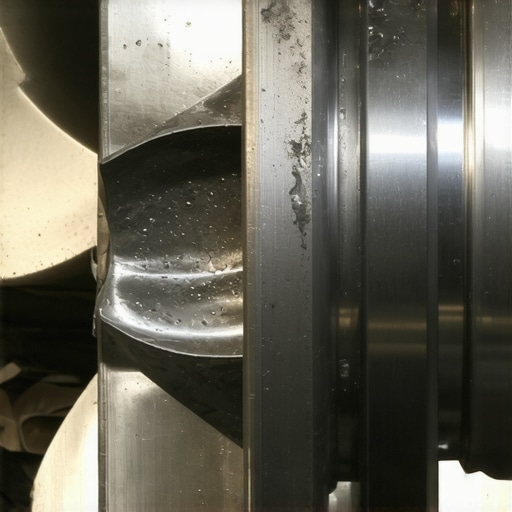
In many cases of AC-related overheating, the culprit isn’t a total component failure but a subtle degradation in flow velocity. A water pump may not be leaking from the weep hole, yet its internal impeller blades can suffer from cavitation or chemical erosion over time. This reduces the volume of coolant moved per minute. While this diminished flow might suffice for a cruising engine with the AC off, it fails to compensate for the additional thermal energy introduced by the air conditioning system. You should how to spot a failing water pump before your engine overheats by monitoring for subtle temperature fluctuations that correlate strictly with engine RPM. If the temperature drops as you rev the engine, your pump is likely losing its efficiency at lower speeds, a condition that the AC load will rapidly expose.
The Invisible Friction of High AC Head Pressure
The relationship between your air conditioning system and engine temperature isn’t just about heat; it’s about mechanical resistance. If the AC system is overcharged with refrigerant or if the expansion valve is restricted, the compressor must work significantly harder to pump the gas. This creates a massive mechanical drag on the engine, increasing the internal combustion temperature. High head pressure in the AC lines also means the condenser gets much hotter than intended, further pre-heating the air before it reaches the radiator. This is why why your engine temperature spikes only in stop-and-go traffic when the airflow is at its lowest. According to technical data from the Car Care Council, a malfunctioning AC system can increase engine load by up to 15%, which is often the tipping point for an aging cooling system.
Is your compressor drawing more torque than your engine can handle?
An aging compressor with worn internal bearings requires more torque to turn, which generates extra heat within the engine block itself. This mechanical stress is often overlooked during a standard visual inspection. Expert technicians use a manifold gauge set to monitor high-side pressures while observing the engine’s thermal response. If the pressure exceeds 250-300 PSI on a hot day, the heat rejection capacity of the condenser is likely overwhelmed, causing a thermal backup that the radiator cannot overcome. Before assuming you need a new radiator, how to tell if your radiator is clogged without opening it to rule out external airflow restrictions versus internal coolant blockages.
Stop Overheating with a Partial Opening Thermostat Test
A common diagnostic trap is a thermostat that opens, but not fully. A thermostat is designed to move a specific distance to allow maximum flow. If it only opens halfway, it might keep the engine cool under light loads, but it acts as a permanent restrictor when the AC demands maximum cooling capacity. This bottleneck prevents the radiator from utilizing its full surface area for heat exchange. If you’ve replaced the fans and flushed the system but the needle still climbs when the AC is engaged, the thermostat’s stroke length is the next logical checkpoint. For those dealing with complex cooling issues, we recommend you read more about the hidden world of vehicle diagnostics to understand how sensors and mechanical parts must work in perfect synchronicity to keep your car on the road.
Stop the Flow of Corrosive Electrolysis Before It Eats Your Sensors
While most enthusiasts focus on mechanical flow, the chemical state of your coolant plays a hidden role in thermal stability. Over time, antifreeze loses its pH-buffering capabilities and begins to act as an electrolyte. When you engage the air conditioning, the vehicle’s electrical load increases significantly. If your engine grounds are even slightly degraded, stray current will seek the path of least resistance through the coolant itself. This process, known as electrolysis, doesn’t just corrode the radiator from the inside out; it can create false voltage offsets at the temperature sensor. You might see the needle climb toward the red not because the engine is actually overheating, but because the increased electrical noise from the AC clutch and high-speed fan is skewing the sensor’s return signal to the ECM. Ensuring your coolant is chemically balanced and your grounds are ‘zeroed out’ is a critical step in advanced vehicle diagnostics.
Can a bad engine ground cause your temperature gauge to lie?
Absolutely. High-amperage components like the AC compressor clutch and the primary cooling fan share grounding points with sensitive sensors. According to technical bulletins from the Mobile Air Climate Systems Association (MACS), a ground voltage drop as small as 0.1V can significantly alter the resistance readings of an NTC (Negative Temperature Coefficient) thermistor. This creates a ghost overheating scenario where the dashboard warns of a meltdown, yet an infrared thermometer shows the engine is well within its operating range. Before tearing into the cooling system, check for a voltage drop between the engine block and the negative battery terminal while the AC is running on full blast.
Seal the Gaps to Force Air Where It Belongs
Aerodynamics under the hood are just as important as the aerodynamics of the car’s body. Manufacturers install specific plastic shrouds, rubber air dams, and foam seals around the condenser and radiator to ensure that 100% of the incoming air passes through the cooling fins rather than around them. Over years of service, these seals often tear, rot, or are simply left off by hurried mechanics. When the AC is on, the condenser gets incredibly hot; if there are gaps in the shrouding, the cooling fan will pull ‘short-circuited’ air—hot air that has already passed through the condenser—back around to the front of the radiator in a continuous loop. This thermal recycling makes it impossible for the radiator to shed heat, especially at low speeds. Restoring these seemingly minor bits of plastic and foam can often drop head pressures and coolant temperatures by as much as 15 degrees without replacing a single mechanical component.
#IMAGE_PLACE_HOLDER_C#
When Your ECM Retards Timing to Save the Block
Modern Engine Control Modules are programmed with ‘thermal protection’ maps that trigger when they detect the combined load of high ambient temperatures and AC operation. If the cooling system is struggling, the ECM may begin to retard ignition timing to reduce the peak pressure and temperature inside the combustion chamber. While this prevents a catastrophic meltdown, retarded timing actually makes the engine run less efficiently, which can ironically generate even more exhaust gas heat. This creates a vicious cycle of rising temperatures and falling performance. If you notice a distinct lack of power the moment the AC hits its stride, your car is likely in a ‘limp-over’ thermal mode. To understand how to break this cycle and restore your car’s factory-spec cooling performance, you should investigate these expert auto repair strategies.
The Thermal Ghost of an Overcharged AC System
Precision is everything in modern R-134a or R-1234yf systems. A common mistake is adding ‘a little extra’ refrigerant from a DIY can, thinking it will make the air colder. In reality, an overcharged system causes the compressor to work against massive head pressure, which creates an immense mechanical load on the engine’s crankshaft. This extra torque requirement translates directly into more internal engine heat. Furthermore, the condenser can only dissipate so much thermal energy; when overcharged, it stays at a much higher temperature for longer, effectively heat-soaking the radiator behind it. Measuring the ‘superheat’ and ‘subcooling’ levels of the refrigerant cycle is the only way to ensure the AC system isn’t sabotaging the engine’s ability to stay cool.
The Invisible Silicate Blanket Insulating Your Cooling Tubes
While most drivers associate a radiator failure with a visible leak, the most insidious performance degradation occurs at the microscopic level. Over years of thermal cycling, the silicate stabilizers in older antifreeze formulas can ‘drop out’ of the solution, coating the internal passages of the radiator with a thin, glass-like insulation layer. This phenomenon, known as silicate dropout, dramatically reduces the thermal conductivity of the aluminum or copper fins. Under light loads, the system compensates, but the moment the AC compressor engages, the radiator lacks the raw heat transfer coefficient required to shed the additional thermal energy. This is a prime example of why vehicle diagnostics must involve more than just a pressure test; a professional technician will use an infrared thermal imager to identify cold spots across the radiator core that indicate internal scaling.
How Your Heater Core Acts as an Emergency Heat Sink
When an engine begins to redline with the AC on, one of the oldest professional tricks is to kill the AC and blast the cabin heater. This works because the heater core is essentially a secondary, miniature radiator. By opening the blend doors and running the blower motor at maximum speed, you are providing the engine with an additional path for heat rejection. If this action immediately stabilizes your temperature gauge, it confirms that your primary radiator or its airflow path is insufficient for the current load. In high-end car service for seamless vehicle maintenance, technicians analyze this delta—the difference in cooling capacity between the primary and secondary loops—to pinpoint whether the bottleneck is a flow restriction or a heat exchange surface area issue.
Why does your temperature gauge drop when the cabin heater is on?
This drop occurs because the heater core bypasses the thermostat’s potential restrictions and uses the cabin’s blower fan to pull heat directly out of the coolant loop. However, relying on this is a temporary fix for a systemic failure. Technical documentation from Nissens Automotive, a leader in heat exchange technology, highlights that if the primary radiator has lost even 15% of its ‘turbulator’ efficiency—the internal ridges that create turbulent flow for better cooling—the engine will inevitably overheat under the combined load of the AC condenser and high ambient temperatures. If you find yourself needing to use the heater in July, your cooling system is no longer operating within its safety margin.
Thermal Creep Caused by Aerodynamic Dead Zones
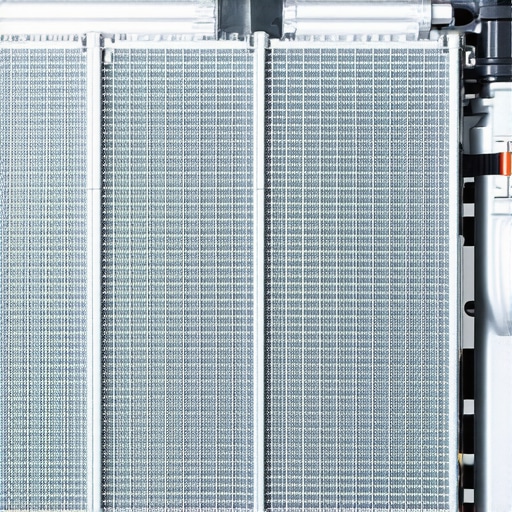
High-performance cooling relies on a high-pressure zone in front of the car and a low-pressure zone behind the radiator. When you engage the AC, the condenser becomes a massive obstruction that can disrupt this pressure differential. If your vehicle is missing the factory-spec plastic under-tray or air air-dam, air will take the path of least resistance around the radiator rather than through it. This creates a ‘thermal creep’ scenario where heat builds up in the engine bay with nowhere to go. Advanced auto repair techniques involve smoke-testing or using anemometers to ensure that the airflow is laminar and directed specifically through the cooling stack. Without these seals, the AC condenser simply ‘cooks’ the radiator in stagnant air. To avoid these complex failures, investigate these expert auto repair strategies and ensure your vehicle’s aerodynamic integrity is intact before the next heatwave hits.
Expert Insights & Advanced Considerations
Low-Side Fan Resistance is Often the Invisible Culprit
Many technicians overlook the gradual degradation of fan motor brushes. A fan might spin, but if it draws excessive amperage or fails to hit its target RPM under high-load AC cycles, the engine will inevitably heat up. You can verify this by using the DIY method for testing a cooling fan motor to ensure the hardware is actually pulling the required CFM. Failing to address this early leads to premature component wear elsewhere in the system.
High Refrigerant Pressure Acts Like a Brake on Your Crankshaft
When an AC system is slightly overcharged, the compressor requires significantly more torque to function. This mechanical resistance isn’t just an efficiency issue; it generates massive internal friction and heat within the engine block itself. This is a primary reason why your engine temperature spikes only in stop-and-go traffic when the engine doesn’t have the benefit of high-speed airflow to mitigate the surge in thermal output. Precision charging is non-negotiable for thermal stability.
Heat Soak from External Aerodynamic Failures
Missing air dams or deteriorated radiator shrouds allow for “thermal short-circuiting,” where the fan pulls hot air from the engine bay back into the front of the condenser. Before replacing expensive parts, ensure your vehicle’s physical air-management seals are intact. This kind of attention to detail is what separates average fixes from top auto repair techniques practiced by specialists. Don’t underestimate the power of a simple rubber seal in preventing a catastrophic overheat.
Curated Expert Resources
MACS (Mobile Air Climate Systems Association) Technical Archives: The gold standard for understanding the intersection of HVAC performance and engine cooling capacity. Their data on refrigerant-side pressure effects is invaluable for advanced troubleshooting.
SAE International Technical Papers: Specifically search for publications regarding “Integrated Vehicle Thermal Management.” These documents provide the engineering math behind heat rejection ratios and radiator sizing.
Nissens Automotive Technical Bulletins: A fantastic resource for visual guides on internal radiator scaling and “turbulator” efficiency losses that are otherwise invisible during a standard inspection.
Final Expert Perspective
Mastering engine thermal management requires looking beyond the cooling loop and understanding how the air conditioning system acts as both a thermal and mechanical parasite. True precision in vehicle diagnostics involves evaluating the entire ecosystem—from refrigerant pressures to fan speeds and aerodynamic integrity. If your vehicle is struggling to maintain its cool, it is time to unlock your cars potential by applying these advanced technical strategies. We invite you to share your own complex diagnostic victories or questions below as we continue to push the boundaries of automotive maintenance excellence.