The modern internal combustion engine operates within a razor-thin thermal margin, where the balance between heat generation and dissipation determines mechanical longevity. While cruising at highway speeds provides a constant stream of high-velocity ram-air to the radiator, stop-and-go traffic forces the vehicle to rely entirely on its secondary cooling subsystems. When temperature spikes occur exclusively during idling or low-speed maneuvers, it indicates a failure in the active cooling phase—often linked to the cooling fan’s duty cycle or the efficiency of the heat exchanger itself. Professional auto repair technicians often observe that these symptoms are the precursors to more severe transmission fluid overheating, as many vehicles utilize integrated coolers within the radiator assembly. Understanding this transition from passive to active cooling is paramount for any high-level car service strategy.
Stop-and-Go Traffic Reveals Your Cooling Fan’s Hidden Weakness
In the absence of natural airflow, the electric cooling fan becomes the primary guardian of your engine’s thermal stability. Most modern vehicles utilize pulse-width modulated (PWM) fans that adjust speed based on real-time data from the engine control unit (ECU). If your temperature rises only when stationary, the fan motor may be experiencing internal resistance or the relay might be failing under high thermal loads. You might also want to check why your car cooling fan will not turn off if the sensors are providing erratic data. This mechanical fatigue is often subtle, requiring advanced vehicle diagnostics to identify voltage drops that only manifest when the engine is under heat stress. Without the fan pulling air through the radiator core, the coolant cannot release the heat absorbed from the cylinder head, leading to a rapid climb in the temperature gauge.
Why Low Engine RPM Chokes Your Coolant Flow Rate
The water pump is the heart of the cooling system, and its efficiency is directly tied to engine speed. In stop-and-go traffic, the engine spends significant time at idle, meaning the water pump is spinning at its lowest possible RPM. A pump with eroded impeller vanes might move enough coolant at 3,000 RPM to keep things cool during a highway commute, but it will fail to maintain sufficient pressure at 800 RPM. This phenomenon is a classic sign of internal component wear that many drivers overlook until it is too late. To prevent a total breakdown, it is vital to learn how to spot a failing water pump before your engine overheats. According to technical research from the Society of Automotive Engineers, the relationship between coolant flow velocity and boundary layer heat transfer is non-linear, meaning even a small drop in pump efficiency at idle can lead to rapid localized boiling within the engine block.
Does Your Temp Gauge Drop Only After You Hit 30 MPH?
If the needle returns to the center as soon as you accelerate, you are likely dealing with a starved radiator. This occurs when the radiator fins are clogged with external debris or when the internal passages are restricted by mineral deposits known as scale. At highway speeds, the sheer volume of air overcomes the inefficiency of the clogged fins, but at a standstill, the fan cannot pull enough air through the restricted core to dissipate the heat. This is a critical time to seek a comprehensive car service to perform a chemical flush or a physical inspection of the heat exchanger. Neglecting this can lead to thermal soak, where the heat penetrates deeper into the engine block, potentially warping the cylinder head or compromising the transmission housing seals. If you’re noticing these spikes, it’s time to leverage professional vehicle diagnostics to prevent catastrophic head gasket failure. We invite you to share your experiences with urban overheating in our community forums to help others identify these complex issues early.
Furthermore, an aging thermostat that is sluggish to respond can exacerbate these issues. If the thermostat does not open fully, the restricted flow might be manageable when the engine is aided by high-speed airflow, but it becomes a bottleneck during the high-load, low-airflow conditions of city driving. This thermal instability often cascades into other systems, causing the transmission to shift poorly as the fluid thins beyond its operational viscosity. For those looking to maintain their vehicle’s peak performance, staying ahead of these thermal anomalies is essential. If you are experiencing shifting issues alongside these heat spikes, explore our guide on transmission failures decoded to see how heat impacts your gearbox.
When you engage the air conditioning while stuck in gridlock, you aren’t just taxing the compressor; you are literally stacking a heat-radiating wall in front of your primary cooling source. The AC condenser, typically mounted ahead of the radiator, sheds immense heat as it turns refrigerant from gas to liquid. In a stationary vehicle, this ‘heat pre-load’ significantly reduces the radiator’s ability to exchange energy with the surrounding air. If your system is already marginal due to a weak fan or restricted internal flow, the added load of the AC is often the final straw that pushes the needle toward the red zone. Modern auto repair strategies often prioritize checking the condenser fins for folding or debris, as even a ten percent reduction in airflow can cause a cascading thermal failure during an urban commute.

Stop Your AC From Overcooking Your Engine During Gridlock
In many vehicles, the cooling fan is programmed to jump to its highest speed the moment the AC is engaged, regardless of engine temperature. This is a fail-safe meant to handle the extra thermal burden. However, if your fan’s high-speed circuit is blown, the fan may continue to spin at low speed, which is sufficient for a basic car service check but wholly inadequate for a 100-degree day in traffic. Recognizing why your car smells like maple syrup and how to fix it is your first line of defense, as that sweet scent often indicates micro-leaks in the heater core or radiator that only manifest under the extreme pressures of idling heat. Ensuring the system remains pressurized is vital because any drop in pressure directly lowers the boiling point of the coolant, leading to steam pockets that act as insulators rather than conductors of heat.
Will a 50/50 Coolant Mix Actually Save Your Engine in Summer?
There is a common misconception that more antifreeze equals better cooling, but the reality is that water is a superior heat-transfer fluid. Pure antifreeze has roughly half the heat capacity of water; therefore, a mixture that is too ‘heavy’ on concentrate will actually cause the engine to run hotter in stop-and-go conditions. The goal of a 50/50 mix is to balance corrosion protection with thermal efficiency. According to the Car Care Council, cooling system failure is the leading cause of engine-related breakdowns, often stemming from neglected fluid chemistry that allows scale to build up on internal surfaces. This scale acts like a thermal blanket, preventing the transmission fluid and engine oil from shedding heat into the coolant jacket. If you notice your temperature creeping up while the car is in gear, it might be due to this diminished transfer efficiency.
Purge Trapped Air to Restore Thermal Balance
One of the most elusive causes of idling spikes is a ‘burp’ or air pocket trapped within the cylinder head. Air pockets can form after a minor repair if the system wasn’t vacuum-filled, leading to localized hotspots that vehicle diagnostics tools might miss because the temperature sensor is submerged in liquid while the metal nearby is scorching. To fix this, don’t forget about the hidden drain plug most people miss during a radiator flush to ensure total debris removal and a clean slate for refilling. Even a minor leak addressed with the 20 fix for a leaky radiator hose can restore pressure stability and prevent air from being sucked back into the system during the cool-down cycle. Furthermore, extreme heat in the combustion chamber can lead to pre-ignition; understand why your engine pings under load and how to stop it to protect your pistons from the destructive forces of thermal overload. Have you ever had to blast the heater in 90-degree weather just to get home? Share your most harrowing traffic-overheating stories in the comments or let us know if you found a secret fix we missed.
Why Your Transmission Suffers Most During Gridlock
Most modern vehicles utilize a shared cooling architecture where the transmission fluid is routed through a dedicated heat exchanger integrated into the radiator’s cold-side tank. When airflow stops at a red light, this heat exchange process can unexpectedly reverse its intended purpose. Instead of the radiator cooling the transmission fluid, the boiling engine coolant begins to heat-soak the ATF (Automatic Transmission Fluid). This is a critical point for auto repair experts: as the fluid temperature exceeds 220°F, the chemical bonds in the lubricant begin to shear, leading to the dreaded limp mode. High-end vehicle diagnostics often reveal that erratic shifting in heavy traffic isn’t a mechanical failure of the gears, but a direct result of fluid thinning caused by this thermal cross-contamination. Maintaining fluid integrity is as much about cooling system health as it is about the gearbox itself.
The Silent Killer: Electrochemical Degradation
Over time, the pH balance of your coolant shifts, turning the liquid into a weak electrolyte. This leads to a process known as electrolysis, where minute electrical currents travel through the cooling system, physically eating away at the thin aluminum tubes of the radiator and heater core. According to a study by the International Journal of Engineering and Advanced Technology, these pinhole leaks often go undetected by standard visual inspections because the coolant evaporates instantly against the hot metal. This slow loss of pressure capacity is why your car might stay cool on the highway but struggle to maintain its equilibrium during a fifteen-minute wait in a drive-thru. If you haven’t had a professional coolant test during your recent car service, you might be driving a ticking thermal time bomb.
How can a failing fan clutch mimic a blocked radiator?
Unlike purely electric fans, many trucks and SUVs use a thermostatic fan clutch that relies on a bi-metal spring or a viscous silicone fluid to engage. If the internal fluid leaks out or the spring loses tension, the fan will spin lazily, providing the illusion of operation without actually pulling enough CFM (Cubic Feet per Minute) to cool the system at idle. You can test this during your next auto repair visit by checking for resistance when the engine is off; a clutch that spins freely like a pinwheel is effectively dead. Identifying this nuance is essential before committing to the expensive replacement of the radiator or transmission cooler. Have you checked your fan’s resistance lately? It’s a simple diagnostic step that could save you thousands in engine rebuild costs.
Stop Ignoring the Debris Between Your Radiator and Condenser
Don’t overlook the sandwich effect that occurs in the front of your engine bay. Between the AC condenser and the radiator lies a narrow gap that acts as a magnet for plastic bags, leaves, and road grime. This debris creates a dead zone where airflow is physically impossible. Even if your fans are screaming at full tilt, they cannot pull air through a wall of compacted road silt. 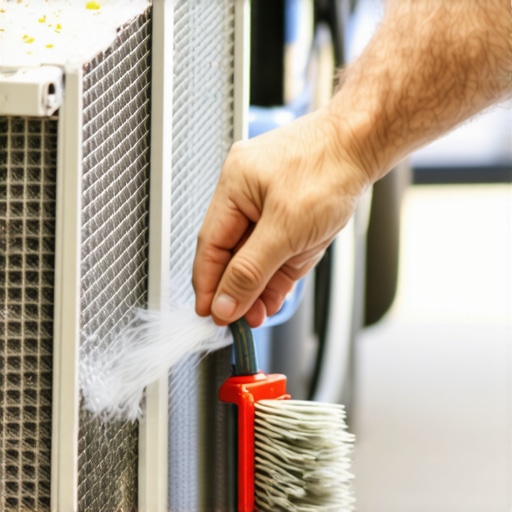 Professional vehicle diagnostics often find that a simple low-pressure rinse of this hidden cavity can drop idle temperatures by ten degrees instantly. This is a common oversight in DIY maintenance but a standard checkpoint in a comprehensive car service. Furthermore, we must consider the role of engine oil as a secondary coolant. In high-heat idling scenarios, the oil’s ability to carry heat away from the crankshaft and camshafts becomes compromised as its viscosity drops, leading to increased friction at the very moment the cooling system is already at its limit. This friction generates even more internal heat, creating a feedback loop that can only be broken by…
When the usual suspects like low coolant levels or broken belts are ruled out, we must look toward the sophisticated electronic management systems that govern modern thermal dynamics. A vehicle’s ability to maintain equilibrium in gridlock depends heavily on the communication between the Powertrain Control Module (PCM) and the cooling hardware. In high-performance or late-model European vehicles, the traditional wax-pellet thermostat has been replaced by map-controlled thermostats that use internal heating elements to proactively open before a thermal spike occurs. If the heating element within the thermostat fails, the unit reverts to a standard mechanical operation, which is often too sluggish to react to the rapid heat accumulation of a sudden traffic jam. This subtle electronic failure requires high-level vehicle diagnostics to detect, as it rarely triggers a check engine light until the threshold for damage is reached.
The Map-Controlled Thermostat Decides Your Engine’s Fate
These advanced components allow the ECU to artificially increase engine temperature during cruise for better fuel economy and then drop it rapidly for power or cooling needs. However, when the electronic interface fails, the engine may struggle to shed heat during the transition from a 60 MPH cruise to a dead stop. This creates a scenario where the cooling system is always one step behind the actual thermal load. During a comprehensive car service, technicians should verify the duty cycle of these thermostats to ensure they aren’t sticking in a high-temperature ‘economy’ mode when the vehicle is stationary. This is particularly vital for preserving transmission health, as the shared radiator cooling loop cannot compensate for an engine that is intentionally, yet erroneously, running ten degrees too hot.
Can a Failing Alternator Cause Your Engine to Overheat?
It is a frequently overlooked reality that your cooling fan’s performance is only as good as the voltage it receives. In stop-and-go traffic, the engine is at its lowest RPM, which is also when the alternator’s output is at its weakest. If you have a heavy electrical load—headlights, seat heaters, and a powerful infotainment system—the voltage available to the electric cooling fan can drop significantly. A fan designed to pull 2,500 CFM at 14.2 volts might only pull 1,800 CFM at 12.5 volts. This reduction in airflow is often the difference between a stable needle and a boiling overflow tank. Advanced auto repair involves testing the alternator’s amperage output specifically at idle under full load to ensure the cooling subsystem isn’t being starved of the current it needs to fight back the heat. 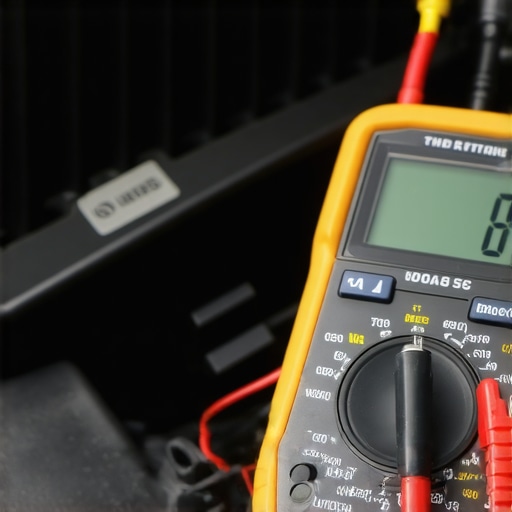
Prevent Micro-Cracking with High-Performance Oil Management
While we often focus on the liquid coolant, the engine oil carries nearly 40% of the thermal load in many modern turbocharged engines. As oil temperatures rise during extended idling, the fluid thins, and its ability to lubricate the turbocharger bearings and VVT solenoids diminishes. This increased friction creates a secondary heat source that the radiator must then work to dissipate. According to technical data hosted by the National Highway Traffic Safety Administration (NHTSA), several manufacturers have issued technical service bulletins regarding cooling system upgrades specifically to prevent premature component fatigue caused by these urban heat cycles. Upgrading to a high-viscosity-index synthetic oil can provide a broader thermal safety margin, keeping internal friction low even when the external airflow is non-existent. If you have ever watched your gauge climb while waiting for a green light, check your battery voltage using a hidden dashboard menu or a multimeter; you might be surprised to find your electrical system is the true culprit. Tell us in the comments if a simple battery or alternator swap fixed your mysterious overheating issues!
Why Your Transmission Computer Triggers Limp Mode Before the Steam Appears
Modern TCMs (Transmission Control Modules) are programmed with aggressive thermal protection logic. Because transmission fluid degrades exponentially faster once it crosses the 230°F threshold, the computer may limit your vehicle to second or third gear to reduce internal friction and heat generation. This often happens before the dashboard temperature light even flickers. This ‘limp mode’ is a desperate cry for help from the gearbox, indicating that the integrated cooler in the radiator is no longer doing its job. During auto repair, it is essential to check for ‘cross-contamination’ where a small internal radiator leak allows coolant into the transmission, which destroys friction plates almost instantly. Consistent vehicle diagnostics and fluid analysis remain the most effective tools for catching these invisible killers before they lead to a multi-thousand dollar rebuild.
The modern internal combustion engine operates within a razor-thin thermal margin, where the balance between heat generation and dissipation determines mechanical longevity. While cruising at highway speeds provides a constant stream of high-velocity ram-air to the radiator, stop-and-go traffic forces the vehicle to rely entirely on its secondary cooling subsystems. When temperature spikes occur exclusively during idling or low-speed maneuvers, it indicates a failure in the active cooling phase—often linked to the cooling fan’s duty cycle or the efficiency of the heat exchanger itself. Professional auto repair technicians often observe that these symptoms are the precursors to more severe transmission fluid overheating, as many vehicles utilize integrated coolers within the radiator assembly. Understanding this transition from passive to active cooling is paramount for any high-level car service strategy.
Stop-and-Go Traffic Reveals Your Cooling Fan’s Hidden Weakness
In the absence of natural airflow, the electric cooling fan becomes the primary guardian of your engine’s thermal stability. Most modern vehicles utilize pulse-width modulated (PWM) fans that adjust speed based on real-time data from the engine control unit (ECU). If your temperature rises only when stationary, the fan motor may be experiencing internal resistance or the relay might be failing under high thermal loads. You might also want to check why your car cooling fan will not turn off if the sensors are providing erratic data. This mechanical fatigue is often subtle, requiring advanced vehicle diagnostics to identify voltage drops that only manifest when the engine is under heat stress. Without the fan pulling air through the radiator core, the coolant cannot release the heat absorbed from the cylinder head, leading to a rapid climb in the temperature gauge.
Why Low Engine RPM Chokes Your Coolant Flow Rate
The water pump is the heart of the cooling system, and its efficiency is directly tied to engine speed. In stop-and-go traffic, the engine spends significant time at idle, meaning the water pump is spinning at its lowest possible RPM. A pump with eroded impeller vanes might move enough coolant at 3,000 RPM to keep things cool during a highway commute, but it will fail to maintain sufficient pressure at 800 RPM. This phenomenon is a classic sign of internal component wear that many drivers overlook until it is too late. To prevent a total breakdown, it is vital to learn how to spot a failing water pump before your engine overheats. According to technical research from the Society of Automotive Engineers, the relationship between coolant flow velocity and boundary layer heat transfer is non-linear, meaning even a small drop in pump efficiency at idle can lead to rapid localized boiling within the engine block.
Does Your Temp Gauge Drop Only After You Hit 30 MPH?
If the needle returns to the center as soon as you accelerate, you are likely dealing with a starved radiator. This occurs when the radiator fins are clogged with external debris or when the internal passages are restricted by mineral deposits known as scale. At highway speeds, the sheer volume of air overcomes the inefficiency of the clogged fins, but at a standstill, the fan cannot pull enough air through the restricted core to dissipate the heat. This is a critical time to seek a comprehensive car service to perform a chemical flush or a physical inspection of the heat exchanger. Neglecting this can lead to thermal soak, where the heat penetrates deeper into the engine block, potentially warping the cylinder head or compromising the transmission housing seals. If you’re noticing these spikes, it’s time to leverage professional vehicle diagnostics to prevent catastrophic head gasket failure. We invite you to share your experiences with urban overheating in our community forums to help others identify these complex issues early.
Furthermore, an aging thermostat that is sluggish to respond can exacerbate these issues. If the thermostat does not open fully, the restricted flow might be manageable when the engine is aided by high-speed airflow, but it becomes a bottleneck during the high-load, low-airflow conditions of city driving. This thermal instability often cascades into other systems, causing the transmission to shift poorly as the fluid thins beyond its operational viscosity. For those looking to maintain their vehicle’s peak performance, staying ahead of these thermal anomalies is essential. If you are experiencing shifting issues alongside these heat spikes, explore our guide on transmission failures decoded to see how heat impacts your gearbox.
When you engage the air conditioning while stuck in gridlock, you aren’t just taxing the compressor; you are literally stacking a heat-radiating wall in front of your primary cooling source. The AC condenser, typically mounted ahead of the radiator, sheds immense heat as it turns refrigerant from gas to liquid. In a stationary vehicle, this ‘heat pre-load’ significantly reduces the radiator’s ability to exchange energy with the surrounding air. If your system is already marginal due to a weak fan or restricted internal flow, the added load of the AC is often the final straw that pushes the needle toward the red zone. Modern auto repair strategies often prioritize checking the condenser fins for folding or debris, as even a ten percent reduction in airflow can cause a cascading thermal failure during an urban commute.
Stop Your AC From Overcooking Your Engine During Gridlock
In many vehicles, the cooling fan is programmed to jump to its highest speed the moment the AC is engaged, regardless of engine temperature. This is a fail-safe meant to handle the extra thermal burden. However, if your fan’s high-speed circuit is blown, the fan may continue to spin at low speed, which is sufficient for a basic car service check but wholly inadequate for a 100-degree day in traffic. Recognizing why your car smells like maple syrup and how to fix it is your first line of defense, as that sweet scent often indicates micro-leaks in the heater core or radiator that only manifest under the extreme pressures of idling heat. Ensuring the system remains pressurized is vital because any drop in pressure directly lowers the boiling point of the coolant, leading to steam pockets that act as insulators rather than conductors of heat.
Will a 50/50 Coolant Mix Actually Save Your Engine in Summer?
There is a common misconception that more antifreeze equals better cooling, but the reality is that water is a superior heat-transfer fluid. Pure antifreeze has roughly half the heat capacity of water; therefore, a mixture that is too ‘heavy’ on concentrate will actually cause the engine to run hotter in stop-and-go conditions. The goal of a 50/50 mix is to balance corrosion protection with thermal efficiency. According to the Car Care Council, cooling system failure is the leading cause of engine-related breakdowns, often stemming from neglected fluid chemistry that allows scale to build up on internal surfaces. This scale acts like a thermal blanket, preventing the transmission fluid and engine oil from shedding heat into the coolant jacket. If you notice your temperature creeping up while the car is in gear, it might be due to this diminished transfer efficiency.
Purge Trapped Air to Restore Thermal Balance
One of the most elusive causes of idling spikes is a ‘burp’ or air pocket trapped within the cylinder head. Air pockets can form after a minor repair if the system wasn’t vacuum-filled, leading to localized hotspots that vehicle diagnostics tools might miss because the temperature sensor is submerged in liquid while the metal nearby is scorching. To fix this, don’t forget about the hidden drain plug most people miss during a radiator flush to ensure total debris removal and a clean slate for refilling. Even a minor leak addressed with the 20 fix for a leaky radiator hose can restore pressure stability and prevent air from being sucked back into the system during the cool-down cycle. Furthermore, extreme heat in the combustion chamber can lead to pre-ignition; understand why your engine pings under load and how to stop it to protect your pistons from the destructive forces of thermal overload. Have you ever had to blast the heater in 90-degree weather just to get home? Share your most harrowing traffic-overheating stories in the comments or let us know if you found a secret fix we missed.
Why Your Transmission Suffers Most During Gridlock
Most modern vehicles utilize a shared cooling architecture where the transmission fluid is routed through a dedicated heat exchanger integrated into the radiator’s cold-side tank. When airflow stops at a red light, this heat exchange process can unexpectedly reverse its intended purpose. Instead of the radiator cooling the transmission fluid, the boiling engine coolant begins to heat-soak the ATF (Automatic Transmission Fluid). This is a critical point for auto repair experts: as the fluid temperature exceeds 220°F, the chemical bonds in the lubricant begin to shear, leading to the dreaded limp mode. High-end vehicle diagnostics often reveal that erratic shifting in heavy traffic isn’t a mechanical failure of the gears, but a direct result of fluid thinning caused by this thermal cross-contamination. Maintaining fluid integrity is as much about cooling system health as it is about the gearbox itself.
The Silent Killer: Electrochemical Degradation
Over time, the pH balance of your coolant shifts, turning the liquid into a weak electrolyte. This leads to a process known as electrolysis, where minute electrical currents travel through the cooling system, physically eating away at the thin aluminum tubes of the radiator and heater core. According to a study by the International Journal of Engineering and Advanced Technology, these pinhole leaks often go undetected by standard visual inspections because the coolant evaporates instantly against the hot metal. This slow loss of pressure capacity is why your car might stay cool on the highway but struggle to maintain its equilibrium during a fifteen-minute wait in a drive-thru. If you haven’t had a professional coolant test during your recent car service, you might be driving a ticking thermal time bomb.
How can a failing fan clutch mimic a blocked radiator?
Unlike purely electric fans, many trucks and SUVs use a thermostatic fan clutch that relies on a bi-metal spring or a viscous silicone fluid to engage. If the internal fluid leaks out or the spring loses tension, the fan will spin lazily, providing the illusion of operation without actually pulling enough CFM (Cubic Feet per Minute) to cool the system at idle. You can test this during your next auto repair visit by checking for resistance when the engine is off; a clutch that spins freely like a pinwheel is effectively dead. Identifying this nuance is essential before committing to the expensive replacement of the radiator or transmission cooler. Have you checked your fan’s resistance lately? It’s a simple diagnostic step that could save you thousands in engine rebuild costs.
Stop Ignoring the Debris Between Your Radiator and Condenser
Don’t overlook the sandwich effect that occurs in the front of your engine bay. Between the AC condenser and the radiator lies a narrow gap that acts as a magnet for plastic bags, leaves, and road grime. This debris creates a dead zone where airflow is physically impossible. Even if your fans are screaming at full tilt, they cannot pull air through a wall of compacted road silt. Professional vehicle diagnostics often find that a simple low-pressure rinse of this hidden cavity can drop idle temperatures by ten degrees instantly. This is a common oversight in DIY maintenance but a standard checkpoint in a comprehensive car service. Furthermore, we must consider the role of engine oil as a secondary coolant. In high-heat idling scenarios, the oil’s ability to carry heat away from the crankshaft and camshafts becomes compromised as its viscosity drops, leading to increased friction at the very moment the cooling system is already at its limit. This friction generates even more internal heat, creating a feedback loop that can only be broken by…
When the usual suspects like low coolant levels or broken belts are ruled out, we must look toward the sophisticated electronic management systems that govern modern thermal dynamics. A vehicle’s ability to maintain equilibrium in gridlock depends heavily on the communication between the Powertrain Control Module (PCM) and the cooling hardware. In high-performance or late-model European vehicles, the traditional wax-pellet thermostat has been replaced by map-controlled thermostats that use internal heating elements to proactively open before a thermal spike occurs. If the heating element within the thermostat fails, the unit reverts to a standard mechanical operation, which is often too sluggish to react to the rapid heat accumulation of a sudden traffic jam. This subtle electronic failure requires high-level vehicle diagnostics to detect, as it rarely triggers a check engine light until the threshold for damage is reached.
The Map-Controlled Thermostat Decides Your Engine’s Fate
These advanced components allow the ECU to artificially increase engine temperature during cruise for better fuel economy and then drop it rapidly for power or cooling needs. However, when the electronic interface fails, the engine may struggle to shed heat during the transition from a 60 MPH cruise to a dead stop. This creates a scenario where the cooling system is always one step behind the actual thermal load. During a comprehensive car service, technicians should verify the duty cycle of these thermostats to ensure they aren’t sticking in a high-temperature ‘economy’ mode when the vehicle is stationary. This is particularly vital for preserving transmission health, as the shared radiator cooling loop cannot compensate for an engine that is intentionally, yet erroneously, running ten degrees too hot.
Can a Failing Alternator Cause Your Engine to Overheat?
It is a frequently overlooked reality that your cooling fan’s performance is only as good as the voltage it receives. In stop-and-go traffic, the engine is at its lowest RPM, which is also when the alternator’s output is at its weakest. If you have a heavy electrical load—headlights, seat heaters, and a powerful infotainment system—the voltage available to the electric cooling fan can drop significantly. A fan designed to pull 2,500 CFM at 14.2 volts might only pull 1,800 CFM at 12.5 volts. This reduction in airflow is often the difference between a stable needle and a boiling overflow tank. Advanced auto repair involves testing the alternator’s amperage output specifically at idle under full load to ensure the cooling subsystem isn’t being starved of the current it needs to fight back the heat.
Prevent Micro-Cracking with High-Performance Oil Management
While we often focus on the liquid coolant, the engine oil carries nearly 40% of the thermal load in many modern turbocharged engines. As oil temperatures rise during extended idling, the fluid thins, and its ability to lubricate the turbocharger bearings and VVT solenoids diminishes. This increased friction creates a secondary heat source that the radiator must then work to dissipate. According to technical data hosted by the National Highway Traffic Safety Administration (NHTSA), several manufacturers have issued technical service bulletins regarding cooling system upgrades specifically to prevent premature component fatigue caused by these urban heat cycles. Upgrading to a high-viscosity-index synthetic oil can provide a broader thermal safety margin, keeping internal friction low even when the external airflow is non-existent. If you have ever watched your gauge climb while waiting for a green light, check your battery voltage using a hidden dashboard menu or a multimeter; you might be surprised to find your electrical system is the true culprit. Tell us in the comments if a simple battery or alternator swap fixed your mysterious overheating issues!
Why Your Transmission Computer Triggers Limp Mode Before the Steam Appears
Modern TCMs (Transmission Control Modules) are programmed with aggressive thermal protection logic. Because transmission fluid degrades exponentially faster once it crosses the 230°F threshold, the computer may limit your vehicle to second or third gear to reduce internal friction and heat generation. This often happens before the dashboard temperature light even flickers. This ‘limp mode’ is a desperate cry for help from the gearbox, indicating that the integrated cooler in the radiator is no longer doing its job. During auto repair, it is essential to check for ‘cross-contamination’ where a small internal radiator leak allows coolant into the transmission, which destroys friction plates almost instantly. Consistent vehicle diagnostics and fluid analysis remain the most effective tools for catching these invisible killers before they lead to a multi-thousand dollar rebuild.
Expert Insights & Advanced Considerations
Voltage Drop Starves Your Fan of Critical Airflow
One of the most insidious causes of idling heat spikes is a weak electrical system. In stop-and-go traffic, your engine is at its lowest RPM, which often coincides with the lowest output from your alternator. If your battery is aging or you have a failing ground wire, the cooling fan may not receive the full 14 volts required to pull maximum CFM through the radiator. This is why it is critical to know how to tell if your alternator is killing your new battery, as a subtle drop in voltage translates directly into a drop in airflow. Professional vehicle diagnostics should always include a load test of the electrical system while the car is at idle with the AC engaged.
Electrolysis Is Eating Your Radiator from the Inside Out
When coolant becomes acidic over time, it turns into a conductive fluid that allows stray electrical currents to flow through the cooling system. This electrochemical degradation, or electrolysis, physically strips metal from the thin aluminum tubes of your radiator. You may find that your system holds pressure during a quick car service, but fails under the sustained heat of gridlock. To prevent this, you must learn how to spot a bad ground wire before it kills your new battery and your radiator, as poor grounding is often the primary driver of this chemical destruction.
Why Your Gearbox Hates Your Integrated Cooling Loop
Most modern transmission systems share a heat exchanger with the engine radiator. When you are stuck in traffic, the heat from the engine block can migrate into the transmission fluid rather than the other way around. This thermal cross-contamination is a primary cause of fluid breakdown. Keeping an eye on your shifting behavior is essential; if you notice delays, consult our guide on transmission failures decoded to identify if your cooling system is slowly cooking your gears from the inside out.
Curated Expert Resources
Society of Automotive Engineers (SAE) Technical Library: The gold standard for understanding the physics of boundary layer heat transfer and coolant flow velocity in internal combustion engines.
National Highway Traffic Safety Administration (NHTSA) Recall Database: A vital tool for identifying if your specific model has known design flaws or technical service bulletins related to urban overheating.
Car Care Council Technical Guides: Excellent resources for cross-referencing fluid chemistry standards and the impacts of scale buildup on thermal exchange efficiency.
Final Expert Perspective
Mastering thermal management in heavy traffic requires moving beyond basic coolant checks and into the realm of vehicle diagnostics and proactive auto repair. Whether it is ensuring your transmission fluid isn’t being heat-soaked by a failing radiator or identifying a voltage drop that starves your cooling fans, staying ahead of these issues is the only way to ensure longevity. We recommend you unlock your cars potential with expert auto repair tips for 2025 to keep your vehicle running cool in even the most grueling gridlock. We invite fellow professionals and dedicated owners to share their most complex cooling challenges in the comments below.