Stop Guessing: How Your Suspension Actually Fails
Suspension integrity is frequently reduced to the ‘bounce test,’ a rudimentary method that often fails to capture the nuanced degradation of modern hydraulic dampers. As an expert in vehicle diagnostics, I have seen countless owners ignore the subtle shifts in kinetic energy management that occur long before a strut completely collapses. A strut is not merely a shock absorber; it is a critical component that maintains tire-to-road contact, particularly during high-speed maneuvers and emergency braking. Understanding the mechanics of a ‘blown’ unit requires moving beyond surface-level observations and into the realm of hydraulic pressure, piston travel, and seal longevity. When these components degrade, your car service needs go from preventative to urgent.
Are Your Struts Leaking or Just Sweating?
One of the most common diagnostic errors involves misidentifying oil residue. Manufacturers often define ‘misting’ as a normal condition where a thin film of oil appears on the strut body due to the rod seal lubricating itself. However, a catastrophic seal failure—what we call a blown strut—results in heavy, dripping fluid that coats the spring seat and potentially the brake components. This loss of fluid directly correlates to a loss of dampening force, which is essential for auto repair professionals to address immediately. According to the Society of Automotive Engineers (SAE), consistent dampening is vital for electronic stability control (ESC) systems to function within their designed safety parameters.
Why Your Tires Show Symptoms Before Your Hands Do
When struts lose their ability to control spring oscillation, the tire begins to ‘hop’ or vibrate at high frequencies against the asphalt. This leads to ‘cupping’—a distinct pattern of uneven wear that looks like scooped-out hills and valleys across the tread. This is not just a tire problem; it is a clear indicator that your suspension can no longer manage vertical loads effectively. If you notice these patterns, it is time to unlock your car’s potential by refreshing the suspension components. For more on how to interpret these mechanical signals, see our guide on the hidden world of vehicle diagnostics.
Can You Really Diagnose Internal Valving Issues Without a Shaker Table?
Internal valving failure is the silent killer of ride quality and safety. Even if a strut is bone dry on the outside, the internal shim stacks can fatigue or debris can clog the orifices, leading to a ‘dead’ strut that offers no resistance to movement. While professional shops use shaker tables to graph dampening curves, you can detect this by observing ‘nose dive’ during hard braking or excessive ‘squat’ during acceleration. These symptoms indicate the transmission of force is no longer being managed. You might find that the one maintenance move that doubles the life of your rotors actually starts with a healthy suspension, as blown struts place an unfair burden on your braking system.
If you suspect your handling is compromised and your vehicle no longer tracks straight or feels planted during turns, schedule a professional assessment via our contact page to ensure your vehicle remains road-worthy and safe for every journey.
While the struts often take the blame for a harsh ride, the collateral damage to neighboring components is where the real costs accumulate. When a dampener fails to control the vertical movement of the wheel assembly, the rubber control arm bushings are forced to operate outside their intended range of motion. This leads to premature tearing of the elastomer, resulting in a vague, ‘rubbery’ steering feel. You might notice your car wandering or requiring constant small corrections on the highway—a symptom often confused with poor alignment. In many cases, addressing these pivots is as critical as replacing the struts themselves to restore factory handling. If you have ever wondered why the steering wheel shakes at 60 mph but stops at 70, it is frequently this interplay between tire balance and bushing compliance that is to blame.
Does Your Vehicle Suffer from ‘Memory Steer’ After a Sharp Turn?
An expert-level diagnostic sign of suspension binding is ‘memory steer.’ This occurs when you complete a turn, but the steering wheel fails to return to the center naturally, or it feels like it wants to continue pulling in the direction you just turned. This is rarely an alignment issue and often points to a seized upper strut mount bearing or a dry ball joint that has lost its internal lubrication. When these pivot points seize, they create friction that overcomes the caster’s self-centering force. Identifying these nuances is a hallmark of top auto repair techniques every car owner should know, as it prevents you from throwing money at unnecessary rack-and-pinion replacements.
The Dangerous Intersection of Sagging Springs and ADAS Accuracy
Modern vehicles are increasingly reliant on Advanced Driver Assistance Systems (ADAS), such as lane-keep assist and emergency autonomous braking. These systems rely on cameras and radar sensors calibrated to a specific chassis pitch. When your rear shocks fail and cause ‘sag,’ or your front struts collapse, the angle of these sensors shifts. A mere one-degree deviation in vehicle pitch can translate to a several-foot error in where the radar ‘sees’ an obstacle on the road. The National Highway Traffic Safety Administration (NHTSA) has highlighted the critical nature of maintaining stock ride height to ensure these safety electronics function correctly. If your car sits lower than it used to, you are not just losing ride quality; you are potentially degrading your safety net.
Identify the High-Pitch Squeak of a Dry Ball Joint
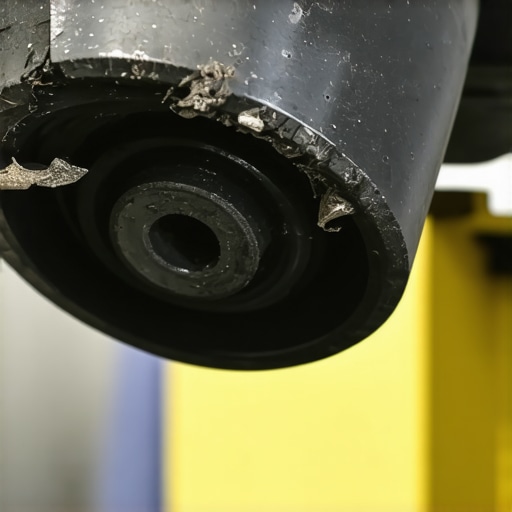
Distinguishing between suspension noise and drivetrain noise is vital for a precise diagnosis. A high-pitched, rhythmic squeak while driving over small bumps is often the ‘death cry’ of a ball joint that has lost its grease. Unlike the low-frequency growl of a failing hub, which you can learn to detect in our guide on how to identify a failing wheel bearing before the hub seizes up, suspension squeaks are strictly related to vertical chassis movement. To verify this, you can perform a localized stress test. Using a floor jack, you can unload the suspension to check for lateral play in the wheel. This method is similar to how to diagnose a bad wheel bearing using a jack, but focuses on the vertical movement of the control arms. To protect yourself from being overcharged for these complex repairs, it is essential to learn how to spot a fake mechanic recommended service scam before you approve a total suspension overhaul.
Reclaim Your Ride Quality with Precise Rebound and Compression Ratios
The nuanced difference between compression and rebound damping is where professional vehicle diagnostics separates itself from common guesswork. Compression damping controls the energy absorbed when the wheel moves upward into the wheel well, while rebound damping manages the speed at which the spring pushes the wheel back down. When these ratios are out of sync due to internal valve fatigue, the vehicle loses its ‘set’ after a bump. Instead of a single, controlled movement, the chassis enters a state of perpetual oscillation. This isn’t just an issue of comfort; it fundamentally alters the slip angle of your tires during cornering. If the rebound is too soft, the tire doesn’t return to the pavement with enough force, leading to a momentary loss of traction that can be catastrophic in wet conditions. Addressing these internal hydraulic failures is a cornerstone of advanced auto repair, ensuring the car remains glued to the road rather than skipping across it.
Does Extreme Summer Heat Permanently Degrade Your Hydraulic Shocks?
Many drivers notice their car feels ‘softer’ or more prone to swaying on a 100-degree afternoon. This is not a figment of your imagination; it is the result of fluid thinning. As the kinetic energy of the road is converted into heat within the strut body, the hydraulic oil’s viscosity index is pushed to its limit. According to technical data from ZF Aftermarket, prolonged exposure to high-operating temperatures can lead to ‘shock fade,’ where the fluid becomes so thin it passes through the valving orifices with almost no resistance. In high-performance or heavy-towing applications, this heat can eventually cause the internal seals to harden and crack, leading to the catastrophic leaks discussed previously. If your vehicle feels significantly different after an hour of highway driving compared to when you first pull out of the driveway, your car service needs have graduated from a simple inspection to a necessary component replacement.
The Small Part That Makes Your Premium Sedan Feel Like an Absolute Wreck
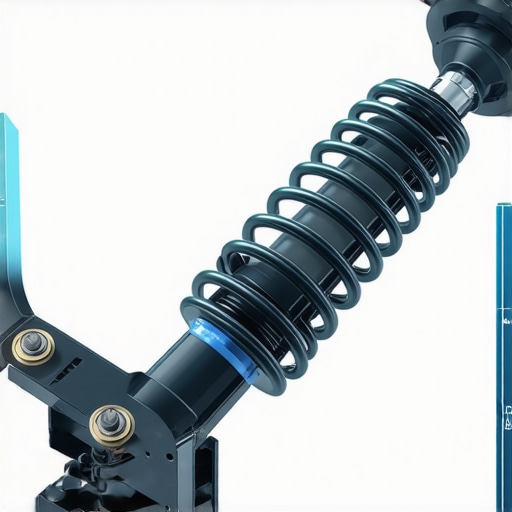
While we often focus on the struts themselves, the stabilizer bar (sway bar) links are the most frequent culprits of undiagnosed chassis noise. These small, ball-jointed rods are responsible for transmitting lateral forces to the anti-roll bar. Because they operate under high tension during every turn, the nylon races inside the joints wear down, creating a microscopic gap. This gap manifests as a sharp, metallic ‘clunk’ that resonates through the floorboards, often leading owners to believe their entire transmission or subframe is loose. Identifying a worn link is relatively simple for an expert, yet many shops will try to sell you a full rack-and-pinion replacement instead. Before you commit to a major overhaul, consider our comprehensive diagnostic approach to pinpoint the exact failure point without wasting money on functional parts.
How to Differentiate Between a Strut Mount Thud and a Wheel Bearing Growl
Diagnostic precision requires a keen ear for frequency and timing. A failing strut mount typically produces a dull ‘thud’ or ‘pop’ specifically during low-speed maneuvers, such as backing out of a driveway or turning the wheel while stationary. This is the sound of the coil spring binding and then suddenly releasing because the upper bearing is seized. In contrast, a wheel bearing growl is a constant, speed-dependent drone that changes pitch when you weight or unweight the side of the car. If you are struggling to tell the difference, you might find that top auto repair techniques every car owner should know include the ‘unloading’ test, where you safely swerve (in a controlled environment) to see if the noise vanishes when the load shifts. Understanding these specific mechanical ‘signatures’ is the only way to avoid the ‘parts cannon’—the expensive habit of replacing every component until the noise finally stops.
Beyond the noise and the bounce, the physical geometry of the suspension is under constant threat from ‘bushings deflection.’ Every control arm is mounted with rubber-to-metal bushings designed to isolate the cabin from vibration. Over time, these rubber inserts undergo chemical breakdown from road salt and oil leaks, causing them to ‘mush’ under load. This deflection allows the wheel to move fore and aft during braking, which can lead to a terrifying phenomenon known as ‘brake steer,’ where the car pulls to one side only when the anchors are dropped…
Stop Chasing Phantoms in Your Alignment Rack
This phenomenon, often referred to as ‘dynamic toe change,’ turns a standard stop into a wrestling match with the steering wheel. While a static alignment on a computerized rack might show green numbers across the board, the road reality is far more chaotic. When you apply the brakes, the force pulls the wheels backward; if the rubber bushings are compromised, the wheels move relative to the chassis, momentarily altering the alignment angles. This is why vehicle diagnostics must include a physical pry-bar inspection of every pivot point, not just a laser printout. This movement is a primary cause of ‘brake steer,’ where the vehicle darts toward the side with the most bushing deflection, creating a dangerous instability during high-speed deceleration.
Why Do Your Tires Keep Vibrating After Every Balance?
If you’ve visited the shop multiple times for a tire balance and the steering wheel still dances at 65 mph, the culprit is likely a ‘dead’ dampener rather than a weight issue. A shock absorber that has lost its internal nitrogen charge or hydraulic integrity can no longer suppress the tire’s natural harmonic frequency. According to technical documentation from Tenneco, a single worn shock can significantly increase braking distance because the tire is essentially ‘skipping’ across the surface rather than maintaining constant friction. This subtle skip mimics the sensation of an out-of-balance wheel, leading many owners to waste money on repeated car service visits for the wrong problem. To truly stabilize your ride, you must look at the dampener’s ability to control the spring’s oscillation cycle.
Sophisticated Magnetorheological Systems Demand More Than a Visual Check
For owners of modern performance vehicles, the complexity escalates with magnetorheological or electronic damping systems. These advanced units use fluid filled with microscopic metallic particles that react to electromagnetic coils within the strut body. While these offer a magic-carpet ride, they fail in ways traditional shocks do not. Internal sensors can malfunction, or the fluid can ‘plate out’ on the internal valves, creating a ride that is intermittently harsh or dangerously floaty without showing a single drop of leaked oil. Diagnosing these requires advanced scan tools to monitor real-time solenoid current and sensor feedback. It is a prime example of how auto repair has evolved into a discipline of data interpretation as much as mechanical wrenching.
Ignoring these electronic nuances can lead to a cascade of failures in your traction control and anti-lock braking systems, which rely on accurate vertical acceleration data. If your car feels like it is fighting your every input, do not wait for a component to snap. Schedule a comprehensive chassis evaluation through our contact page today and experience the difference that true precision makes in your daily commute. Understanding the interplay between your suspension and your transmission‘s ability to put power down is key to maintaining a high-performance vehicle. For those looking to sharpen their DIY skills, mastering top auto repair techniques every car owner should know will help you identify these complex issues before they become catastrophic road failures.
Expert Insights & Advanced Considerations
The Hidden Impact on Drivetrain Longevity
Worn dampeners create a ripple effect that extends far beyond a bumpy ride. When a strut fails to suppress wheel hop, the resulting vibrations travel directly through the axles and into the transmission. Over time, this constant micro-shuddering can lead to premature wear of the internal gears and seals. If you are noticing erratic shifting patterns alongside a bouncy ride, it is worth reviewing transmission failures decoded: signs and expert fixes to see if your suspension is actually the root cause of your gearbox woes.
Why Standard Alignment Computers Often Lie
A computerized alignment rack is a snapshot in time, not a reflection of road dynamics. Many vehicles pass with perfect green numbers while still wandering across the lane. This happens because static alignment cannot account for bushing deflection under load. If you experience a vehicle that pulls to one side only when braking, the issue is almost certainly a mechanical failure in the control arm pivots rather than a simple alignment error. Professional vehicle diagnostics require a physical pry-bar test to verify these components under simulated stress.
Thermal Capacity and the Real Danger of Fade
In performance or heavy-duty towing scenarios, the hydraulic fluid inside a strut can reach temperatures exceeding 300 degrees Fahrenheit. At this point, the fluid loses its sheer stability, leading to damping fade. This is often a silent failure—the strut looks perfectly fine when cooled down at the shop, but fails completely on the highway. This is why a thorough car service should involve a test drive long enough to bring components up to operating temperature before declaring the suspension healthy.
Curated Expert Resources
SAE International Technical Papers provide the gold standard for understanding the physics of chassis dynamics and electronic stability control integration.
Tenneco Technical Training offers an incredible deep-dive into the forensic analysis of failed shocks and struts, perfect for those moving beyond basic auto repair knowledge.
ZF Aftermarket Service Info delivers specific, high-level documentation on the maintenance of European-style multi-link suspensions and electronic damping systems.
Final Expert Perspective
Mastering the intricacies of chassis health requires looking past obvious leaks and focusing on the subtle physics of energy management. Whether it is a failing strut mount causing a rhythmic thud or a dead dampener leading to invisible tire hop, the goal is always the same: maintaining the critical interface between rubber and road. By staying ahead of these mechanical shifts, you ensure that every auto repair investment translates into tangible safety and performance. If you have questions about your specific vehicle’s handling, reach out via our contact page or explore our guide on choosing the right car service for seamless vehicle maintenance to keep your car in factory-fresh condition.