The High Stakes of Fastener Fatigue in High-Performance Blocks
A snapped fastener buried within an engine block is more than a mere mechanical delay; it is a high-stakes challenge that demands an understanding of metallurgy and precision machining. When a bolt shears off, it often happens due to a combination of galvanic corrosion, excessive torque, or thermal cycling that has altered the structural integrity of the steel against the cast iron or aluminum of the block. Approaching this with a standard drill-and-hope mentality often results in permanent damage to the block threads, necessitating expensive heli-coil inserts or, in worst-case scenarios, a complete component replacement. Expert-level auto repair techniques prioritize preservation of the original casting by analyzing the nature of the break before any physical intervention begins.
Center-Punching is the Single Most Important Step
Success in bolt extraction is won or lost in the first thirty seconds. If your drill bit wanders even a fraction of a millimeter off-center, you risk boring into the soft aluminum threads of the engine block rather than the hardened steel of the bolt. A high-quality automatic center punch must be used to create a definitive starting point. Advanced technicians often use a transfer punch set that matches the diameter of the hole to ensure the mark is perfectly concentric. This precision is vital because it dictates the trajectory of the pilot hole, which is the foundation of the entire extraction process. For those dealing with broader mechanical issues, staying updated on vehicle diagnostics can help identify why certain components are under enough stress to cause such catastrophic fastener failures.
What Happens if the Easy-Out Snaps Inside the Bolt?
This is the ultimate technician’s nightmare because extractors are typically made of hardened tool steel, which is significantly harder than standard drill bits. If you break an extractor, you can no longer drill through the center. In this scenario, professionals turn to solid carbide burs or even electrical discharge machining (EDM) in extreme cases. To avoid this, always use the largest extractor possible and apply heat to the surrounding block area to expand the hole, rather than relying solely on the torque of the tool. According to research published by SAE International, the coefficient of thermal expansion differences between steel fasteners and aluminum blocks can be leveraged to break the corrosive bond before mechanical force is applied. If you find yourself frequently battling seized components, it may be time to consult with a car service for seamless vehicle maintenance to prevent these issues through proper lubrication and torque auditing.
The Critical Role of Reverse-Twist Drill Bits
While many enthusiasts reach for a standard extractor immediately, seasoned pros know that high-quality left-handed (reverse-twist) drill bits are often the superior solution. As the bit bites into the steel, the torque and heat generated often catch the remains of the bolt and spin it right out of the hole without ever needing an extractor. This method minimizes the risk of expanding the bolt against the threads, which is a common side effect of tapered extractors. If the bolt is truly seized, you have at least prepared a perfect, centered hole for the next stage. Whether you are dealing with engine internals or complex transmission failures, the principle remains the same: use the least invasive method that offers the highest probability of success. If you are struggling with a particularly stubborn extraction, we invite you to share your specific scenario with our community of master technicians for tailored advice.
Induction Heating vs. Open Flames near the Block
Applying heat is a fundamental tactic, but the method of delivery matters. Open flames from a torch can be difficult to control and may damage nearby gaskets, sensors, or even the temper of the engine block itself. Induction heating tools provide a localized, high-intensity magnetic field that heats the bolt specifically, causing it to expand and contract rapidly, which effectively crushes the rust and corrosion holding it in place. This surgical application of physics is what separates a professional broken bolt extraction from a DIY attempt that ends in a trip to the machine shop. By understanding the thermal limits of your engine’s alloy, you can manipulate the material to work for you rather than against you.
The MIG Welding Miracle for Flush Breaks
When a bolt snaps flush with the surface or, worse, slightly recessed, the MIG welder becomes the most surgical instrument in the workshop. By carefully building up a small ‘nub’ of weld material onto the center of the broken stud and then welding a sacrificial nut to that nub, you accomplish two critical tasks simultaneously. First, you create a fresh hex head to grip with a standard wrench, and second, you shock the threads with localized, extreme heat that disrupts the bond of rust. This technique is remarkably effective for removing stripped lug nuts or broken exhaust manifold studs where accessibility is severely limited. The intense heat of the arc often does more to loosen the fastener than any amount of physical leverage ever could.
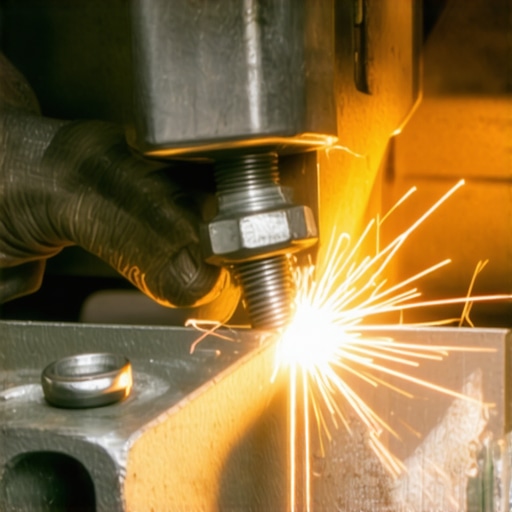
How deep is too deep for a manual extraction attempt?
When a bolt shears more than a half-inch into a casting, the physics of extraction shift from a matter of torque to a matter of alignment. At this depth, the risk of a drill bit or extractor flexing increases exponentially because the tool lacks the lateral support of the upper hole walls. Experts suggest that if the break depth exceeds the diameter of the fastener, you must utilize rigid guide bushings to ensure the drill bit remains perfectly perpendicular. Neglecting this alignment often leads to an oval-shaped hole that compromises the block’s structural integrity, a common pitfall noted in even the most advanced auto repair tips for 2025. In these deep-seated scenarios, the margin for error is nearly zero.
Chemical Warfare Against Galvanic Corrosion
While standard penetrating oils provide a baseline of lubrication, high-performance maintenance often requires custom solutions to defeat galvanic corrosion—the molecular bond formed between two dissimilar metals. A 50/50 mixture of Acetone and Automatic Transmission Fluid (ATF) has long been a secret of master machinists for its superior wicking properties. According to data found in the Machinery’s Handbook (31st Edition), the incredibly low surface tension of this mixture allows it to penetrate clearances as tight as 0.001 inches, reaching the core of the threads where commercial sprays often fail. This is particularly vital when dealing with stuck calipers or aluminum-to-steel interfaces where time and moisture have effectively cold-welded the parts together.
Vibration as a Mechanical Force Multiplier
The application of rapid, low-amplitude impacts can often ‘walk’ a frozen thread loose when steady, linear torque would only result in another snapped tool. Using a pneumatic air hammer with a blunt ‘drift’ tip against the head of a fastener creates microscopic shockwaves that fracture the crystalline structure of oxidation. This is a common practice in exhaust system repairs, where years of thermal cycling have fused nuts to studs. It is a game of finesse; the vibration ‘jars’ the threads, allowing your penetrating oil to seep deeper into the newly created micro-fissures. If you have ever lost a weekend to a single snapped fastener, we want to hear about your most difficult extractions in the comments—or perhaps you have a trick that beats the classic cigar-smoke method for finding vacuum leaks?
The Hidden Cost of Over-Torquing New Fasteners
Extraction is only half the battle; preventing the next failure requires an understanding of fastener stretch and yield points. Every bolt has a specific elastic range where it acts like a spring, providing the clamping force necessary to seal an engine or transmission. Once a bolt is over-torqued and enters its plastic deformation phase, it is permanently weakened and far more likely to shear during the next heat cycle. This is why following vehicle diagnostics and manufacturer torque specifications is not just a suggestion, but a prerequisite for longevity. Using a calibrated torque wrench and, where specified, new ‘torque-to-yield’ bolts ensures that the metallurgy of your repair matches the engineering requirements of the vehicle.
Rebuild the Foundation When the Threads Come Out with the Bolt
The euphoria of finally extracting a stubborn fastener often evaporates the moment you inspect the hole and see the ‘spiral of death’—the original threads stripped clean and wrapped around the bolt like a steel spring. When the parent material, typically cast aluminum in modern blocks, has been compromised, the repair shifts from extraction to structural reconstruction. You aren’t just looking for a way to hold a bolt; you are looking to restore the original load-bearing capacity of the engine component. Professional-grade restoration requires moving beyond hardware-store kits and into the realm of precision inserts that become a permanent part of the casting. Ignoring the integrity of the hole at this stage is a recipe for a ‘comeback’—the most expensive word in any technician’s vocabulary.
Stop Using Taps to Clean Your Engine Block
A frequent and costly error in high-performance engine building is reaching for a standard cutting tap to ‘clean up’ dirty or slightly deformed threads. Cutting taps are designed to remove metal to create new threads; using them in an existing hole effectively shaves the peaks off the original internal geometry, significantly reducing the thread engagement area and the resulting shear strength. Instead, expert technicians utilize thread chasers or ‘re-forming’ taps. These specialized tools are designed to move the metal back into its original position through burnishing rather than cutting. By maintaining the mass of the parent material, you preserve the torque-handling capabilities of the block, a nuance often overlooked in basic auto repair techniques. If the threads are too far gone for a chaser, then, and only then, do you move toward a mechanical insert.
Do Thread Inserts Sacrifice Total Clamping Force?
Many enthusiasts fear that adding an insert creates a point of failure, but the opposite is often true. When properly installed, a high-quality solid-wall insert can actually provide a higher pull-out strength than the original threads in a soft aluminum casting. This is because the insert provides a larger external surface area to grip the block, effectively spreading the load across more parent material. According to NASA’s Fastener Design Manual (NASA RP-1228), the reliability of a threaded joint is largely dependent on the ratio of the shear area of the internal threads to the tensile area of the bolt. By using an insert, you are essentially upgrading the block’s ‘skin’ to a harder alloy, allowing for more consistent torque readings and better resistance to thermal cycling. If you are dealing with critical components like head studs, ensuring this clamping force is uniform across all fasteners is essential for preventing head gasket failure and other vehicle diagnostics nightmares.
The Heavy-Duty Choice: Time-Sert vs. Helicoil
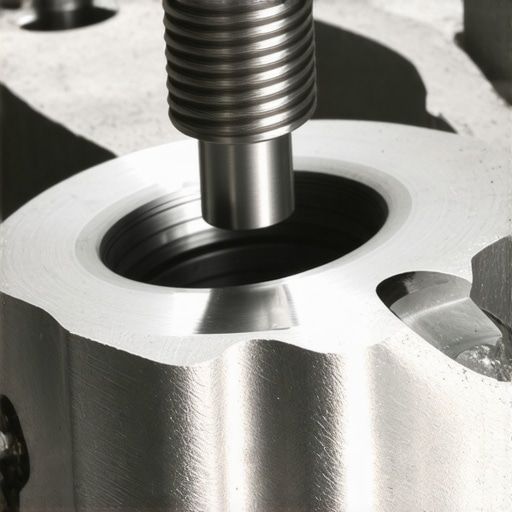
When the repair demands maximum reliability, the debate between wire-coil inserts (Helicoils) and solid-wall inserts (Time-Serts) becomes central. Wire-coil inserts are excellent for general repairs and are remarkably space-efficient, making them ideal for tight clearances where there isn’t enough ‘meat’ in the casting for a larger hole. However, for high-stress applications like main bearing caps or spark plug holes, solid-wall inserts offer a distinct advantage: they are physically incapable of winding out or compressing under load. These inserts are typically thin-walled steel bushings that are ‘swaged’ into place, locking them into the parent material. This mechanical lock prevents the insert from backing out during future disassemblies, a critical feature for any long-term car service for seamless vehicle maintenance strategy. Choosing the wrong insert for a high-vibration environment is a mistake you’ll only make once.
If you’ve ever felt that sickening ‘pop’ while torquing a head bolt, share your survival story below—we might feature your specific workaround in our next technical deep dive. Whether you prefer the surgical precision of a Time-Sert or have a secret method for stabilizing wire inserts, your expertise helps the community avoid the graveyard of ruined engine blocks.
Detect Micro-Fractures Before the Next Catastrophic Failure
The mechanical stress that snaps a bolt often leaves behind ‘invisible’ damage in the surrounding casting. Before you install your new insert or fastener, it is imperative to inspect the area for micro-fractures. Using a simple dye penetrant kit can reveal hairline cracks that radiate from the hole—cracks that will surely expand under the intense heat and pressure of a running engine. This level of scrutiny is what separates a backyard fix from a professional transmission repair or engine rebuild. If a crack is detected, the repair moves from simple thread restoration into the complex world of TIG welding or ‘stitching’ the casting, a process that requires a deep understanding of the specific alloy’s thermal properties.
Stop the Rot Before It Reaches the Water Jacket
The most terrifying sound in engine restoration isn’t the snap of a bolt, but the sudden hiss of coolant emerging from a hole where it shouldn’t be. When drilling out a broken fastener, you are often working within millimeters of pressurized water jackets or oil galleries. Expert machinists refer to this as ‘operating on the edge of the envelope.’ If your drill bit drifts slightly toward a cooling passage, the block effectively becomes a boat anchor. To mitigate this, professionals use ultrasonic thickness gauges to map the surrounding material density before the first bit touches the metal. This ensures that even a slightly oversized repair won’t compromise the wall thickness necessary to contain internal pressures during a high-boost run. If you’ve encountered a breach in these delicate zones, it’s a critical time to evaluate your vehicle diagnostics strategy for potential internal leaks.
How do you verify structural integrity after a heavy-duty drill-out?
Once the metal has been bored and the new threads are tapped, visual inspection is no longer sufficient for high-performance applications. Professionals utilize non-destructive testing (NDT) methods like magnetic particle inspection or fluorescent penetrant testing (FPI) to ensure that the mechanical stress of the extraction didn’t initiate a crack in the crystalline structure of the block. According to technical documentation from ASM International, the residual stresses left behind by machining can act as ‘stress risers,’ significantly lowering the fatigue life of the surrounding alloy. If the FPI reveals even a microscopic ‘feather’ of a crack, the repair requires immediate stabilization via metal stitching or a custom flanged insert to prevent the crack from propagating under thermal load.
Ceramic Lubrication is the Final Line of Defense
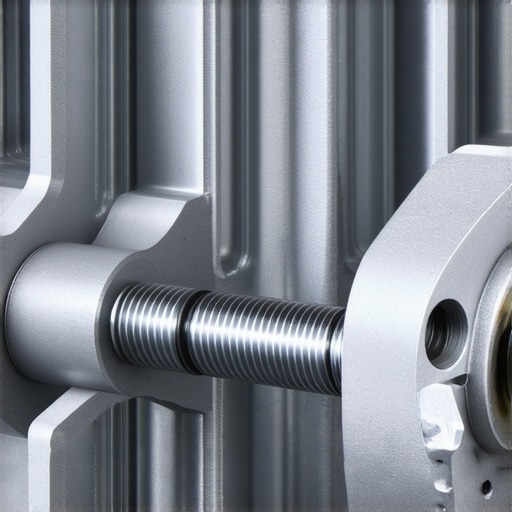
Reinstalling a new fastener into a repaired hole without a specialized barrier is an invitation for history to repeat itself. While traditional copper anti-seize was once the industry standard, it can actually promote galvanic corrosion in certain aluminum-to-steel interfaces due to the potential difference between the metals. Modern high-performance builds demand ceramic-based anti-seize compounds that can withstand temperatures exceeding 2,500°F without breaking down or washing away. These boron-nitride formulations create a molecular-level barrier that prevents the ‘cold-welding’ effect seen in exhaust manifolds and turbocharger housings. Implementing these advanced lubricants is a hallmark of elite car service for seamless vehicle maintenance, ensuring that the next technician to touch the vehicle—even a decade later—won’t face the same extraction nightmare.
Don’t Sacrifice Your Sleeves for a Fifty-Cent Bolt
There comes a moment in every difficult extraction where the risk to the component outweighs the value of the repair. If the fastener is located near a cylinder sleeve or a critical oil feed, the mechanical distortion caused by drilling and tapping can ‘pull’ the sleeve out of round, leading to oil consumption or compression loss. In these scenarios, ‘over-repairing’ is as dangerous as a failure. A seasoned tech knows when to transition from a manual drill-out to specialized services like Electrical Discharge Machining (EDM). EDM uses a spark to disintegrate the bolt without touching the parent threads, offering a level of precision that no hand-held tool can match. This strategic restraint is what prevents a routine transmission repair or head gasket job from spiraling into a five-figure engine replacement. Have you ever had to walk away from a repair and call in the heavy artillery? Tell us your EDM success stories in the comments—your experience might just save a fellow builder from a catastrophic mistake.
Expert Insights and Advanced Considerations
Why You Can’t Reuse That High-Tensile Head Bolt
Many technicians overlook the fact that high-performance fasteners are often designed to operate within a specific range of permanent deformation. Reusing a fastener that has already reached its yield point significantly increases the risk of another snap during the next heat cycle. Mastering broken bolt extraction is essential, but recognizing that the metallurgy has changed is what prevents a repeat failure. Always verify if your specific application requires torque-to-yield hardware before reassembling.
Don’t Trust Your Eyes Alone for Micro-Cracks
Even if the extraction looks clean, the mechanical stress of drilling and tapping can create invisible stress risers. For critical engine components, using a fluorescent penetrant is a mandatory step to ensure the casting hasn’t developed hairline fractures. This level of detail is a core component of expert auto repair tips for 2025, as modern alloys are thinner and less forgiving than the heavy iron blocks of the past.
The Friction Coefficient Trap in Dry versus Lubed Threads
Applying a standard torque value to a lubricated thread can result in up to 30 percent more clamping force than intended, potentially stripping your newly installed inserts. It is vital to consult technical data for ‘wet’ versus ‘dry’ torque specifications. This nuance is often the difference between a successful long-term fix and a catastrophic thread failure during a routine transmission repair where torque accuracy is paramount.
Curated Expert Resources
SAE International Technical Papers: These documents provide the definitive data on fastener shear strength and thermal expansion coefficients for various automotive alloys.
Machinery’s Handbook: Known as the bible of the mechanical industries, this resource offers precise charts for drill bit sizing and thread engagement calculations that exceed standard shop manuals.
NASA Fastener Design Manual (RP-1228): For those dealing with extreme vibration or high-temperature environments, this manual provides the most advanced physics-based approach to joint reliability available today.
Final Expert Perspective
Successful broken bolt extraction is rarely about raw power and almost always about the surgical application of heat, chemistry, and precise geometry. By shifting your mindset from ‘removal’ to ‘preservation of the parent material,’ you ensure the structural integrity of the engine block remains intact for the life of the vehicle. This specialized knowledge is a critical subset of advanced vehicle diagnostics, where understanding material failure is just as important as reading a scan tool. We invite you to contribute your most challenging extraction stories or specialized tool recommendations below to help push the boundaries of modern mechanical restoration.