In the precision-driven world of modern auto repair, a single stripped lug nut can derail an entire afternoon of scheduled car service. While many novice mechanics immediately reach for the oxy-acetylene torch, the thermodynamic consequences of applying extreme heat to high-carbon steel studs often introduce micro-fractures that compromise structural integrity. Professional vehicle diagnostics frequently reveal that these failures stem from more than just brute force; they are the result of galvanic corrosion—a chemical bonding process where the steel stud and aluminum wheel alloy effectively fuse over time. Understanding the mechanical interface between these metals is essential for any technician aiming for a clean extraction without damaging the expensive wheel hub or adjacent braking components.
The Physics Behind Galvanic Bonding in Wheel Assemblies
When moisture and road salts infiltrate the threads of a wheel stud, they act as an electrolyte, facilitating a process known as galvanic corrosion. This is particularly prevalent in regions with harsh winters, where the interaction between different metals leads to a seized fastener that defies standard impact wrenches. In the realm of advanced auto repair, we recognize that the ‘stripping’ of a nut usually occurs during the initial breakaway torque when the socket loses surface contact. If you have found yourself in this predicament, mastering these top auto repair techniques is what separates a shop-floor hero from a weekend warrior. This isn’t just about unscrewing a part; it’s about managing the friction coefficients that have been fundamentally altered by environmental exposure.
Kinetic Energy and the Physics of the Extraction Socket
The most effective non-thermal solution involves specialized extraction sockets designed with a reverse-spiral flute. Unlike standard sockets that rely on flat-surface contact, these tools use kinetic energy to ‘bite’ into the remaining metal of the nut. As you apply counter-clockwise pressure, the flutes dig deeper, creating a mechanical lock that often overcomes the seizure. Similar to the protocols used for extracting a broken bolt without panic, the key is the steady application of torque rather than sudden, violent bursts. According to research published by SAE International, the integrity of the wheel stud is paramount, and mechanical extraction preserves the metallurgy far better than heat-based methods which can soften the steel.
Can You Salvage a Stud After an Oversized Socket Extraction?
One of the most frequent inquiries in professional forums is whether a stud remains viable after a forced extraction. From an expert perspective, the answer depends entirely on the thread condition and the degree of lateral force applied. If the extraction required ‘pounding’ a smaller socket onto the nut, the radial stress might have introduced stress risers at the base of the stud. A professional car service always includes a visual inspection of the threads and a quick check with a thread chaser. If there is any doubt, replacement is the only safe path, as a compromised stud can fail under the cyclic loading experienced during high-speed travel.
Integrating Proper Torque Into Your Regular Car Service
Preventing this nightmare scenario is a hallmark of high-quality maintenance. Every time a vehicle undergoes a transmission check or a brake inspection, the wheels must be re-torqued using a calibrated torque wrench rather than an unmitigated impact gun. Over-torquing is the leading cause of lug nut deformation and subsequent stripping. This proactive approach is much like the maintenance move that doubles the life of your rotors. If you’re dealing with more complex drivetrain issues, our deep dive into vehicle diagnostics offers the technical clarity you need to keep your car on the road safely and efficiently.
While high-viscosity lubricants provide a temporary reprieve, the true challenge lies in breaking the surface tension of the oxidization layer. Advanced vehicle diagnostics often point toward environmental factors, but the chemical reality is that most off-the-shelf penetrants lack the solvent power to dissolve aluminum oxide. Technical data from Henkel Adhesives highlights how friction coefficients change drastically when lubricants are introduced, often leading to unintended over-tensioning during reassembly. This is where the 15-dollar fix for a rattling heat shield and a seized lug nut share a commonality: success is found in the chemistry of the bond, not just the length of the breaker bar.
Chemical Interventions Beyond Generic Penetrants
When dealing with extreme galvanic bonding, professional auto repair requires a mixture of acetone and vegetable oil or specialized freeze-sprays that utilize thermal shock to create micro-fissures in the rust. These fissures allow the lubricant to travel via capillary action into the deepest threads of the stud. Unlike the marketing surrounding lifetime transmission fluid, which often obscures the need for maintenance, the physics of thread penetration is transparent and measurable. If the chemical approach fails, the next logical step isn’t more force, but a change in the frequency of the energy applied to the fastener.
Leverage Vibration Instead of Raw Torque
An often-overlooked tool in the technician’s arsenal is the pneumatic air hammer fitted with a blunt-force bit. By applying rapid, low-amplitude vibrations to the face of the lug nut, you can often break the molecular bond of the corrosion without shearing the stud. This method is far safer than using a six-foot cheater pipe, which creates massive lateral loads that can lead to catastrophic failure. Using a 20-dollar scan tool might find electronic ghosts, but only mechanical intuition and steady vibration will solve a seized fastener. 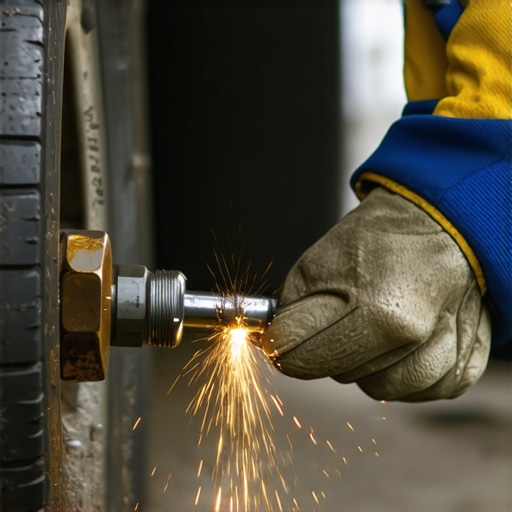 The goal is to ‘shock’ the threads into submission, allowing the extraction socket to do its job with minimal resistance.
Will High-Intensity Impacts Fracture Your Hub Assembly?
Many mechanics worry that the repeated hammering of an impact wrench or air hammer will damage the delicate internals of the wheel hub. This concern is valid; excessive axial force can pit the bearing races, leading to premature wear. Just as you would identify a failing wheel bearing by its rhythmic growl, you can hear when a hub is being stressed beyond its limits during extraction. The key is to apply pressure in short bursts, allowing the metal to dissipate the kinetic energy before it transfers into the bearing assembly. High-quality car service is as much about protecting the surrounding components as it is about removing the faulty one.
The Anti-Seize Debate and Torque Inaccuracy
Once the stripped nut is finally removed, the temptation to coat the new stud in heavy anti-seize is strong. However, most manufacturers specify ‘dry’ torque ratings. Applying lubricant to the threads reduces friction so significantly that following the factory torque spec can actually stretch the stud beyond its elastic limit. This leads to the very deformation that causes nuts to strip in the future. In the context of transmission work or wheel mounting, precision is your best friend. If you have a stubborn bolt story or a secret extraction technique that has saved your knuckles, share your experience in the comments; we are always looking to expand our collective shop knowledge.
Induction Heat Beats the Open Flame Every Time
When standard mechanical leverage reaches its physical limit, the professional technician shifts from brute force to controlled thermodynamics. The traditional oxy-acetylene torch is a blunt instrument that often radiates excessive heat into the wheel bearings and hub seals, leading to premature failure of the entire assembly. In contrast, modern auto repair utilizes high-frequency induction heaters. These tools generate a focused electromagnetic field that excites the molecules specifically within the ferrous lug nut, causing it to expand rapidly while the stud remains relatively cool. This thermal differential breaks the molecular bond of the corrosion in seconds. 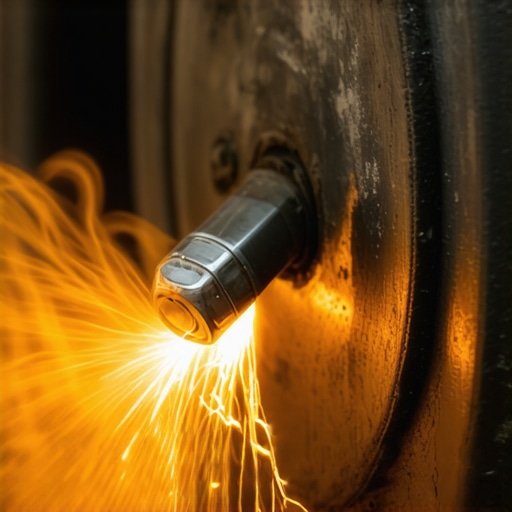 This localized expansion is the ultimate solution for dealing with anaerobic thread-locking compounds that have polymerized over years of heat cycles. If your shop has already integrated these high-tech solutions into your routine car service, you have likely noticed a significant decrease in broken studs and a massive improvement in workflow efficiency.
Can Latent Thermal Stress Lead to Sudden Hub Failure?
One of the most nuanced concerns in advanced vehicle diagnostics is the long-term effect of thermal cycling on the hub’s structural integrity. When a nut is heated to a cherry-red state, the heat soak eventually migrates into the hub flange. If cooled too rapidly—such as by spraying it with water or a cold solvent—the metal can undergo a phase transformation that creates micro-cracks. These are often invisible to the naked eye but can act as fatigue points under the heavy lateral loads of cornering. A truly professional approach involves allowing the metal to air-cool naturally, ensuring the metallurgical grain structure returns to its stable state without becoming brittle. This level of care is what differentiates a standard fix from a high-performance restoration of the wheel’s mounting surface.
Protecting the Temper of High-Tensile Wheel Studs
Every wheel stud is engineered with a specific tensile strength and elasticity, typically categorized by its property class. According to technical documentation from ASM International, overheating high-strength fasteners can lead to a drastic reduction in their yield strength. Once the ‘temper’ of the steel is lost, the stud can no longer maintain its clamping force, even if the nut is torqued correctly. This is a critical safety issue that often goes unnoticed during a standard transmission or brake check. We recommend replacing any stud that has been subjected to temperatures exceeding 700°F (371°C) to avoid the risk of fatigue-induced shearing. In the high-stakes world of automotive safety, guessing is never an option; if the metal has changed color significantly, the component is likely compromised and should be retired from service immediately.
Precision Clamping and the 60-Degree Conical Seat
The mechanical interaction between the lug nut and the wheel is dictated by the geometry of the seat. Most modern vehicles utilize a 60-degree conical seat, which is designed to center the wheel on the hub while providing a massive surface area for friction-based locking. However, when a nut becomes seized or the seat is deformed by a previous over-torquing event, this geometry is ruined. Even a brand-new nut cannot compensate for a wallowed-out wheel seat. This is why vehicle diagnostics should include a physical measurement of the seat’s diameter. If you find yourself constantly retightening a wheel, the problem may not be the stud, but the lateral deformation of the aluminum alloy within the wheel itself. This specific type of wear often occurs when technicians use impact guns without torque-limiting extensions, a practice that we combat through rigorous education and the use of precision-calibrated equipment.
Beyond the immediate physical extraction, the forensic phase of vehicle diagnostics must address the sub-surface damage that occurs when metal is pushed to its yield point. For high-performance vehicles or heavy-duty trucks, a simple visual inspection is often insufficient to guarantee safety. This is where advanced auto repair transitions into the realm of non-destructive testing (NDT). We frequently utilize Dye Penetrant Inspection (DPI) to identify “stress risers”—microscopic cracks that originate at the root of the thread or the radius where the stud meets the hub. By applying a high-contrast liquid dye to the cleaned stud and hub, any surface-breaking defect becomes brilliantly visible as the dye “bleeds out” into a developer coating. 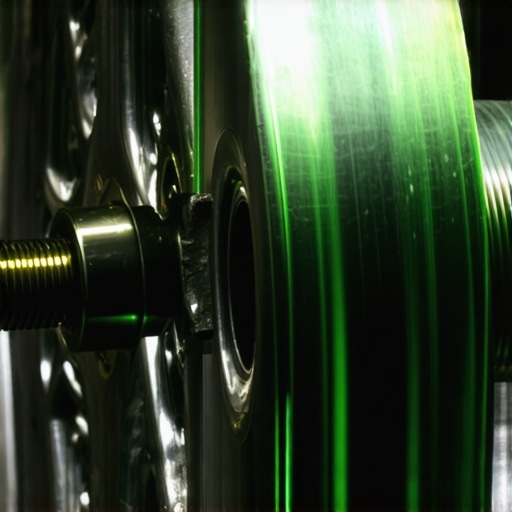 Failing to perform this rigorous check after a violent extraction can lead to a catastrophic “wheel-off” incident, even if the replacement nut feels perfectly secure under a torque wrench.
The Critical Role of Ultrasonic Testing in Hub Preservation
In elite shops, the diagnostic toolkit extends even further to ultrasonic thickness and flaw detectors. These specialized devices send high-frequency sound waves through the wheel hub to detect internal voids, inclusions, or fractures that the naked eye—and even dye penetrants—simply cannot reach. While the average car service might overlook these minute details, the physics of metal fatigue dictates that every significant over-torque event consumes a measurable portion of the component’s finite fatigue life. Just as a modern transmission requires precise fluid dynamics and electronic timing to function, the hub assembly relies on the perfectly elastic behavior of its high-carbon steel. If the ultrasonic signature shows a deviation in the material’s density or sound velocity, it indicates that the molecular lattice has begun to shift, signaling an imminent failure regardless of how “clean” the external part looks.
Why Does Thread Pitch Change the Way We Approach a Seizure?
Technicians often encounter a wide variety of fine and coarse thread pitches depending on the vehicle’s country of origin and intended load capacity. Fine-thread studs (such as M12x1.25) provide a higher clamping force for a given torque but are notoriously sensitive to the galvanic bonding and surface oxidation discussed in previous segments. The tighter tolerances between the male and female threads leave significantly less room for the capillary action of penetrants to work effectively. In contrast, coarse threads are more resilient to road debris but are much easier to strip if the nut is cross-threaded during a hurried car service. Recognizing the specific metallurgy and thread geometry allows a master technician to select the exact viscosity of the chemical penetrant required to reach the seat of the seizure without further compromising the structural integrity of the threads.
Ditch the Breaker Bar for Precision Clamping Metrics
The reliance on massive breaker bars is often a symptom of a lack of technical finesse in the modern shop environment. When a fastener refuses to move, simply increasing the length of the lever only increases the lateral load, which is the primary cause of snapped studs and warped hubs. Technical data from ARP (Automotive Racing Products) emphasizes that the “preload” or “stretch” of a fastener is the only true measure of its clamping integrity. If a stud has been stretched beyond its elastic limit—even by a fraction of a millimeter—it loses its ability to maintain tension, effectively becoming a ticking time bomb. This is why a sophisticated vehicle diagnostics protocol includes measuring the free-standing length of the stud against factory specifications after any high-torque extraction event. If the stud is “longer” than its spec, its metallurgy has failed, and it must be discarded.
Integrating these advanced forensic methodologies into your routine maintenance ensures that your vehicle remains as reliable and safe as the day it left the assembly line. Whether you are dealing with a complex transmission recalibration, an elusive electrical ghost, or a stubborn wheel nut, the path to success is paved with empirical data and technical precision, not just brute effort. Are you ready to elevate your maintenance standards and ensure your vehicle’s structural longevity? Connect with our specialist team today to explore how our precision auto repair and diagnostic services can safeguard your automotive investments and provide the peace of mind that only expert-level care can deliver.
In the precision-driven world of modern auto repair, a single stripped lug nut can derail an entire afternoon of scheduled car service. While many novice mechanics immediately reach for the oxy-acetylene torch, the thermodynamic consequences of applying extreme heat to high-carbon steel studs often introduce micro-fractures that compromise structural integrity. Professional vehicle diagnostics frequently reveal that these failures stem from more than just brute force; they are the result of galvanic corrosion—a chemical bonding process where the steel stud and aluminum wheel alloy effectively fuse over time. Understanding the mechanical interface between these metals is essential for any technician aiming for a clean extraction without damaging the expensive wheel hub or adjacent braking components.
The Physics Behind Galvanic Bonding in Wheel Assemblies
When moisture and road salts infiltrate the threads of a wheel stud, they act as an electrolyte, facilitating a process known as galvanic corrosion. This is particularly prevalent in regions with harsh winters, where the interaction between different metals leads to a seized fastener that defies standard impact wrenches. In the realm of advanced auto repair, we recognize that the ‘stripping’ of a nut usually occurs during the initial breakaway torque when the socket loses surface contact. If you have found yourself in this predicament, mastering these top auto repair techniques is what separates a shop-floor hero from a weekend warrior. This isn’t just about unscrewing a part; it’s about managing the friction coefficients that have been fundamentally altered by environmental exposure.
Kinetic Energy and the Physics of the Extraction Socket
The most effective non-thermal solution involves specialized extraction sockets designed with a reverse-spiral flute. Unlike standard sockets that rely on flat-surface contact, these tools use kinetic energy to ‘bite’ into the remaining metal of the nut. As you apply counter-clockwise pressure, the flutes dig deeper, creating a mechanical lock that often overcomes the seizure. Similar to the protocols used for extracting a broken bolt without panic, the key is the steady application of torque rather than sudden, violent bursts. According to research published by SAE International, the integrity of the wheel stud is paramount, and mechanical extraction preserves the metallurgy far better than heat-based methods which can soften the steel.
Can You Salvage a Stud After an Oversized Socket Extraction?
One of the most frequent inquiries in professional forums is whether a stud remains viable after a forced extraction. From an expert perspective, the answer depends entirely on the thread condition and the degree of lateral force applied. If the extraction required ‘pounding’ a smaller socket onto the nut, the radial stress might have introduced stress risers at the base of the stud. A professional car service always includes a visual inspection of the threads and a quick check with a thread chaser. If there is any doubt, replacement is the only safe path, as a compromised stud can fail under the cyclic loading experienced during high-speed travel.
Integrating Proper Torque Into Your Regular Car Service
Preventing this nightmare scenario is a hallmark of high-quality maintenance. Every time a vehicle undergoes a transmission check or a brake inspection, the wheels must be re-torqued using a calibrated torque wrench rather than an unmitigated impact gun. Over-torquing is the leading cause of lug nut deformation and subsequent stripping. This proactive approach is much like the maintenance move that doubles the life of your rotors. If you’re dealing with more complex drivetrain issues, our deep dive into vehicle diagnostics offers the technical clarity you need to keep your car on the road safely and efficiently.
While high-viscosity lubricants provide a temporary reprieve, the true challenge lies in breaking the surface tension of the oxidization layer. Advanced vehicle diagnostics often point toward environmental factors, but the chemical reality is that most off-the-shelf penetrants lack the solvent power to dissolve aluminum oxide. Technical data from Henkel Adhesives highlights how friction coefficients change drastically when lubricants are introduced, often leading to unintended over-tensioning during reassembly. This is where the 15-dollar fix for a rattling heat shield and a seized lug nut share a commonality: success is found in the chemistry of the bond, not just the length of the breaker bar.
Chemical Interventions Beyond Generic Penetrants
When dealing with extreme galvanic bonding, professional auto repair requires a mixture of acetone and vegetable oil or specialized freeze-sprays that utilize thermal shock to create micro-fissures in the rust. These fissures allow the lubricant to travel via capillary action into the deepest threads of the stud. Unlike the marketing surrounding lifetime transmission fluid, which often obscures the need for maintenance, the physics of thread penetration is transparent and measurable. If the chemical approach fails, the next logical step isn’t more force, but a change in the frequency of the energy applied to the fastener.
Leverage Vibration Instead of Raw Torque
An often-overlooked tool in the technician’s arsenal is the pneumatic air hammer fitted with a blunt-force bit. By applying rapid, low-amplitude vibrations to the face of the lug nut, you can often break the molecular bond of the corrosion without shearing the stud. This method is far safer than using a six-foot cheater pipe, which creates massive lateral loads that can lead to catastrophic failure. Using a 20-dollar scan tool might find electronic ghosts, but only mechanical intuition and steady vibration will solve a seized fastener. The goal is to ‘shock’ the threads into submission, allowing the extraction socket to do its job with minimal resistance.
Will High-Intensity Impacts Fracture Your Hub Assembly?
Many mechanics worry that the repeated hammering of an impact wrench or air hammer will damage the delicate internals of the wheel hub. This concern is valid; excessive axial force can pit the bearing races, leading to premature wear. Just as you would identify a failing wheel bearing by its rhythmic growl, you can hear when a hub is being stressed beyond its limits during extraction. The key is to apply pressure in short bursts, allowing the metal to dissipate the kinetic energy before it transfers into the bearing assembly. High-quality car service is as much about protecting the surrounding components as it is about removing the faulty one.
The Anti-Seize Debate and Torque Inaccuracy
Once the stripped nut is finally removed, the temptation to coat the new stud in heavy anti-seize is strong. However, most manufacturers specify ‘dry’ torque ratings. Applying lubricant to the threads reduces friction so significantly that following the factory torque spec can actually stretch the stud beyond its elastic limit. This leads to the very deformation that causes nuts to strip in the future. In the context of transmission work or wheel mounting, precision is your best friend. If you have a stubborn bolt story or a secret extraction technique that has saved your knuckles, share your experience in the comments; we are always looking to expand our collective shop knowledge.
Induction Heat Beats the Open Flame Every Time
When standard mechanical leverage reaches its physical limit, the professional technician shifts from brute force to controlled thermodynamics. The traditional oxy-acetylene torch is a blunt instrument that often radiates excessive heat into the wheel bearings and hub seals, leading to premature failure of the entire assembly. In contrast, modern auto repair utilizes high-frequency induction heaters. These tools generate a focused electromagnetic field that excites the molecules specifically within the ferrous lug nut, causing it to expand rapidly while the stud remains relatively cool. This thermal differential breaks the molecular bond of the corrosion in seconds. This localized expansion is the ultimate solution for dealing with anaerobic thread-locking compounds that have polymerized over years of heat cycles. If your shop has already integrated these high-tech solutions into your routine car service, you have likely noticed a significant decrease in broken studs and a massive improvement in workflow efficiency.
Can Latent Thermal Stress Lead to Sudden Hub Failure?
One of the most nuanced concerns in advanced vehicle diagnostics is the long-term effect of thermal cycling on the hub’s structural integrity. When a nut is heated to a cherry-red state, the heat soak eventually migrates into the hub flange. If cooled too rapidly—such as by spraying it with water or a cold solvent—the metal can undergo a phase transformation that creates micro-cracks. These are often invisible to the naked eye but can act as fatigue points under the heavy lateral loads of cornering. A truly professional approach involves allowing the metal to air-cool naturally, ensuring the metallurgical grain structure returns to its stable state without becoming brittle. This level of care is what differentiates a standard fix from a high-performance restoration of the wheel’s mounting surface.
Protecting the Temper of High-Tensile Wheel Studs
Every wheel stud is engineered with a specific tensile strength and elasticity, typically categorized by its property class. According to technical documentation from ASM International, overheating high-strength fasteners can lead to a drastic reduction in their yield strength. Once the ‘temper’ of the steel is lost, the stud can no longer maintain its clamping force, even if the nut is torqued correctly. This is a critical safety issue that often goes unnoticed during a standard transmission or brake check. We recommend replacing any stud that has been subjected to temperatures exceeding 700°F (371°C) to avoid the risk of fatigue-induced shearing. In the high-stakes world of automotive safety, guessing is never an option; if the metal has changed color significantly, the component is likely compromised and should be retired from service immediately.
Precision Clamping and the 60-Degree Conical Seat
The mechanical interaction between the lug nut and the wheel is dictated by the geometry of the seat. Most modern vehicles utilize a 60-degree conical seat, which is designed to center the wheel on the hub while providing a massive surface area for friction-based locking. However, when a nut becomes seized or the seat is deformed by a previous over-torquing event, this geometry is ruined. Even a brand-new nut cannot compensate for a wallowed-out wheel seat. This is why vehicle diagnostics should include a physical measurement of the seat’s diameter. If you find yourself constantly retightening a wheel, the problem may not be the stud, but the lateral deformation of the aluminum alloy within the wheel itself. This specific type of wear often occurs when technicians use impact guns without torque-limiting extensions, a practice that we combat through rigorous education and the use of precision-calibrated equipment.
Beyond the immediate physical extraction, the forensic phase of vehicle diagnostics must address the sub-surface damage that occurs when metal is pushed to its yield point. For high-performance vehicles or heavy-duty trucks, a simple visual inspection is often insufficient to guarantee safety. This is where advanced auto repair transitions into the realm of non-destructive testing (NDT). We frequently utilize Dye Penetrant Inspection (DPI) to identify “stress risers”—microscopic cracks that originate at the root of the thread or the radius where the stud meets the hub. By applying a high-contrast liquid dye to the cleaned stud and hub, any surface-breaking defect becomes brilliantly visible as the dye “bleeds out” into a developer coating. Failing to perform this rigorous check after a violent extraction can lead to a catastrophic “wheel-off” incident, even if the replacement nut feels perfectly secure under a torque wrench.
The Critical Role of Ultrasonic Testing in Hub Preservation
In elite shops, the diagnostic toolkit extends even further to ultrasonic thickness and flaw detectors. These specialized devices send high-frequency sound waves through the wheel hub to detect internal voids, inclusions, or fractures that the naked eye—and even dye penetrants—simply cannot reach. While the average car service might overlook these minute details, the physics of metal fatigue dictates that every significant over-torque event consumes a measurable portion of the component’s finite fatigue life. Just as a modern transmission requires precise fluid dynamics and electronic timing to function, the hub assembly relies on the perfectly elastic behavior of its high-carbon steel. If the ultrasonic signature shows a deviation in the material’s density or sound velocity, it indicates that the molecular lattice has begun to shift, signaling an imminent failure regardless of how “clean” the external part looks.
Why Does Thread Pitch Change the Way We Approach a Seizure?
Technicians often encounter a wide variety of fine and coarse thread pitches depending on the vehicle’s country of origin and intended load capacity. Fine-thread studs (such as M12x1.25) provide a higher clamping force for a given torque but are notoriously sensitive to the galvanic bonding and surface oxidation discussed in previous segments. The tighter tolerances between the male and female threads leave significantly less room for the capillary action of penetrants to work effectively. In contrast, coarse threads are more resilient to road debris but are much easier to strip if the nut is cross-threaded during a hurried car service. Recognizing the specific metallurgy and thread geometry allows a master technician to select the exact viscosity of the chemical penetrant required to reach the seat of the seizure without further compromising the structural integrity of the threads.
Ditch the Breaker Bar for Precision Clamping Metrics
The reliance on massive breaker bars is often a symptom of a lack of technical finesse in the modern shop environment. When a fastener refuses to move, simply increasing the length of the lever only increases the lateral load, which is the primary cause of snapped studs and warped hubs. Technical data from ARP (Automotive Racing Products) emphasizes that the “preload” or “stretch” of a fastener is the only true measure of its clamping integrity. If a stud has been stretched beyond its elastic limit—even by a fraction of a millimeter—it loses its ability to maintain tension, effectively becoming a ticking time bomb. This is why a sophisticated vehicle diagnostics protocol includes measuring the free-standing length of the stud against factory specifications after any high-torque extraction event. If the stud is “longer” than its spec, its metallurgy has failed, and it must be discarded.
Expert Insights & Advanced Considerations
Stop Trusting Your Instincts Over a Calibrated Wrench
Expert-level auto repair requires moving beyond “feel.” Tensile stress is invisible, and by the time you feel a bolt yield, you have already compromised its structure. Calibrated tools ensure the assembly performs as the manufacturer intended.
Why Anti-Seize Ruins Factory Tension Specs
Lubricants change the friction coefficient. Applying them to dry-spec studs often leads to over-stretching and thread deformation. In high-precision car service, knowing when to keep threads clean and dry is as important as knowing when to lubricate.
Identify Micro-Cracks Most Mechanics Overlook
Using dye penetrants after a hard extraction isn’t overkill; it’s professional diligence. Advanced vehicle diagnostics must account for the sub-surface trauma inflicted on the hub during high-torque removal processes.
Curated Expert Resources
SAE International: The industry benchmark for automotive engineering standards and fastener testing protocols. ASM International: The primary authority on metallurgy and failure analysis, essential for understanding how heat cycles affect structural steel. ARP Technical: Provides industry-leading data on fastener preload and the precise physics of maintaining clamp load under extreme automotive conditions.
Final Expert Perspective
Navigating the complexities of seized fasteners requires more than just a longer lever; it demands a deep integration of chemical, thermal, and mechanical knowledge. Whether you are dealing with a standard wheel swap or a complex transmission rebuild, prioritizing precision over power ensures safety and longevity. For those seeking the highest standard of care, choosing a car service for seamless vehicle maintenance is the first step toward preventing these failures. If you’ve encountered a seizure that defied standard logic, we invite you to share your findings and join the professional conversation on advanced auto repair methods. For more on mechanical health, explore our guide to transmission failures decoded for further technical insights.