The modern Tire Pressure Monitoring System (TPMS) represents a critical intersection of safety engineering and digital sensor logic. When that amber horseshoe-shaped icon illuminates, it signifies more than just a deviation in atmospheric pressure; it represents a disruption in the vehicle’s real-time telemetry. In the world of professional vehicle diagnostics, a light that refuses to extinguish after inflation is rarely a simple case of ‘not enough air.’ Instead, it points to a conflict between physical reality and the electronic interpretation stored within the vehicle’s Control Area Network (CAN bus). This isn’t just an inconvenience; it’s a diagnostic signal that requires a nuanced approach to restore the digital handshake between your tires and your dashboard.
The Digital Logic Behind Your Stubborn Tire Pressure Warning
In many contemporary vehicles, the ECU (Engine Control Unit) doesn’t just read a number; it looks for a ‘stable state’ before it authorizes the clearing of a fault code. This often involves a logic gate that requires the vehicle to reach a specific speed for a sustained period—a process known as a drive cycle. If you have inflated your tires to the placard pressure but have not driven above 20 mph for at least ten to fifteen minutes, the system remains in a ‘pending’ state. This is a common hurdle in advanced auto repair where the computer requires motion-based validation to ensure the pressure reading isn’t a momentary fluke caused by a compressor pump.
When Ambient Temperature Shifts Outpace Sensor Calibration
Physics dictates that pressure is directly proportional to temperature. According to data provided by the National Highway Traffic Safety Administration (NHTSA), tire pressure typically fluctuates by 1 PSI for every 10-degree change in ambient temperature. If you inflated your tires in a heated garage and immediately drove out into a freezing morning, the air volume inside the tire contracted almost instantly. This thermal lag can keep the sensor below its trigger threshold even though you technically added the ‘correct’ amount of air. To combat this, experts suggest inflating tires to 1-2 PSI above the door-jamb recommendation during extreme cold snaps to account for this physical contraction.
Does Your Vehicle Require a Manual Digital Handshake to Reset?
One of the most frequent points of confusion for car owners is the distinction between ‘Direct’ and ‘Indirect’ TPMS systems. Direct systems use battery-powered sensors inside each wheel, which usually reset themselves after a short drive. However, Indirect systems—common in many European brands—rely on the ABS wheel speed sensors to detect a tire’s diameter change. If you have an indirect system, the car has no physical way of knowing you added air; it only knows the wheel was spinning at an ‘incorrect’ rate previously. In these cases, you MUST navigate through the dashboard menu to manually trigger a reset, effectively telling the car, ‘This is the new normal.’
Identifying the Difference Between Pressure Loss and Sensor Fatigue
It is vital to distinguish between a solid warning light and a flashing one. A solid light typically indicates a pressure deviation, but a light that flashes for 60 to 90 seconds upon startup before staying solid almost always signals a hardware failure. The internal lithium-ion batteries in TPMS sensors generally have a lifespan of 5 to 10 years. Once these batteries reach their end-of-life, the sensor can no longer broadcast its signal. This is a scenario where standard maintenance isn’t enough, and a high-quality car service is required to replace the sensor and perform a digital ‘relearn’ procedure. Interestingly, sometimes the issue isn’t even the tires; the one sensor that ruins your gas mileage without triggering a warning light can sometimes reside on the same electrical circuit, leading to confusing intermittent signals. If your light remains on despite perfect pressures, it is time to contribute your vehicle’s data to a professional scan tool for a deeper look.
The persistent glow of a TPMS indicator after you have already topped off the air is often caused by a ‘phantom’ reading from a source many drivers overlook: the spare tire. While compact ‘donuts’ rarely feature sensors, full-size spares found in many SUVs and trucks frequently do. If your spare is tucked under the chassis or hidden in a trunk compartment and its pressure has dropped over several years of neglect, the vehicle’s receiver will continue to pick up that low-pressure signal. This creates a confusing scenario where the four tires on the pavement are perfectly balanced, yet the dashboard refuses to clear the fault. Before assuming your electronics are failing, pull out the spare and verify its pressure matches the recommended PSI on the door placard.
Could Aftermarket Electronics Be Jamming Your Wireless Signals?
TPMS sensors communicate with the vehicle’s central receiver via radio frequency, typically operating on the 315MHz or 433MHz bands. This wireless handshake is surprisingly delicate and can be disrupted by electromagnetic interference (EMI). We have seen cases where high-powered USB chargers, aftermarket dashcams, or even certain LED headlight conversions emit enough electronic noise to drown out the sensor’s broadcast. If your light flickers or stays on intermittently, try unplugging your cabin accessories to see if the signal restores itself. This type of interference is a cousin to the electrical gremlins that explain why your dashboard lights flicker when you hit a bump, highlighting the interconnected nature of modern vehicle wiring.
How Does Galvanic Corrosion Kill a Perfectly Good Sensor?
Beyond digital logic and signal interference, physical degradation at the valve stem remains a leading cause of TPMS failure. Many original equipment sensors utilize an aluminum stem which is highly susceptible to galvanic corrosion if a technician or owner uses a standard brass valve cap. The two dissimilar metals react chemically, effectively welding the cap to the stem or causing the internal valve core to seize. The Tire Industry Association (TIA) strictly recommends the use of plastic or nickel-plated caps and high-quality cores to prevent this structural breakdown. Once corrosion sets in, the sensor’s seal is often compromised, leading to a slow leak that no amount of air can permanently fix until the entire unit is replaced.
Stop Guessing and Use the Right Diagnostic Data
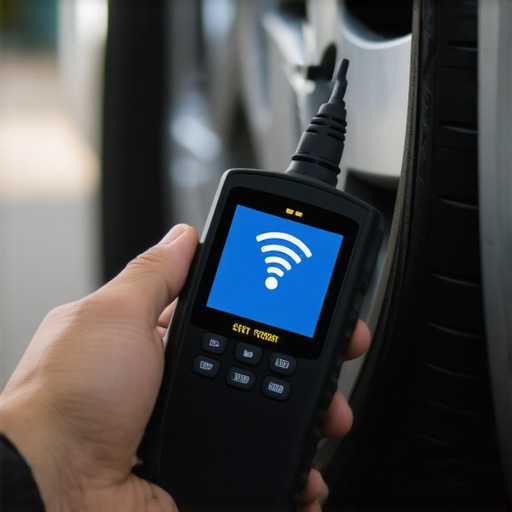
When the manual reset procedures fail, the only way forward is to look at the ‘live data’ stream from the vehicle’s body control module. A professional-grade device, similar to the $20 scan tool that actually finds hidden transmission codes, can isolate exactly which sensor is reporting a low battery or a missing signal. This prevents the costly mistake of replacing all four sensors when only one is faulty. If you have exhausted the DIY options and your light still won’t budge, it is time to leverage specialized hardware to read the hexadecimal IDs of each sensor. Have you ever been haunted by a TPMS light that just wouldn’t die? Tell us your most frustrating car electronic stories in the comments below, or check out our guide on how to find reliable car service near you in 2025 for a professional resolution.
When the Central Receiver Becomes the Weak Link
If you have replaced every sensor and your PSI is laser-accurate, the culprit likely isn’t in the wheels at all. In many modern chassis architectures, the TPMS signals are processed by the Remote Control Door Lock Receiver (RCDLR). This module is often tucked behind a C-pillar or nestled within the headliner. Because this single component handles both your key fob commands and your tire data, a failing receiver can manifest as intermittent ‘Key Not Detected’ errors alongside a stubborn tire pressure light. This is a classic diagnostic trap where a technician might chase a ‘dead sensor’ for hours, unaware that the central ‘ear’ of the vehicle has developed a hearing problem due to a localized wiring short or internal circuit degradation. This kind of communication breakdown is why professional tools are necessary to see if the RCDLR is even ‘listening’ to the 315MHz or 433MHz frequencies.
Why Does My TPMS Light Come On Only at Highway Speeds?
This is a frequent point of frustration that defies standard driveway checks. When a vehicle reaches higher velocities, the centrifugal forces acting on the sensor increase exponentially. If a sensor’s internal mounting bracket is loose or the battery is nearing its voltage floor, these forces can cause the internal components to shift or the battery to sag under the increased ‘wake-up’ frequency required at high speeds. Essentially, the sensor works fine when you’re idling at the gas station, but ‘blacks out’ once you hit 65 mph. This specific failure mode requires a dynamic diagnostic approach, often involving a technician using a handheld trigger tool while the car is on a lift or during a controlled road test to capture the dropout in real-time.
Why Winter Tires Often Break Your Dashboard Logic
Transitioning between seasonal sets is the most common time for digital handshakes to fail. Many owners opt for a second set of wheels for winter, but skipping the sensor installation—or choosing ‘cloned’ sensors—can lead to a persistent amber glow. Cloned sensors are programmed to mimic the ID of your summer set, theoretically tricking the car. However, if the cloning process isn’t exact, or if the car’s ECU expects a specific protocol update that the clone cannot provide, the system will eventually flag a malfunction. To ensure seamless operation, experts recommend utilizing sensors that meet the SAE J2657 standard, which defines the hardware and environmental requirements for tire pressure monitoring systems to ensure they can withstand the rigors of high-speed vibration and extreme thermal cycles (SAE International). Using substandard aftermarket parts often leads to a cycle of resets that never truly stick.
The Finicky Nature of Initiator Antennas
There is a dangerous misconception that every modern car is smart enough to find its own sensors automatically. While many luxury manufacturers have moved toward sophisticated ‘Auto-Learn’ systems that use signal strength to triangulate sensor positions, they often rely on ‘Initiators.’ These are low-frequency antennas located within each wheel well designed to force the sensor to transmit its ID immediately upon startup. If these antennas are caked in mud, road salt, or suffer from a cracked housing, the ‘Auto-Learn’ function fails instantly, leaving the ECU wondering where the tires went. If you are struggling with a recalcitrant system, understanding the nuance of advanced vehicle diagnostics is your best path forward. We are even seeing cases where slight variations in tire diameter between different brands can confuse an indirect system’s rotational logic, as the ABS module detects a mismatch in wheel speed that it interprets as a pressure loss…
Don’t Fall for the New Tire Trap on Indirect Systems
This rotational logic is particularly sensitive in vehicles utilizing indirect TPMS, where the computer monitors wheel speed rather than actual air pressure. If you replace only one tire on an axle due to a puncture, the difference in circumference between the new, deep tread and the worn counterpart on the opposite side is enough to create a persistent delta in rotational frequency. Even with identical PSI, the computer sees the older tire spinning faster than the new one, interpreting this mismatch as a pressure loss. This creates a frustrating diagnostic loop where no amount of air can resolve the light until the system is manually recalibrated to the new rotational baseline, a step often missed during a quick car service visit.
Your Dashcam Might Be Muffling Your Tires’ Digital Voice
The electronic ecosystem inside a modern cabin is more crowded than most drivers realize. Since TPMS sensors transmit on common radio frequencies, they are highly susceptible to electromagnetic interference from seemingly harmless accessories. We have documented cases where low-quality shielding in aftermarket dashcams or cheap USB cigarette lighter adapters creates enough ‘noise’ to drown out the 315MHz or 433MHz signals. When the vehicle’s receiver cannot hear the sensors clearly, it triggers a fault code not because the pressure is low, but because the sensor has ‘gone dark.’ If your light only activates when your electronics are plugged in, you are likely dealing with a signal collision that requires a professional approach to vehicle diagnostics to isolate the source of the interference.
Why Does the Computer Demand More Air Than the Door Placard Suggests?
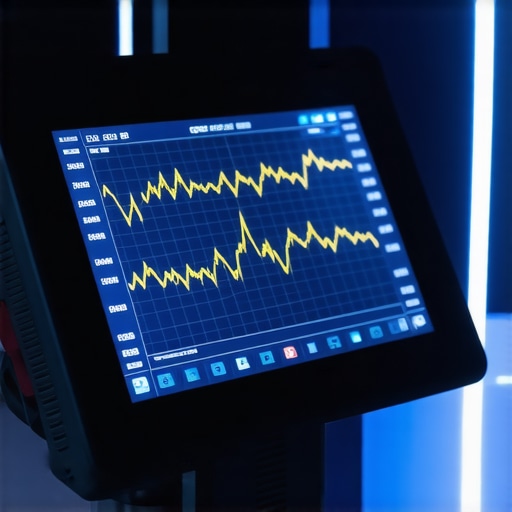
One of the most elusive concepts in sensor management is the ‘Hysteresis Effect.’ Engineers program a buffer into the ECU to prevent the warning light from flickering every time you hit a pothole or experience a minor temperature drop. Typically, a system that triggers at 28 PSI will not clear until it sees a much higher threshold—perhaps 34 or 35 PSI—to ensure the state is truly stable. If you only inflate back to the minimum threshold, the software logic remains in a ‘fault’ state. This is why technicians often ‘over-inflate’ the tires by a few pounds to force a reset before bleeding them back down to the manufacturer’s specification. This nuance is a hallmark of sophisticated auto repair strategies that prioritize digital logic over simple mechanical fixes.
Mastering the Hysteresis Loop to Finally Kill the Amber Light
Beyond software thresholds, the physical composition of the air you use can impact how these sensors behave over time. According to the U.S. Tire Manufacturers Association (USTMA), moisture levels in compressed air can lead to internal sensor corrosion and inconsistent pressure readings as the water vapor expands and contracts with heat. This is why professional shops often recommend nitrogen inflation for vehicles with sensitive TPMS setups; the lack of moisture and larger molecule size leads to a more stable digital signal. If you find yourself constantly battling a light that changes with the weather, it may be time to purge the atmospheric air and move to a more stable medium. Are you tired of that amber light haunting your commute? Share your most baffling sensor stories with us, or explore our guide on finding expert car service near you to get a definitive scan and finally enjoy a dark dashboard again.
Expert Insights & Advanced Considerations
The Hysteresis Trap: Why Your Car Demands Extra PSI
Engineers program a ‘hysteresis’ buffer into the Engine Control Unit to prevent the tire pressure light from flickering during minor temperature swings. If your system triggers at 28 PSI, it often won’t clear until the pressure reaches 34 or 35 PSI. Simply filling to the door placard minimum isn’t enough to satisfy the digital logic; you must overshoot the threshold to reset the fault state. This is a subtle but vital part of unlocking your car’s potential during routine maintenance.
Radio Silence: Your Dashcam Might Be Muffling Sensors
TPMS sensors transmit data on the 315MHz or 433MHz frequencies, which are surprisingly susceptible to electromagnetic interference. We have documented cases where aftermarket electronics—specifically cheap dashcams or USB chargers—emit enough RF noise to drown out the sensor’s signal. If your dashboard displays a sensor malfunction rather than just low pressure, why you should never ignore a flickering dashboard light becomes a question of signal integrity rather than just air volume.
Receiver Fatigue Beyond the Wheels
In many modern chassis, the TPMS signals are processed by the same module that handles your key fobs. If you experience intermittent tire warnings alongside a ‘Key Not Detected’ error, the fault likely lies in the central receiver rather than the individual wheel sensors. This cross-system communication is a core element of the hidden world of vehicle diagnostics, where one failing module can manifest as multiple unrelated symptoms.
Curated Expert Resources
NHTSA Tire Safety Portal
The definitive government resource for tire safety standards and recall information, providing essential data on sensor mandates and legal PSI requirements.
Tire Industry Association (TIA) Tech Bulletins
Professional-grade technical guides that cover the nuances of galvanic corrosion, valve stem maintenance, and sensor relearn procedures used by master technicians.
SAE International J2657 Standard
The global engineering standard defining the hardware requirements for tire pressure monitoring systems, ensuring sensors withstand high-speed vibration and thermal cycles.
Final Expert Perspective
Managing a stubborn tire pressure monitoring system requires moving beyond the pressure gauge and into the realm of digital telemetry. Whether you are battling a hysteresis loop that demands extra air, electronic interference from cabin gadgets, or the simple end-of-life battery failure of a five-year-old sensor, the solution always begins with accurate data. Utilizing a professional-grade scan tool that actually finds hidden codes can save hours of guesswork by pinpointing exactly which sensor has gone dark. We invite you to share your most frustrating electronic gremlin stories in the comments or reach out for a deeper look into your vehicle’s health.