Precision Diagnostics Over Component Replacement
In the world of professional auto repair, the most expensive mistake a technician can make is misdiagnosing a systemic failure as a hardware catastrophe. High-pressure oil systems, particularly those found in HEUI-equipped diesel engines and high-performance gasoline direct-injection blocks, are notoriously sensitive to minute pressure drops. While many shops might recommend a full high-pressure oil pump (HPOP) replacement—a repair costing thousands—expert vehicle diagnostics often reveal a humbler culprit: a $5 mounting gasket or a degraded O-ring. Understanding the fluid dynamics within these galleries is essential for any high-tier car service provider aiming for mechanical integrity and customer trust.
Why Does Your Engine Struggle to Fire Only When the Oil Is Hot?
One of the most perplexing symptoms for many vehicle owners is a “hot no-start” condition. When engine oil reaches operating temperature, its viscosity decreases, making it significantly easier for fluid to bypass compromised internal seals. If a specific $5 gasket or rail O-ring has hardened due to thermal cycling, it allows high-pressure oil to bleed back into the crankcase instead of reaching the fuel injectors. This is a prime example of the hidden world of vehicle diagnostics where sensor data must be interpreted through the lens of mechanical physics. According to technical documentation from SAE International, maintaining hydraulic integrity within these circuits is paramount for precise injection timing and overall combustion efficiency.
The Critical Role of Sealing Integrity in High-Pressure Circuits
Modern engine architectures rely on high-pressure oil not just for lubrication, but as a vital hydraulic medium for variable valve timing and fuel delivery systems. When a leak occurs internally, it rarely leaves a puddle on the driveway, making it invisible to the untrained eye. Instead, it manifests as erratic idling, reduced fuel economy, or sudden power loss under load. Identifying these hidden reasons for engine oil consumption or pressure loss requires a specialized approach that goes beyond basic OBD-II scanning. Professional-grade auto repair involves monitoring PID data for ICP (Injection Control Pressure) to determine if the pump is actually meeting the target pressure or if the fluid is escaping through a failed seal.
Stop Throwing Parts at Your Pressure Problems
Before you commit to heavy mechanical work, it is vital to rule out the simple components that interface between high-pressure lines and the cylinder head. Much like how you might fix a leaky valve cover gasket to prevent external messes, replacing an internal high-pressure gasket restores the hydraulic seal necessary for peak performance. This methodology applies to other complex systems as well; for instance, many transmission failures decoded by specialists often point back to simple solenoid seals rather than complete planetary gear failure. If you are experiencing inconsistent engine performance or suspect a hydraulic leak, we invite you to consult with our specialists to ensure your diagnostics are as precise as the machinery they analyze.
Expert Insight: Always perform a high-pressure air test on the oil rail before condemning expensive pumps; it is the only definitive way to hear the “hiss” of a failing $5 seal hidden deep within the engine valley, saving you thousands in unnecessary hardware swaps.
Ditch the Parts Cannon and Use Air Instead
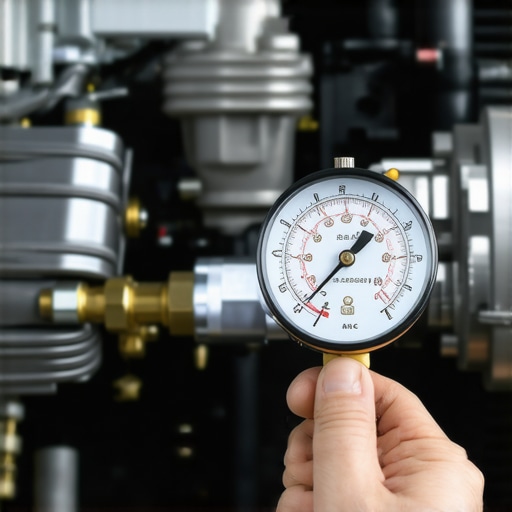
While high-tech scanners provide a wealth of data, they often fail to pinpoint the exact ‘why’ behind a system failure. A veteran technician knows that shop air is the ultimate truth-teller in high-pressure oil systems. By introducing regulated compressed air into the oil rail while the engine is static, you can literally hear where the pressure is escaping. This is one of the top auto repair techniques every car owner should know, even if you are not performing the work yourself. Hearing a faint hiss from under a valve cover immediately points to a failed internal gasket or O-ring, potentially sparing you from purchasing a costly high-pressure pump that is actually functioning perfectly.
Is Your Cold Start Problem Hiding a Hot Oil Leak?
It seems entirely counterintuitive: the vehicle fires up perfectly when frozen but refuses to budge after a quick trip to the grocery store. This ‘hot no-start’ phenomenon is the classic calling card of an internal hydraulic leak. As engine oil reaches operating temperatures of 200 degrees or more, its viscosity drops significantly. In this thinned state, it easily finds the path of least resistance through microscopic cracks or hardened seals in your high-pressure galleries. The National Institute for Automotive Service Excellence (ASE) emphasizes that technician proficiency in symptom-based diagnostics is critical here, as simple sensor replacement rarely addresses the underlying fluid physics. If you have been chasing intermittent starting ghosts, it is worth looking at the hidden ground wire that causes intermittent starting issues as well; low voltage can further degrade the performance of high-pressure solenoids already struggling with thin oil and pressure drops.
Why Micro-Leaks Disrupt Your Fuel Injection Timing
In advanced HEUI or GDI systems, the oil pressure is not merely a number on a diagnostic screen; it is the physical force required to actuate fuel delivery. If a $5 gasket is bleeding off even a fraction of that pressure, your injection timing shifts, leading to the dreaded ‘bogging’ sensation under load. This is often why your car loses power uphill but runs fine on flat roads, where the demand for hydraulic force is lower. The precision required is staggering. A single nick on an O-ring can drop rail pressure by 500 PSI, the literal difference between a smooth idle and a total stall. Utilizing the $30 tool that lets you see inside your engine—an endoscope—can help you spot oil pooling around the base of an injector or standpipe without a full teardown. Have you ever encountered a repair that seemed like a major engine failure but turned out to be a simple seal? Share your story in the comments or read more about the hidden world of vehicle diagnostics to stay ahead of the curve.
Heat Is the Silent Killer of Internal Elastomers
The material science of your engine’s seals is the thin line between a reliable workhorse and a driveway ornament. High-pressure oil galleries often utilize Viton or similar high-grade elastomers designed to withstand significant thermal loads. However, every heat cycle—from a cold morning start to the blistering operating temperatures of a long-distance haul—gradually robs these seals of their “memory.” Once a $5 gasket loses its ability to spring back after compression, it creates a microscopic bypass. This isn’t just a theory; technical specifications from ASTM International regarding elastomer compression sets highlight how chemical exposure at high temperatures can accelerate the hardening of synthetic rubbers. When this happens, the seal no longer “hugs” the metal surfaces, allowing high-pressure fluid to escape during the very moments your injectors need it most. This degradation is often accelerated by micro-vibrations within the oil rail, which can saw through a brittle O-ring over thousands of miles.

How Cheap Oil Shreds Your High-Pressure Gaskets
It is a common misconception that all motor oils are created equal as long as the weight matches the cap. In reality, the additive packages in premium oils do more than just lubricate; they contain seal conditioners that prevent internal gaskets from becoming brittle. Inferior oils often lack the shear stability required for high-pressure hydraulic systems found in modern auto repair scenarios. As the oil molecules break down under the intense pressure of the HPOP, they can form acidic byproducts that actively attack the chemical bonds of your internal O-rings. If you have been following a “budget-friendly” maintenance schedule, you might inadvertently be shortening the lifespan of your high-pressure circuit. This is another reason why engine oil consumption or pressure loss is often a symptom of chemical degradation rather than just physical wear.
Can a Failing Oil Pressure Sensor Mimic a Blown Gasket?
This is one of the most frequent questions we encounter in the service bay during complex vehicle diagnostics. The short answer is yes, but the diagnostic path is entirely different. A failing ICP (Injection Control Pressure) sensor can send erratic data to the engine control module, causing the computer to compensate by overworking the pump or incorrectly timing the injectors. This creates a feedback loop that feels identical to a physical pressure leak. To differentiate the two, a technician must use a mechanical gauge to verify the actual rail pressure against what the sensor reports. If the mechanical gauge shows 3,000 PSI but the scanner shows 1,200 PSI, you have a sensor or wiring issue. If both show 1,200 PSI, that $5 gasket is likely the culprit. This level of precision vehicle diagnostics is what prevents you from spending $2,000 on a pump when you only needed a $150 sensor or a simple seal.
Catching Waveform Anomalies Before the Engine Stalls
For the truly advanced DIYer or the dedicated specialist, the ultimate tool isn’t a wrench or even a scanner—it’s a lab scope. By tapping into the signal wire of the pressure regulator, you can see the electrical “signature” of the hydraulic event. A physical leak in a high-pressure gasket often manifests as a “noisy” or inconsistent waveform as the pump struggles to maintain a steady state against the bypass. Specifically, monitoring the IPR (Injection Pressure Regulator) duty cycle provides a window into the soul of the high-pressure system. If the duty cycle is pegged at 85% just to maintain a base idle, the system is screaming that it has a massive internal leak, likely at a dummy plug or a standpipe seal. This proactive monitoring can catch a failing $5 gasket before it leaves you stranded. If you’ve noticed your engine taking a few extra seconds to “catch” during start-up, it’s time to stop guessing and start measuring. Analyzing these patterns is the definitive way to ensure your high-pressure system remains a closed, efficient loop, and we recommend checking your IPR percentages during your next car service to baseline your engine’s health.
Bubbles in the Blood: How Aeration Destroys Injection Logic
While we have discussed physical leaks and electrical signatures, the physical state of the hydraulic fluid itself is often the most overlooked variable in high-tier auto repair. Aeration—the introduction of microscopic air bubbles into the oil—is a silent performance killer. Because air is compressible and oil is not, any amount of foam within the high-pressure galleries acts as a mechanical sponge, absorbing the force that should be going directly to your injectors. This leads to a ‘spongy’ throttle response and erratic idle that even the most expensive new pump cannot fix. According to technical service bulletins from Bosch Mobility, even a 3% air-to-oil ratio can cause a 15% drop in effective hydraulic force, resulting in timing delays that the ECU struggles to calibrate. If your oil level is too high or your pickup tube has a microscopic crack, you are essentially trying to run a precision hydraulic system on carbonated soda.
Can Entrained Air Cause Your Pressure Sensor to Give False Readings?
Absolutely. When air passes through the high-pressure oil rail, it doesn’t just affect the injectors; it creates ‘signal noise’ at the ICP sensor. As these air pockets compress and expand rapidly, the sensor reports wild fluctuations that the computer interprets as a mechanical failure of the regulator. This is a classic trap in vehicle diagnostics where a technician might replace perfectly good sensors or gaskets when the real issue is a cavitation problem at the oil pump’s suction side. Identifying this requires a clear-hose test on the return line, a specialized car service technique that reveals if the oil is ‘milky’ or clear. 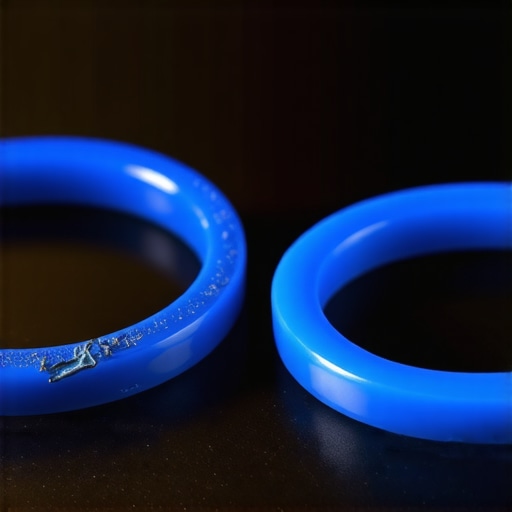
The Science of Durometer and Why Materials Matter
When searching for that $5 gasket, many owners fall into the trap of buying generic kits from unverified sources. However, the ‘durometer’—or hardness—of the elastomer is critical for high-pressure sealing. A seal that is too soft will extrude under the 3,000+ PSI found in HEUI systems, while one that is too hard will fail to seal against the micro-irregularities of the metal surfaces. Professional-grade auto repair demands the use of high-fluorine Viton or specialized Nitrile compounds that maintain their elasticity at 250 degrees Fahrenheit. If a gasket is marketed as ‘universal,’ it likely lacks the specific chemical resistance required to survive the aggressive detergent packages found in modern synthetic oils. Choosing the wrong material means you’ll be performing the exact same teardown six months from now when the seal ‘cooks’ and turns into brittle plastic.
Mechanical Resonance and the Destruction of Internal Seals
Every engine has a harmonic frequency, and the high-pressure oil rail is no exception. At specific RPM ranges, the rapid opening and closing of fuel injectors create hydraulic shockwaves—often called ‘water hammer’—that travel back through the oil. If the mounting hardware for your oil rail is even slightly loose, these vibrations can cause the rail to ‘walk’ microscopically. This movement turns your $5 gasket into a sandpaper-like surface, wearing down the mating face of the cylinder head. Specialized vehicle diagnostics involve checking for these witness marks during any teardown. If you find silver metallic flakes near a seal, it isn’t just a leak; it’s a mechanical clearance issue. Ensuring every bolt is torqued to the exact inch-pound specification is what separates a backyard fix from a professional car service that lasts for another 200,000 miles. If you’ve already checked your seals and still face inconsistent power, it’s time to scrutinize your suction-side intake; a tiny crack in the pickup tube can mimic a catastrophic pump failure. Have you checked your IPR duty cycle during a hot idle lately? Understanding those numbers is the first step toward true mechanical mastery.
Expert Insights for High-Pressure Systems
Heat Soak Often Masks Mechanical Failure
A common trap in vehicle diagnostics is assuming that because a sensor reports a fault only when hot, the sensor itself is failing. In reality, thermal expansion in high-pressure oil rails acts like a magnifying glass for tiny leaks. If you find the simple reason your car wont start only when the engine is hot, it is usually because the viscosity drop allows fluid to bypass a seal that was sufficient when cold but fails under operating stress.
Let Compressed Air Tell the Truth
While electronic scanners measure the result of a leak, regulated compressed air identifies the physical source. By pressurizing the system while the engine is static, you eliminate the mechanical noise that masks smaller failures. This is one of those top auto repair techniques every car owner should know to avoid buying a three-thousand-dollar pump when you actually need a five-dollar gasket.
#IMAGE_PLACEHOLDER_E#
Quality Seals Outlast Generic Alternatives
Using the wrong O-ring material is a guaranteed recipe for a repeat teardown. High-pressure systems require specific durometer ratings to resist extrusion under load. If your engine is consuming oil without a leak or losing rail pressure, check if previous work utilized generic hardware that has since become brittle. This focus on component quality is vital when choosing the right car service for seamless vehicle maintenance.
Essential Resources for Master Technicians
- SAE International Technical Papers: These documents provide the gold standard for understanding fluid dynamics and elastomer failure modes in high-pressure automotive circuits.
- ASE Advanced Engine Performance Manuals: These offer a deep dive into complex diagnostics that connects mechanical physics with electronic sensor data.
- Bosch Diesel Systems Service Bulletins: These are essential for anyone dealing with HEUI or GDI high-pressure systems to understand injection timing and hydraulic logic.
Closing the Loop on Hydraulic Integrity
Mastering the intricacies of high-pressure systems requires moving beyond the parts cannon mentality and focusing on precision. By understanding the role of simple components like gaskets and O-rings, you ensure a higher standard of auto repair that saves both time and resources. Whether you are dealing with transmission failures decoded through similar hydraulic principles or chasing an engine ghost, the solution is almost always found in fluid physics. We invite you to join the conversation below with your own diagnostic wins or contact us for specialized support on your next complex project.