When a vehicle sits overnight, particularly in coastal or high-humidity environments, a microscopic layer of flash oxidation forms on the cast-iron surface of the brake rotors. This chemical phenomenon, while often dismissed by casual drivers, is a critical data point for professionals in vehicle diagnostics. This transient rasping sound is the mechanical equivalent of a clearing of the throat, yet its persistence or intensity can reveal deep-seated issues within the braking system’s metallurgy or hydraulic balance. Understanding the distinction between atmospheric surface rust and mechanical component failure is essential for maintaining vehicle longevity and safety.
The Chemistry of Flash Oxidation on Modern Iron Rotors
Modern braking systems utilize high-carbon steel or cast-iron rotors that are inherently prone to atmospheric moisture. This isn’t a failure of auto repair standards but a natural property of the materials used to achieve high heat dissipation. When the pad sweeps across the rotor during that first morning stop, it is physically scraping away iron oxide. If the noise dissipates quickly, the system is likely healthy. However, if the grind is accompanied by a tactile vibration, you may be dealing with uneven pad deposits. To better understand the health of your system, you can learn how to check your own brake pads without taking the wheels off to ensure there is sufficient friction material remaining.
Why Does the Noise Disappear After Only a Few Blocks?
The transition from a grinding noise to silence is the result of kinetic friction converting into thermal energy. As the brake pads engage, they perform a mechanical ‘cleaning’ of the rotor face, while the generated heat evaporates any latent moisture trapped between the pad and the disc. According to technical insights from the Society of Automotive Engineers (SAE), the friction coefficient of braking materials fluctuates based on temperature and surface contaminants. If your car feels unusually heavy during these initial stops, it is wise to consider whether other systems are contributing to the drag, such as exploring transmission troubles and how to save time and money on drivetrain repairs.
Identify When the Morning Noise Signals Real Danger
While a light morning grind is often benign, certain acoustic signatures demand immediate car service. If the grinding is high-pitched and consistent, or if the vehicle pulls to one side during the first stop, you are likely looking at a seized caliper pin or a collapsed brake hose. This leads to uneven heat distribution and accelerated wear. Professional technicians often see cases where brake pads are wearing unevenly on one side due to these hydraulic imbalances. Ignoring these signals can lead to rotor warping and significantly higher repair costs down the road.
Is your vehicle making unsettling noises that don’t go away after the first mile? Don’t leave your safety to chance. Schedule a professional vehicle diagnostics appointment with our expert team today to ensure your braking system is operating at peak performance.
The physical mechanism of the brake caliper relies on floating pins that allow the assembly to center itself over the rotor face. When these pins lose their lubrication or the rubber boots perish, the caliper fails to retract fully after you release the pedal. This creates a parasitic drag that maintains constant contact between the pad and the rotor, making the morning flash rust sound persist much longer than it should. Professionals in auto repair often discover that fixing a spongy brake pedal when bleeding the lines failed frequently involves addressing these mechanical hang-ups rather than just the hydraulics. A stuck slider doesn’t just make noise; it generates localized heat that can crystallize the pad material, leading to a permanent loss of stopping power and potential rotor glazing.
Is Your Braking System Absorbing Moisture From the Inside Out?
While surface rust on the rotors is an external issue, a more insidious threat comes from the hygroscopic nature of glycol-based brake fluid. This fluid actively pulls moisture from the atmosphere through microscopic pores in the rubber hoses or through the reservoir cap. Once water content exceeds a certain threshold, it begins to corrode internal steel lines and piston bores. This internal oxidation can cause caliper pistons to stick or bind, which significantly exacerbates that morning grind by preventing the pads from backing off the rotor. For those looking to restore the original feel of their car, discovering the secret to getting a perfect brake pedal every time usually involves a full system flush to remove this contaminated fluid. According to technical data from the National Highway Traffic Safety Administration (NHTSA), maintaining the integrity of the hydraulic seal and fluid quality is paramount to preventing total system failure under heavy load or panic-stopping conditions.
Restore Stopping Power by Inspecting Pad Hardware and Shims
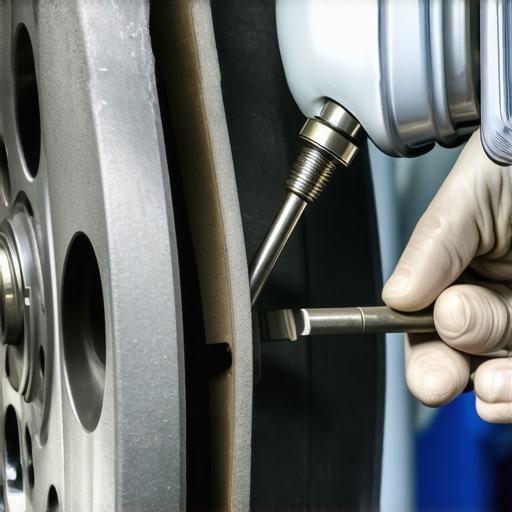
Beyond internal fluid health, the physical hardware surrounding the pads plays a massive role in noise suppression and component longevity. Anti-rattle clips and stainless steel shims are designed to isolate the pad from the caliper bracket, yet they are often the first victims of road salt and debris. If these clips are bent, corroded, or missing, the pad can chatter within the bracket, producing a sound nearly identical to a grinding rotor. When replacing components, it is vital to use high-temperature ceramic grease; using the wrong lubricant can cause the pads to stick and overheat. We have seen many instances why your brakes smoke after you’ve changed the pads because of improper lubrication or failing to clean the protective shipping oil off new rotors. For a long-term fix, you should consider the best way to remove rust from your brake rotors properly to ensure the new pads have a clean surface to bed into.
If you are looking for more ways to keep your vehicle in peak condition, you can unlock your car’s potential with expert auto repair tips for 2025 that cover everything from drivetrain health to advanced electrical diagnostics. Have you noticed a difference in your brake noise after a rainy night or a car wash? Share this article with a friend who is dealing with an annoying morning squeal and let us know your experience in the comments below.
Stop the Shake Before It Costs You a Set of Rotors
Lateral runout is the silent killer of braking performance, often masked by the temporary rasp of morning oxidation. When a rotor isn’t perfectly perpendicular to the hub, it wobbles as it rotates, striking the pads even when you aren’t braking. This creates ‘hot spots’ or cementite—an ultra-hard iron carbide that forms when cast iron is subjected to extreme localized heat. Professional vehicle diagnostics involves using a dial indicator to measure this runout down to the thousandth of an inch. If you ignore that initial morning vibration, you’re not just dealing with rust; you’re allowing the mechanical geometry of your car to degrade. According to the Motor Assurance Program (MAP) uniform inspection guidelines, any lateral runout exceeding 0.002 to 0.005 inches, depending on specific vehicle manufacturer tolerances, warrants immediate attention to prevent Disc Thickness Variation (DTV).
Does occasional morning grinding lead to warped rotors?
The short answer is no, but the context matters. Simple flash rust is a surface-level event that cleans off within seconds of driving. However, if the grinding persists because a caliper piston is sluggish, the resulting friction creates a thermal bottleneck. This heat causes the rotor to expand unevenly. Over time, the rotor doesn’t actually ‘warp’ in the way a vinyl record does; instead, it develops uneven thickness as the pads deposit uneven layers of friction material onto the hot spots. This is why a simple auto repair often involves more than just swapping pads—it requires surfacing the rotors or replacing them entirely to ensure a perfectly flat mating surface for the new friction material.
How Modern Electronic Parking Brakes Mimic Rust Noises
Modern vehicles equipped with Electronic Parking Brakes (EPB) introduce another layer of complexity to the ‘morning noise’ mystery. Unlike traditional cable-driven systems, an EPB uses a small electric motor to drive the caliper piston into the pad. If the software logic or the actuator itself begins to fail, the pads might not retract to their ‘zero’ position after the vehicle is started. This keeps the pads in light contact with the rotor, dragging through that morning flash rust for miles rather than meters. In the world of car service, we often see EPB units that have become contaminated with road salt or debris, leading to a mechanical bind that feels exactly like a rusty rotor but is actually a failing electronic component. 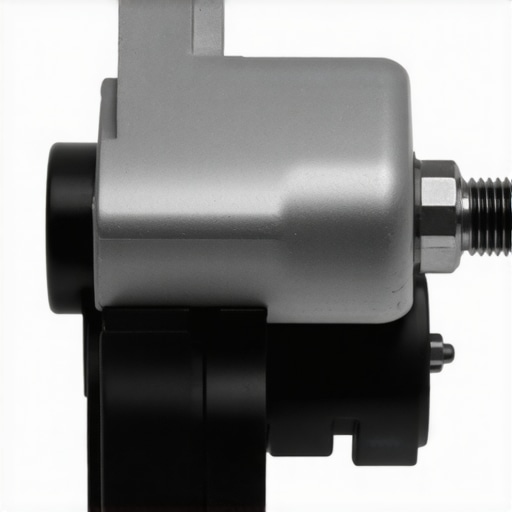
If you suspect your electronic brakes are dragging or if your dashboard is throwing a warning light along with the noise, don’t wait for a total mechanical failure. Reach out to our technicians who specialize in advanced electronic braking systems to recalibrate your EPB before it burns through your expensive friction material. Failure to use a proper diagnostic tool to retract these calipers during service can also lead to internal gear damage, turning a simple maintenance task into a costly replacement.
The Critical Role of Proper Pad Bedding-In Procedures
When new rotors and pads are installed, they are not yet optimized for stopping. The ‘grind’ people hear can sometimes be attributed to an incomplete bedding-in process. This process, also known as ‘burnishing,’ involves a series of controlled stops that transfer a thin, even layer of pad material onto the rotor surface. Technical bulletins from Akebono Brake Corporation emphasize that ceramic pads, in particular, rely on this transfer layer to operate quietly and effectively. If this layer is not established, the bare iron of the rotor remains exposed to the elements, making it far more susceptible to the heavy flash oxidation that causes loud morning noises. When the transfer layer is patchy or non-existent, the friction is inconsistent, leading to the tactile ‘chatter’ that many drivers mistake for mechanical failure. Understanding the chemistry of the transfer layer is the difference between a quiet, smooth stop and a recurring headache every time you pull out of your driveway.
Open-Spoke Wheels Invite Unwanted Oxidation
The modern aesthetic preference for large, open-spoke alloy wheels has an unintended functional consequence that directly impacts your braking system’s morning behavior. While these designs are engineered to optimize thermal management by maximizing airflow, they simultaneously leave the cast-iron rotors vulnerable to atmospheric moisture. Without the physical shielding provided by traditional steel wheels or more restrictive hubcap patterns, the rotor face is constantly exposed to humidity, road brine, and rain. This increased exposure significantly accelerates the rate of flash oxidation, often causing the ‘bite’ of the rust to penetrate slightly deeper than it would on a shielded vehicle. 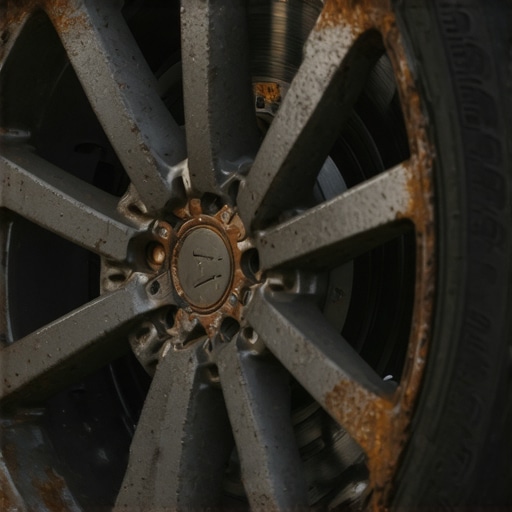
When this occurs, that initial morning stop doesn’t just clear a microscopic film; it involves the pads scraping away a more substantial layer of iron oxide, which can lead to increased abrasive wear over time. If you notice your morning grind is particularly aggressive after a night of high humidity, it is often a direct result of this environmental exposure facilitated by your wheel geometry. For those looking to mitigate these effects, investing in rotors with specialized protective treatments can make a substantial difference in both noise and longevity.
Why do some aftermarket rotors rust faster than others?
The discrepancy in oxidation rates between brands usually stems from the specific metallurgy of the casting and the presence (or absence) of anti-corrosion coatings. Budget-friendly rotors often bypass the complex cooling vane architectures and high-carbon additives found in premium components. High-carbon rotors are less prone to the structural vibrations that cause noise, but they still require surface protection. Technical data from the Brembo Engineering Department highlights that advanced UV-coated technology on the non-friction surfaces—such as the hub hat and outer edges—is critical for preventing ‘edge-to-surface’ rust migration. Without this coating, systemic corrosion can creep toward the braking track, causing the pads to sit unevenly and leading to the persistent morning vibration many drivers experience. Choosing the right components is a vital step in maintaining a silent, efficient system, much like how selecting high-performance brake pads for daily drivers requires balancing noise and stopping power.
Hub Corrosion Can Mimic a Warped Rotor
Often, the source of a persistent morning grind isn’t the friction surface at all, but rather the interface between the rotor and the wheel hub. A phenomenon known as ‘rust-jacking’ occurs when moisture penetrates the space where the rotor meets the hub. As oxidation builds up in this tight tolerance area, it exerts immense pressure, physically pushing the rotor out of its perfect alignment. This creates lateral runout that mimics the feel of a warped disc. Professionals in vehicle diagnostics must meticulously clean the hub face during every brake service to ensure a perfectly flat mounting surface. If this step is skipped during an auto repair, the new rotors will inevitably develop a wobble that no amount of pad bedding can fix. Ensuring your technician uses a wire brush and a light film of anti-seize lubricant can prevent this mechanical misalignment and keep your morning drives smooth and silent.
Is your car’s morning routine becoming a noisy ordeal that worries you every time you pull out of the driveway? Don’t settle for ‘normal’ noises when they could be a warning sign of deeper mechanical degradation. Request an expert brake evaluation from our certified team today to identify exactly what is causing your system to grind and restore the quiet, confident stopping power your vehicle deserves.
Expert Insights & Advanced Considerations
Copper Content Predicts System Failure Before Moisture Does
While many shops only check for moisture, true vehicle diagnostics professionals monitor copper parts-per-million within the fluid. High copper levels indicate that the internal protective coating of your brake lines has worn away, leaving the system vulnerable to electrochemical degradation long before a spongy pedal appears. For those aiming for longevity, this metric is far more telling than a simple visual inspection of the reservoir. Mastering these nuances is part of unlocking your car’s potential with expert auto repair tips for 2025.
High-Carbon Castings Silence the Morning Grind
Choosing high-carbon rotors isn’t just about racing performance; it’s about noise suppression for daily drivers. These rotors possess a superior damping capacity, meaning the vibrations caused by morning flash rust are absorbed by the metallurgy rather than amplified through the suspension. If you’ve been searching for a reliable car service near you in 2025, ensure they prioritize component quality over the cheapest available part to avoid recurring acoustic issues.
EVs and Hybrids Face a Unique Oxidation Crisis
In vehicles with heavy regenerative braking, the mechanical pads may not engage for days at a time. This allows oxidation to transition from a light film to a destructive scale that can pit the rotor surface permanently. It is a vital auto repair strategy to occasionally perform a firm mechanical stop in a safe area to physically clear the friction surfaces. This simple action prevents the buildup that leads to premature component failure. #IMAGE_PLACEHOLDER_E#
Curated Expert Resources
Friction Materials Standards Institute (FMSI): The definitive authority for cross-referencing pad shapes and ensuring proper hardware fitment across different global vehicle platforms.
Bendix Brake Training Center: Provides deep-dive technical modules on the chemistry of friction materials and the complex physics of heat dissipation in modern braking systems.
ASE Certification Guides (A5 Series): The industry gold standard for technicians looking to master hydraulic systems, electronic stability control, and mechanical brake service protocols.
Final Expert Perspective
The morning grind is more than an annoyance; it’s a physical report on the health of your vehicle diagnostics status. By understanding the interplay between atmospheric chemistry and mechanical wear, you can prevent minor surface rust from evolving into a total hydraulic failure. If your car isn’t responding as it should, you might need to look beyond the pads and consider whether transmission failures or drivetrain drag are contributing to the unusual sensation. What has been your experience with persistent brake noise after a damp night? Connect with our master technicians today to discuss your specific symptoms or share your findings with our professional community below.