Mechanical failure is rarely polite, and a dead starter motor in a remote location represents one of the most frustrating hurdles in automotive ownership. While modern car service schedules aim to prevent such ‘no-start’ conditions, the reality of thermal cycling and carbon brush degradation means that even a well-maintained vehicle can suffer a sudden electrical disconnect. When the ignition key is turned and produces only a hollow click—or worse, absolute silence—the operator must move beyond basic troubleshooting and into the realm of tactical mechanical intervention. In the field of high-current automotive electronics, the distinction between a ‘no-crank’ and a ‘no-start’ condition is the first step in successful vehicle diagnostics. A true ‘no-crank’ implies the starter is not rotating the crankshaft, which points directly to the battery, starter, or the ignition circuit.
The Mechanical Reality of Solenoid Engagement
The starter motor is essentially a high-torque DC motor designed to overcome the massive compression of an internal combustion engine. When the solenoid fails, the electrical bridge between the battery and the motor remains open. This solenoid serves two purposes: it acts as a high-current switch and physically pushes the starter drive gear into the flywheel teeth. Professionals often see cases where your battery dies every morning due to high-resistance connections or voltage drops rather than a mechanical failure within the starter itself. If the lights remain bright but the engine stays dead, the focus shifts to the starter internal contacts or the ‘S’ terminal signal.
Can You Safely Bypass a Modern Ignition System Without Frying the ECU?
The primary concern in any bypass attempt on a post-2010 vehicle is the sensitive electronic control unit (ECU). Bypassing the starter involves sending 12 volts directly to the trigger terminal. While this effectively removes the ignition switch and the neutral safety switch from the loop, it creates a potential for voltage spikes. Experts suggest ensuring the ignition is in the ‘ON’ position so the fuel pump primes and the injectors are ready to fire, or you will simply be cranking an engine that has no intention of starting. Using a dedicated remote starter switch is safer, but in a pinch, a heavy-gauge screwdriver can bridge the gap between the main positive post and the solenoid terminal. However, the proximity of fuel lines and sensitive sensors makes this a last-resort maneuver that requires extreme precision to avoid arcing.
Strategic Hammer Taps and Brush Reseating
One of the most effective, albeit primitive, methods involves the use of kinetic energy to reseat worn carbon brushes. A starter that has developed ‘dead spots’ can often be coaxed into one final cycle by a firm tap with a hammer or a heavy wrench while an assistant holds the key in the start position. This mechanical shock can vibrate the brushes back into contact with the commutator. However, this is a temporary fix. Continued reliance on this method will eventually result in total failure, necessitating a full auto repair intervention. If you find yourself frequently dealing with intermittent starting issues, performing advanced vehicle diagnostics can help isolate if the culprit is a relay, the ignition harness, or the internal windings of the starter assembly.
Safety Protocols for High-Current Procedures
Bypassing a starter is an inherently dangerous procedure that involves high current and moving parts. It is imperative that the vehicle is in Park (for automatics) or Neutral with the parking brake firmly engaged (for manuals). Failure to do so could result in the vehicle lunging forward the moment the motor engages. For those who prefer a more calculated approach to maintenance before disaster strikes, reviewing top auto repair techniques can provide the foundational knowledge needed to avoid being stranded. According to detailed mechanical studies in the Car and Driver technical archives, the starter can pull over 100 amps during peak load, meaning any tool used for a bypass will get hot instantly and must be handled with insulated gloves. If your vehicle starting issues are accompanied by a grinding noise or a refusal to shift once moving, check out our guide on transmission failures decoded to ensure your powertrain is operating at peak efficiency.
Voltage Drop Is the Silent Killer of Healthy Starters
A common pitfall in amateur diagnostics is relying solely on static voltage readings. A battery may display a healthy 12.6 volts at rest, yet fail instantly under the 150-ampere load required to rotate a high-compression engine. This discrepancy often stems from high resistance within the primary power cables. When a cable undergoes internal corrosion, its ability to carry current diminishes, even if the exterior insulation looks pristine. For those struggling with intermittent power loss, utilizing the 5-tool for finding electrical shorts in minutes can help identify if the circuit is bleeding energy before it even reaches the solenoid. High-resistance connections generate heat, and as the metal expands, the connection worsens, leading to the dreaded ‘heat soak’ phenomenon where a car starts fine while cold but refuses to turn over after a long drive.
Why Does Your Multi-Meter Give a False Sense of Security?
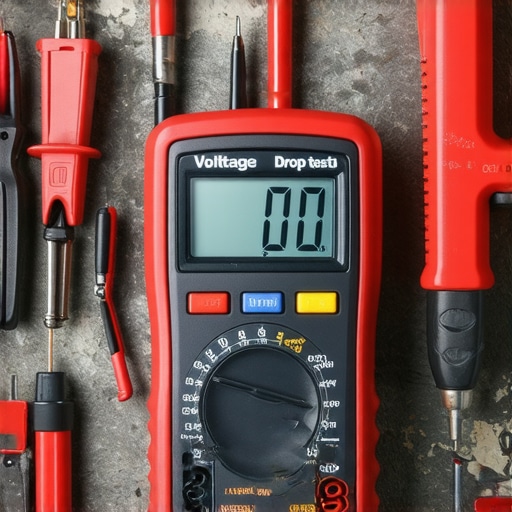
Measuring voltage at the battery terminals is only half the battle. To truly understand the starter’s health, an expert performs a dynamic voltage drop test while the engine is cranking. If the voltage at the starter terminal is significantly lower than the voltage at the battery post during a crank attempt, the cable or the terminal connection is the culprit. Professionals suggest performing a parasitic battery drain test if you find your battery lacks the amperage to engage the starter after sitting overnight. This nuanced approach prevents the expensive mistake of replacing a functional starter motor when the actual issue is a five-dollar ground strap that has succumbed to road salt and oxidation.
The Hidden Sabotage of Heat Soak and Failed Windings
Heat soak occurs when the starter motor absorbs ambient heat from the engine block and exhaust manifold, increasing the electrical resistance of the internal copper windings. In this state, the motor requires significantly more current to produce the same torque. This is often the simple reason your car won’t start only when the engine is hot. While heat shields can mitigate this, internal wear on the armature or a failing field coil will eventually make the motor’s operation inconsistent. Industry standards from the National Institute for Automotive Service Excellence (ASE) emphasize that testing the starter current draw is the only definitive way to confirm internal mechanical binding or shorted windings. A starter pulling 300 amps on a four-cylinder engine is a clear indicator of a mechanical drag or a short-to-ground within the motor housing itself.
Mastering the Ground Path Audit
The electrical circuit is a loop, and the ground path is just as critical as the positive feed. A corroded engine-to-chassis ground strap can mimic the symptoms of a dead battery or a failed solenoid perfectly. If you see your interior lights dim excessively or your dashboard gauges flicker wildly during a crank attempt, the ground path is likely compromised. It is also wise to identify a dying alternator during this process, as a weak charging system may never provide the battery with enough ‘surface charge’ to effectively kick the starter into gear. Before condemning the starter, take a jumper cable and connect the negative battery terminal directly to a solid metallic point on the engine block. If the car starts immediately, you have successfully diagnosed a bad ground. Have you ever encountered a ‘no-start’ that turned out to be a simple loose wire? Share your experience in the comments below or suggest which electrical component we should tear down next.
Don’t Ignore the Transmission’s Role in the Starting Loop
While we’ve audited the physical connections at the battery and starter, the diagnostic path often leads back to the cockpit. The neutral safety switch—or inhibitor switch—acts as a critical gatekeeper in the starting circuit. If the Transmission Control Module (TCM) cannot verify that the vehicle is in Neutral or Park, it will never complete the ground circuit for the starter relay. This is a common failure point in vehicles with high-mileage shift linkages where the physical alignment of the shifter no longer matches the sensor’s internal contact points. Simply cycling the shifter through the gears or applying firm pressure toward the ‘Park’ position while turning the key can often reveal a failing switch without cracking a single bolt. It is a nuanced mechanical interaction that amateur DIYers often overlook in favor of more expensive component replacements.
Can a Corrupted Immobilizer Signal Freeze Your Starter Motor?
Modern security protocols add a layer of complexity that purely mechanical diagnostics cannot solve. If your dashboard displays a padlocked car icon or a flashing ‘key’ symbol, the engine’s immobilizer system has likely failed its handshake protocol. In this scenario, the Body Control Module (BCM) receives the ‘Start’ request but refuses to pass the authorization to the Powertrain Control Module (PCM). This digital wall is often caused by a dying transponder battery or radio frequency interference from other devices on your keychain. Advanced technicians often look for ‘B’ or ‘U’ series Diagnostic Trouble Codes (DTCs) that indicate a communication failure within the security network, a step often missed when focus remains solely on the engine bay. If the security light persists, your starter is physically capable but electronically jailed.
Inspect the Ignition Relay for Carbon Tracking and High Resistance
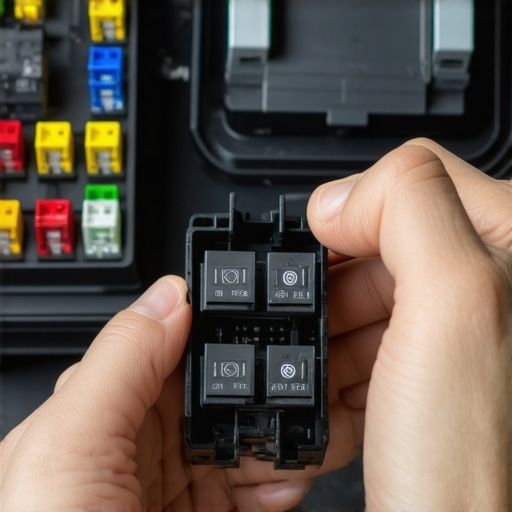
The relay box itself is a battleground of thermal stress and microscopic wear. A starter relay that clicks but doesn’t engage the solenoid might suffer from carbon tracking on its internal points. Over thousands of cycles, the high-current arc across the relay contacts creates a resistive layer of oxidation that inhibits current flow. According to research published by SAE International on automotive electrical reliability, even a minor increase in relay contact resistance can result in a significant voltage drop that prevents the solenoid from fully pulling in. Swapping the starter relay with a known good one from a non-essential circuit—like the horn or the A/C clutch—is a rapid field test that can save hours of teardown time. If you’ve ever wondered why your car starts fine in the morning but fails at the gas station, a heat-soaked relay is a prime suspect.
When the CAN-Bus Data Stream Collides with Your Ignition Command
In the most modern architectures, the ‘crank’ command is not a simple electrical signal but a data packet sent over a Controller Area Network (CAN-bus). If a high-priority sensor—such as a crankshaft position sensor or a transmission pressure switch—is sending ‘garbage’ data onto the network, the PCM may veto the starting sequence to protect the engine. This is where high-level vehicle diagnostics become indispensable. A noisy alternator or a partially shorted sensor can inject enough electrical interference into the data lines to scramble the ‘all-clear’ signal. This creates a ghost-in-the-machine scenario where every individual component tests perfectly on a bench, yet the vehicle refuses to crank when fully assembled. Have you ever faced a vehicle that only starts when a specific fuse is pulled and reseated? This often points toward a module that has hung in a logic loop, preventing the starter from receiving its digital marching orders. To dive deeper into the tools required for these digital gremlins, check out our breakdown of specialized scan tools. The journey from a simple electrical path to a networked command structure means the physical starter is now the final actor in a very long digital play.
While digital signals over the CAN-bus dictate the command, the physical execution of a start remains a brutal exercise in high-amperage transfer. Microscopic layers of lead sulfate and copper oxidation on battery terminals often create a ‘film’ resistance that a standard voltmeter cannot penetrate. This phenomenon, known as terminal creep, allows enough current for low-draw accessories like a radio or dome light but chokes the system the moment the starter demands a massive surge. Professionals look past the clean exterior of a terminal to find the grayish, non-conductive tint that signals a chemical barrier between the post and the clamp.
Current Ramping Reveals the Soul of the Motor
For the elite technician, a multi-meter is a blunt instrument compared to an oscilloscope paired with a high-current inductive amp clamp. By capturing a ‘current ramp’ of the starter during cranking, you can visually inspect the health of every individual commutator segment within the motor. A healthy starter produces a consistent, saw-tooth waveform. If the peaks are uneven or one ‘tooth’ is missing from the wave, you have identified a shorted or open winding on the armature. This level of vehicle diagnostics eliminates the guesswork, proving exactly why a motor might be struggling even when supplied with perfect voltage. According to research on rotational machinery failure from the American Society of Mechanical Engineers (ASME), thermal expansion in high-torque DC motors frequently leads to ‘dragging’ armatures where the internal rotor physically grazes the field magnets once operating temperatures are reached.

Does a High-Resistance Connection Create Enough Heat to Melt Internal Solder?
The short answer is yes. In extreme cases of a ‘labored crank,’ the resistance encountered by the current produces localized heat that can exceed several hundred degrees in seconds. This is frequently seen in the solenoid’s bridge plate. If the internal copper contacts are pitted from years of arcing, the surface area for current flow is reduced, turning the contact point into a heating element. This heat can eventually desolder the internal windings of the solenoid, leading to a permanent open circuit. If you smell burning electronics after a long, failed cranking attempt, the damage has likely moved from the battery cables into the internal architecture of the starter itself. This is why repeated ‘grinding’ of the starter is the quickest way to turn a minor electrical issue into a complete auto repair overhaul.
The Mechanical Treachery of the Overrunning Clutch
Not every no-start is electrical. When you hear the starter motor spinning at a high-pitched, frantic rate without the engine actually turning, the overrunning clutch—commonly called the Bendix drive—has failed. This component uses a series of spring-loaded rollers to lock onto the drive gear in one direction and freewheel in the other. When the internal grease hardens or the springs lose tension, the gear fails to lock, spinning uselessly against the flywheel. This is a purely mechanical failure that no amount of battery charging will fix. Precision car service requires checking for metal shavings inside the bellhousing, which might indicate that the ring gear teeth on the engine itself are worn down, preventing the starter from finding purchase. If you suspect your vehicle’s electrical architecture is failing at the data level or you have a bizarre ‘spinning’ starter symptom, drop a question below for a deep dive into advanced powertrain troubleshooting.
Expert Insights & Advanced Considerations
Why Battery Voltage Alone Is a Dangerous Metric
A battery displaying 12.6V at rest is merely a measurement of chemical potential, not its current delivery capacity. In professional vehicle diagnostics, static voltage is often a red herring. A high-resistance internal cell can mask a failing battery until the high-amperage demand of the starter collapses the circuit entirely. Experts always prioritize dynamic load testing to ensure the power source can maintain at least 9.6V while the starter is actively pulling current. If you suspect your power source is leaching energy, learning how to find a parasitic battery drain with a 15-multimeter can save hours of misdiagnosis.
Listen for the High-Pitched Whine of a Spinning Bendix
When the motor rotates rapidly but the engine fails to crank, the mechanical link has been severed. This usually indicates that the internal grease in the overrunning clutch has hardened or the return springs have lost tension. While many modern units are sealed, a seasoned tech knows that environmental factors can accelerate this mechanical treachery. If your car exhibits this symptom, it is a clear sign that basic top auto repair techniques like cleaning the solenoid plunger might not be enough, and a component replacement is likely imminent.
Thermal Cycling Often Masks Internal Winding Resistance
A vehicle that starts reliably in the morning but fails at the gas station is suffering from heat soak. As copper reaches higher temperatures, its electrical resistance naturally increases. This physical phenomenon highlights existing micro-fractures in the solenoid or motor windings that stay hidden during a standard cold car service inspection. In these cases, the starter isn’t truly ‘dead’; it is simply inefficient and requires more amperage than the system can provide in its heated state.
#IMAGE_PLACEHOLDER_E#
Curated Expert Resources
ASE Electrical Systems Study Guides
These modules provide the industry-standard framework for understanding automotive electricity and are essential for anyone transitioning from hobbyist to professional-level auto repair proficiency.
SAE International Technical Archives
For those who want to understand the metallurgy of contact points and the physics behind high-current arcing, the SAE archives offer peer-reviewed data that defines modern engineering standards.
iATN Professional Waveform Libraries
A deep-dive resource for technicians using oscilloscopes to capture current ramps and identify shorted windings before they lead to a total ‘no-start’ condition.
Final Expert Perspective
Diagnostic precision is the only reliable way to avoid the expensive and frustrating ‘parts-box’ approach to maintenance. Mastering vehicle diagnostics requires a disciplined blend of physical inspection and electrical theory to ensure every component in the loop is contributing to a successful crank. If you have been chasing an intermittent ghost in your ignition circuit or need professional guidance on complex electrical failures, we invite you to contact us or explore our archive of expert auto repair tips for 2025. We encourage you to share your most challenging electrical success stories in the technical community to help others sharpen their diagnostic edge.