Most drivers assume a puddle on the garage floor is the only definitive sign of oil loss, but the most insidious consumption happens internally where the driver never sees it. As a specialist in high-level car service and deep-tier vehicle diagnostics, I have seen countless late-model engines burn a quart of oil every 1,000 miles while showing zero external symptoms. This phenomenon is rarely a simple gasket failure; it is often a byproduct of modern engineering trade-offs between fuel efficiency and mechanical durability.
Why Your Engine Swallows Oil Without Leaving a Trace
In the past, oil consumption was almost always tied to visible blue smoke or a physical drip. Today, high-precision manufacturing and advanced catalytic converters effectively mask these symptoms by burning off particulates before they exit the tailpipe. The modern auto repair landscape is increasingly focused on this “invisible burn.” One primary driver is the industry-wide shift toward low-tension piston rings. These rings reduce friction to meet stringent fuel economy standards, but they are significantly more susceptible to carbon fouling. When carbon builds up in the ring grooves, the ring loses its ability to scrape oil back into the crankcase, allowing it to bypass into the combustion chamber.
The Positive Crankcase Ventilation System as a Hidden Leak Path
The PCV valve is a component often overlooked during a routine car service, yet it plays a critical role in fluid retention. If the valve sticks in the open position, the intake manifold vacuum pulls oil vapors directly from the crankcase into the intake, where they are consumed during the combustion cycle. This is especially prevalent in GDI (Gasoline Direct Injection) engines, where the lack of fuel washing over the intake valves leads to massive carbon buildup. If you suspect your engine is running lean or rough, it is essential to stop your engine from dying at stoplights by verifying that a faulty PCV system isn’t creating a vacuum-related oil ingestion issue.
The Subtle Sabotage of Valve Stem Seals
Hardened or worn valve stem seals allow oil to seep down the valve guides while the car is parked or idling. This oil is then burned off the moment you accelerate, often so quickly that it doesn’t trigger a smoke trail visible to the driver. Unlike a catastrophic transmission failure, which is often immediate and audible, valve seal degradation is a slow, silent thief of engine life. According to data from Consumer Reports, several modern engine families are prone to internal consumption that far exceeds historical expectations due to these material compromises.
How Can You Tell if Your Turbocharger is Consuming Oil Internally?
Turbos rely on a thin film of oil to lubricate bearings spinning at over 100,000 RPM. When the seals within the turbo center housing rotating assembly (CHRA) fail, oil can be pushed into the intake plumbing or directly into the exhaust stream. If you pull your intercooler piping and find a pool of oil, your turbo is likely the culprit rather than your piston rings. This requires expert auto repair techniques to diagnose accurately. If your dashboard lights have been behaving strangely alongside these oil issues, you might want to investigate why your dashboard lights flicker to ensure your electrical system isn’t also under stress.
Beyond the mechanical seals, we must address the chemistry and physics of modern lubricants that often lead to mystery oil loss. Many newer vehicles specify ultra-thin synthetic oils, such as 0W-20 or even 0W-16. While these offer exceptional flow at cold starts and improve fuel economy, they are also prone to higher evaporation rates, technically known as NOACK volatility. When your engine runs at high operating temperatures during a long highway commute, a portion of that thin oil actually turns into vapor. This vapor is recycled through the intake via the PCV system and burned off, leaving no trace of a leak on your garage floor. This is why it is vital to know how to tell if your mechanic actually changed your oil filter, as a clogged or low-quality filter can exacerbate pressure imbalances that drive these vapors out of the crankcase at an accelerated rate.
Stop Blaming the Gaskets and Look at Oil Volatility
The transition to thinner oils has fundamentally changed how we diagnose consumption. High-volatility oils break down faster under thermal stress, contributing to the very deposits that cause internal engine wear. Manufacturers often consider consumption of one quart every 1,500 miles to be “within normal limits” for high-efficiency engines, but for a meticulous owner, this is a sign of underlying inefficiency. If you find yourself frequently topping off the reservoir, it might not be a failure of metal, but a failure of the fluid itself to withstand the heat cycles of a modern turbocharged environment.
Why Does Your High-Mileage Engine Need More Than Just Thicker Oil?
Common DIY wisdom suggests switching to a much thicker oil, like a 10W-40, once the odometer crosses 100,000 miles to “plug” internal gaps. However, this often does more harm than good in modern engines equipped with variable valve timing (VVT) systems. These systems rely on precise oil pressure and flow rates to move hydraulic phasers; thicker oil can slow down the response time, leading to sluggish performance or timing-related check engine lights. Instead of masking the issue, focusing on unlocking your car’s potential through high-quality detergents that keep these narrow passages clear is a far more sustainable strategy for longevity.
The Hidden Link Between Carbon and Ring Failure
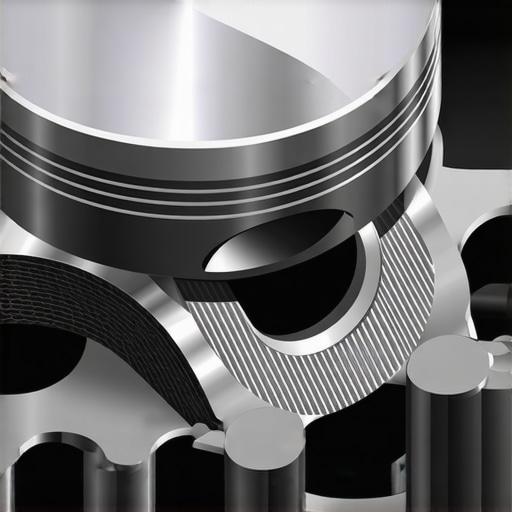
The real villain in the story of “invisible” oil loss is carbon. In direct-injection engines, carbon accumulates on the piston crowns and, more critically, behind the piston rings. Once the oil control rings become “stuck” or “packed” with these hard deposits, they can no longer expand against the cylinder wall to scrape oil back down into the sump. This leads to a runaway effect: more oil burns in the combustion chamber, creating more carbon, which sticks the rings even further. You might find that the $15 fix for engines that stumble under pressure, such as a specialized piston soak or high-grade fuel system cleaner, can actually free up these rings and drastically reduce consumption without requiring a total engine teardown.
Could Your Ignition System Be Propping Up Oil Loss?
There is a nuanced relationship between oil consumption and your spark plugs. When oil enters the combustion chamber, it raises the effective octane requirement and can foul the electrodes. If you notice why your engine stumbles when you accelerate, check your plugs for a wet, oily residue or heavy ash deposits. This fouling creates a weak spark, leading to incomplete combustion and even more carbon buildup. In some cases, you can pull engine fault codes using only a paperclip on certain vehicles to see if misfires are being logged as a result of this oil-induced fouling before the problem escalates to a catalytic converter failure.
Technical research published by SAE International highlights that even a 1% increase in oil volatility can lead to significantly higher deposits on intake valves in Gasoline Direct Injection (GDI) engines. This research underscores that the quality of the base stock in your oil is just as important as the viscosity rating on the bottle. If you are struggling with unexplained oil loss, consider switching to a lubricant with a lower NOACK rating before assuming your engine is mechanically shot. Have you noticed your car performing differently after a specific brand of oil change? Share your findings in the comments below, or pass this along to a fellow driver who is tired of the constant low-oil warnings.
Stop Ignoring the Pressure Building Inside Your Crankcase
While carbon-packed rings are a primary culprit, the atmospheric conditions inside your engine block—specifically crankcase pressure—act as a silent accelerator of oil loss. When an engine is running, a small amount of combustion gas inevitably slips past the piston rings; this is known as blow-by. In a healthy engine, the PCV system manages this pressure efficiently. However, as engines age or become choked with carbon, this pressure builds up, searching for the path of least resistance. Often, that path is straight through your front or rear main seals, or worse, forcing oil into the combustion chamber through the very rings meant to keep it out. High-level vehicle diagnostics require measuring this pressure with a manometer to ensure the crankcase isn’t behaving like a pressurized kettle.
How Much Blow-By is Considered Normal for a Turbocharged Engine?
In the world of forced induction, the margins for error are razor-thin. A turbocharged engine naturally generates more internal pressure than a naturally aspirated one. A slight amount of visible vapor from the oil fill neck when the cap is removed at idle is generally acceptable, but a steady pulse or “steam engine” effect indicates significant ring wear or a failed oil separator. If you are noticing a sudden drop in performance alongside oil loss, it is vital to unlock your car’s potential by performing a wet and dry compression test to pinpoint whether the issue lies in the cylinders or the valvetrain. Unlike basic repairs, diagnosing blow-by requires a nuanced understanding of how boost pressure interacts with the crankcase ventilation circuit under load.
Move Beyond Compression Tests with a Cylinder Leak-Down Analysis
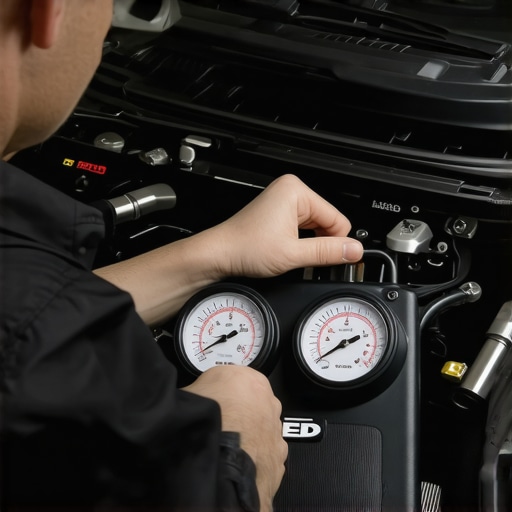
Standard compression tests only tell you how well the engine can “squeeze” air for a split second. To truly find where your oil is vanishing, you need a cylinder leak-down test. This involves pressurizing each cylinder with compressed air while the piston is at top dead center and measuring the percentage of air that escapes. If you hear air hissing out of the oil dipstick tube, your rings are the leak point. If it’s coming from the tailpipe, your exhaust valves are the problem. This level of precision is what separates a parts-changer from a master technician. Research from Machinery Lubrication indicates that specialized ester-based lubricants can sometimes “swell” seals just enough to mitigate minor leaks, but mechanical wear of this magnitude usually requires a more hands-on intervention.
The complexity of modern transmission and engine integration means that sometimes, oil loss isn’t even about the engine itself. In some vehicles, the vacuum pump—which provides assist for the brakes—is lubricated by engine oil and driven by the camshaft. A failure in the pump’s internal diaphragm can allow the engine to suck its own oil directly into the brake booster. It sounds like a freak occurrence, but in the world of high-mileage European and domestic commuters, it is a documented failure mode that leaves no drips on the driveway and no smoke in the air.
Why Short Commutes Are Killing Your Oil’s Viscosity
If your daily drive is less than ten miles, your engine rarely reaches its optimal operating temperature. This creates a phenomenon known as fuel dilution. Unburnt fuel seeps past the rings and mixes with the oil, thinning it out significantly. This “diluted” oil has a much lower boiling point and evaporates far more easily, leading to the “invisible” consumption we’ve been discussing. You might check your oil and find it’s at the “Full” mark, but it might actually be 10% gasoline. Once you finally take that car on a long highway trip, the heat evaporates the fuel, and suddenly you are a quart low. This is a primary reason why following a “severe” service schedule is non-negotiable for city drivers. If you have ever pulled your oil fill cap only to find a milky, tan residue, you are witnessing the first stage of internal moisture contamination. Have you checked the underside of your oil cap lately? Share what you found with us in the comments so we can help you decode the health of your lubricant.
The Vital Connection Between Oil Flow and Timing Chain Stretch
Many drivers don’t realize that oil does more than just lubricate; it acts as a hydraulic fluid for the timing chain tensioner. When oil levels run low or the oil becomes saturated with carbon from excessive blow-by, the tensioner cannot maintain the correct pressure on the timing chain. This leads to “chain slap,” which physically wears down the guides and pins, eventually causing the chain to stretch. This is a catastrophic cascade: poor oil maintenance leads to consumption, which leads to low pressure, which leads to a $3,000 timing chain job. Staying ahead of this requires more than just an occasional top-off; it requires an understanding of how proper oil filter selection prevents the abrasive carbon particles from recycling through these sensitive hydraulic components.
Most drivers assume a puddle on the garage floor is the only definitive sign of oil loss, but the most insidious consumption happens internally where the driver never sees it. As a specialist in high-level car service and deep-tier vehicle diagnostics, I have seen countless late-model engines burn a quart of oil every 1,000 miles while showing zero external symptoms. This phenomenon is rarely a simple gasket failure; it is often a byproduct of modern engineering trade-offs between fuel efficiency and mechanical durability.
Why Your Engine Swallows Oil Without Leaving a Trace
In the past, oil consumption was almost always tied to visible blue smoke or a physical drip. Today, high-precision manufacturing and advanced catalytic converters effectively mask these symptoms by burning off particulates before they exit the tailpipe. The modern auto repair landscape is increasingly focused on this “invisible burn.” One primary driver is the industry-wide shift toward low-tension piston rings. These rings reduce friction to meet stringent fuel economy standards, but they are significantly more susceptible to carbon fouling. When carbon builds up in the ring grooves, the ring loses its ability to scrape oil back into the crankcase, allowing it to bypass into the combustion chamber.
The Positive Crankcase Ventilation System as a Hidden Leak Path
The PCV valve is a component often overlooked during a routine car service, yet it plays a critical role in fluid retention. If the valve sticks in the open position, the intake manifold vacuum pulls oil vapors directly from the crankcase into the intake, where they are consumed during the combustion cycle. This is especially prevalent in GDI (Gasoline Direct Injection) engines, where the lack of fuel washing over the intake valves leads to massive carbon buildup. If you suspect your engine is running lean or rough, it is essential to stop your engine from dying at stoplights by verifying that a faulty PCV system isn’t creating a vacuum-related oil ingestion issue.
The Subtle Sabotage of Valve Stem Seals
Hardened or worn valve stem seals allow oil to seep down the valve guides while the car is parked or idling. This oil is then burned off the moment you accelerate, often so quickly that it doesn’t trigger a smoke trail visible to the driver. Unlike a catastrophic transmission failure, which is often immediate and audible, valve seal degradation is a slow, silent thief of engine life. According to data from Consumer Reports, several modern engine families are prone to internal consumption that far exceeds historical expectations due to these material compromises.
How Can You Tell if Your Turbocharger is Consuming Oil Internally?
Turbos rely on a thin film of oil to lubricate bearings spinning at over 100,000 RPM. When the seals within the turbo center housing rotating assembly (CHRA) fail, oil can be pushed into the intake plumbing or directly into the exhaust stream. If you pull your intercooler piping and find a pool of oil, your turbo is likely the culprit rather than your piston rings. This requires expert auto repair techniques to diagnose accurately. If your dashboard lights have been behaving strangely alongside these oil issues, you might want to investigate why your dashboard lights flicker to ensure your electrical system isn’t also under stress.
Beyond the mechanical seals, we must address the chemistry and physics of modern lubricants that often lead to mystery oil loss. Many newer vehicles specify ultra-thin synthetic oils, such as 0W-20 or even 0W-16. While these offer exceptional flow at cold starts and improve fuel economy, they are also prone to higher evaporation rates, technically known as NOACK volatility. When your engine runs at high operating temperatures during a long highway commute, a portion of that thin oil actually turns into vapor. This vapor is recycled through the intake via the PCV system and burned off, leaving no trace of a leak on your garage floor. This is why it is vital to know how to tell if your mechanic actually changed your oil filter, as a clogged or low-quality filter can exacerbate pressure imbalances that drive these vapors out of the crankcase at an accelerated rate.
Stop Blaming the Gaskets and Look at Oil Volatility
The transition to thinner oils has fundamentally changed how we diagnose consumption. High-volatility oils break down faster under thermal stress, contributing to the very deposits that cause internal engine wear. Manufacturers often consider consumption of one quart every 1,500 miles to be “within normal limits” for high-efficiency engines, but for a meticulous owner, this is a sign of underlying inefficiency. If you find yourself frequently topping off the reservoir, it might not be a failure of metal, but a failure of the fluid itself to withstand the heat cycles of a modern turbocharged environment.
Why Does Your High-Mileage Engine Need More Than Just Thicker Oil?
Common DIY wisdom suggests switching to a much thicker oil, like a 10W-40, once the odometer crosses 100,000 miles to “plug” internal gaps. However, this often does more harm than good in modern engines equipped with variable valve timing (VVT) systems. These systems rely on precise oil pressure and flow rates to move hydraulic phasers; thicker oil can slow down the response time, leading to sluggish performance or timing-related check engine lights. Instead of masking the issue, focusing on unlocking your car’s potential through high-quality detergents that keep these narrow passages clear is a far more sustainable strategy for longevity.
The Hidden Link Between Carbon and Ring Failure
The real villain in the story of “invisible” oil loss is carbon. In direct-injection engines, carbon accumulates on the piston crowns and, more critically, behind the piston rings. Once the oil control rings become “stuck” or “packed” with these hard deposits, they can no longer expand against the cylinder wall to scrape oil back down into the sump. This leads to a runaway effect: more oil burns in the combustion chamber, creating more carbon, which sticks the rings even further. You might find that the $15 fix for engines that stumble under pressure, such as a specialized piston soak or high-grade fuel system cleaner, can actually free up these rings and drastically reduce consumption without requiring a total engine teardown.
Could Your Ignition System Be Propping Up Oil Loss?
There is a nuanced relationship between oil consumption and your spark plugs. When oil enters the combustion chamber, it raises the effective octane requirement and can foul the electrodes. If you notice why your engine stumbles when you accelerate, check your plugs for a wet, oily residue or heavy ash deposits. This fouling creates a weak spark, leading to incomplete combustion and even more carbon buildup. In some cases, you can pull engine fault codes using only a paperclip on certain vehicles to see if misfires are being logged as a result of this oil-induced fouling before the problem escalates to a catalytic converter failure.
Technical research published by SAE International highlights that even a 1% increase in oil volatility can lead to significantly higher deposits on intake valves in Gasoline Direct Injection (GDI) engines. This research underscores that the quality of the base stock in your oil is just as important as the viscosity rating on the bottle. If you are struggling with unexplained oil loss, consider switching to a lubricant with a lower NOACK rating before assuming your engine is mechanically shot. Have you noticed your car performing differently after a specific brand of oil change? Share your findings in the comments below, or pass this along to a fellow driver who is tired of the constant low-oil warnings.
Stop Ignoring the Pressure Building Inside Your Crankcase
While carbon-packed rings are a primary culprit, the atmospheric conditions inside your engine block—specifically crankcase pressure—act as a silent accelerator of oil loss. When an engine is running, a small amount of combustion gas inevitably slips past the piston rings; this is known as blow-by. In a healthy engine, the PCV system manages this pressure efficiently. However, as engines age or become choked with carbon, this pressure builds up, searching for the path of least resistance. Often, that path is straight through your front or rear main seals, or worse, forcing oil into the combustion chamber through the very rings meant to keep it out. High-level vehicle diagnostics require measuring this pressure with a manometer to ensure the crankcase isn’t behaving like a pressurized kettle.
How Much Blow-By is Considered Normal for a Turbocharged Engine?
In the world of forced induction, the margins for error are razor-thin. A turbocharged engine naturally generates more internal pressure than a naturally aspirated one. A slight amount of visible vapor from the oil fill neck when the cap is removed at idle is generally acceptable, but a steady pulse or “steam engine” effect indicates significant ring wear or a failed oil separator. If you are noticing a sudden drop in performance alongside oil loss, it is vital to unlock your car’s potential by performing a wet and dry compression test to pinpoint whether the issue lies in the cylinders or the valvetrain. Unlike basic repairs, diagnosing blow-by requires a nuanced understanding of how boost pressure interacts with the crankcase ventilation circuit under load.
Move Beyond Compression Tests with a Cylinder Leak-Down Analysis
Standard compression tests only tell you how well the engine can “squeeze” air for a split second. To truly find where your oil is vanishing, you need a cylinder leak-down test. This involves pressurizing each cylinder with compressed air while the piston is at top dead center and measuring the percentage of air that escapes. If you hear air hissing out of the oil dipstick tube, your rings are the leak point. If it’s coming from the tailpipe, your exhaust valves are the problem. This level of precision is what separates a parts-changer from a master technician. Research from Machinery Lubrication indicates that specialized ester-based lubricants can sometimes “swell” seals just enough to mitigate minor leaks, but mechanical wear of this magnitude usually requires a more hands-on intervention.
The complexity of modern transmission and engine integration means that sometimes, oil loss isn’t even about the engine itself. In some vehicles, the vacuum pump—which provides assist for the brakes—is lubricated by engine oil and driven by the camshaft. A failure in the pump’s internal diaphragm can allow the engine to suck its own oil directly into the brake booster. It sounds like a freak occurrence, but in the world of high-mileage European and domestic commuters, it is a documented failure mode that leaves no drips on the driveway and no smoke in the air.
Why Short Commutes Are Killing Your Oil’s Viscosity
If your daily drive is less than ten miles, your engine rarely reaches its optimal operating temperature. This creates a phenomenon known as fuel dilution. Unburnt fuel seeps past the rings and mixes with the oil, thinning it out significantly. This “diluted” oil has a much lower boiling point and evaporates far more easily, leading to the “invisible” consumption we’ve been discussing. You might check your oil and find it’s at the “Full” mark, but it might actually be 10% gasoline. Once you finally take that car on a long highway trip, the heat evaporates the fuel, and suddenly you are a quart low. This is a primary reason why following a “severe” service schedule is non-negotiable for city drivers. If you have ever pulled your oil fill cap only to find a milky, tan residue, you are witnessing the first stage of internal moisture contamination. Have you checked the underside of your oil cap lately? Share what you found with us in the comments so we can help you decode the health of your lubricant.
The Vital Connection Between Oil Flow and Timing Chain Stretch
Many drivers don’t realize that oil does more than just lubricate; it acts as a hydraulic fluid for the timing chain tensioner. When oil levels run low or the oil becomes saturated with carbon from excessive blow-by, the tensioner cannot maintain the correct pressure on the timing chain. This leads to “chain slap,” which physically wears down the guides and pins, eventually causing the chain to stretch. This is a catastrophic cascade: poor oil maintenance leads to consumption, which leads to low pressure, which leads to a $3,000 timing chain job. Staying ahead of this requires more than just an occasional top-off; it requires an understanding of how proper oil filter selection prevents the abrasive carbon particles from recycling through these sensitive hydraulic components.
The Hidden Exchange Where Oil and Coolant Mix
Sophisticated vehicle diagnostics often reveal a crossover between the lubrication and cooling systems that circumvents the combustion chamber entirely. Many performance engines utilize oil-to-coolant heat exchangers to maintain thermal stability. When the internal gaskets of these coolers degrade, the higher pressure of the oil system forces lubricant into the cooling passages. This doesn’t produce blue smoke or a driveway puddle; instead, it creates a thick, mayonnaise-like sludge in your expansion tank. While many mechanics immediately jump to a head gasket diagnosis, an expert knows to pressure-test the heat exchanger first, potentially saving the owner thousands in unnecessary labor. Research from technical specialists at Lubrizol also points toward the dangers of Low-Speed Pre-Ignition (LSPI) in modern turbocharged engines, where oil droplets can actually trigger premature combustion that shatters piston ring lands, leading to massive internal consumption.
Can a Clogged VVT Screen Force Higher Consumption?
Variable Valve Timing solenoids are protected by microscopic mesh screens that catch debris before it enters the sensitive hydraulic phasers. Over time, carbonized oil—a result of the “invisible burn”—can clog these screens, causing a drop in the hydraulic pressure required to adjust cam timing. This forces the engine to run at sub-optimal efficiency, increasing the duration of valve overlap and inadvertently pulling more oil vapor into the combustion cycle. If your engine stumbles under pressure, it is vital to inspect these screens. A simple cleaning of a $2 screen can often restore timing accuracy and stabilize oil consumption levels that appeared to be terminal.
When Micro-Explosions Shatter Your Piston’s Defenses
The phenomenon of LSPI is the silent killer of modern downsized, turbocharged engines. When oil mixed with fuel ignites before the spark plug fires, it creates a massive pressure spike that the piston was never designed to handle. This often results in “micro-cracks” in the ring lands—the thin shelves of metal that hold the piston rings in place. Once these lands are compromised, the rings can no longer seal against the cylinder wall, turning your engine into an oil-burning furnace. This mechanical failure is often misdiagnosed as simple wear, but it is actually a chemical-mechanical failure related to oil quality and fuel octane. 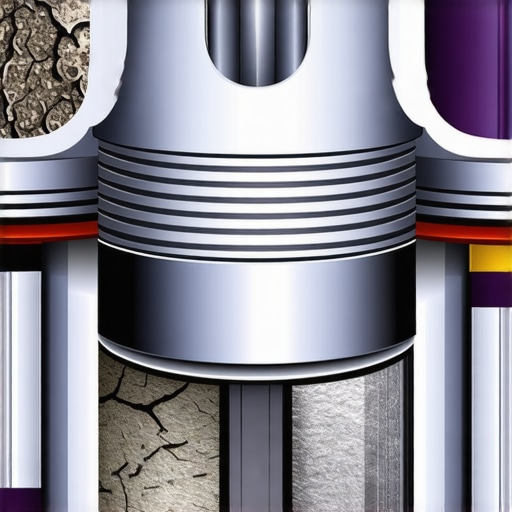 Ensuring you use an oil formulated to mitigate LSPI is a critical step in preserving the structural integrity of your engine’s bottom end. Have you ever experienced a sudden, sharp knock under low-speed acceleration? This could be the warning sign that your oil consumption is about to skyrocket due to ring land failure.
Expert Insights & Advanced Considerations
Stop LSPI Before It Shatters Your Piston Rings
In modern turbocharged engines, the chemistry of your oil is a structural component. Low-Speed Pre-Ignition (LSPI) creates pressure spikes that physically break ring lands, causing massive oil consumption. Choosing an oil specifically API SN Plus or SP rated is a non-negotiable step for long-term durability. This is a critical part of unlocking your car’s potential while avoiding catastrophic internal damage.
Why Thicker Oil Often Sabotages Variable Valve Timing
The old school fix of moving to a 10W-40 weight on a high-mileage engine can lead to sluggish response from the VVT solenoids. These systems rely on specific flow rates to advance or retard cam timing; a lubricant that is too viscous will cause timing errors and poor fuel economy. Instead of chasing leaks with thicker oil, utilize vehicle diagnostics to verify if a simple solenoid cleaning can restore efficiency.
Don’t Mistake a Failing Heat Exchanger for a Blown Head Gasket
Oil in your coolant reservoir doesn’t always mean your engine is dead. In vehicles with oil-to-coolant heat exchangers, an internal seal failure can mimic head gasket symptoms perfectly. An expert technician will always pressure-test the cooler before recommending a teardown, utilizing advanced auto repair techniques to save the client thousands in labor costs.
#IMAGE_PLACEHOLDER_E#
Curated Expert Resources
SAE International Technical Papers
This is the gold standard for understanding the relationship between oil volatility and intake valve deposits in GDI engines. It provides the raw data necessary to choose lubricants based on chemical stability rather than just marketing claims.
Machinery Lubrication Journal
A vital resource for deep-diving into NOACK volatility ratings and how synthetic base stocks perform under extreme thermal stress, helping you prevent invisible oil evaporation through science-backed lubrication choices.
Lubrizol LSPI Knowledge Center
Detailed technical breakdowns on why specific oil additives and calcium-based detergents can either trigger or prevent pre-ignition events that lead to ring failure.
Final Expert Perspective
Solving the mystery of oil loss in modern engines requires moving beyond the driveway-puddle mindset. We must account for the chemical volatility of modern thin-weight oils, the precision of low-tension rings, and the atmospheric pressures within the crankcase. Effective car service now involves as much chemistry as it does mechanics. If you’ve struggled with oil warnings that lead to no physical leak, you are likely witnessing the byproduct of modern efficiency trade-offs. I invite you to contact us for a professional consultation if your vehicle is consuming oil at an alarming rate, or share your own diagnostic experiences in the comments below to help our community of drivers stay on the road longer.