The Intricacies of ABS Warning Lights and Limitations of Conventional Diagnostics
The Anti-lock Braking System (ABS) warning light serves as a crucial alert to malfunction within a vehicle’s safety systems. While professional diagnostics often rely on scan tools, many technicians and car enthusiasts seek alternative methods to troubleshoot ABS alerts, especially in field conditions or when scan tools are unavailable. Understanding the electrical and electronic nuances of ABS system indicators allows for a deeper, more accurate diagnosis using simple, yet effective techniques such as jumper wire methods.
Leveraging Jumper Wires for In-Depth Vehicle Diagnostics: An Advanced Approach
The jumper wire trick is a classic, hands-on diagnostic technique that, when executed properly, provides invaluable insights into a vehicle’s ABS system. This method involves establishing direct electrical connections between specific sensors or modules to simulate diagnostic conditions or bypass faulty components. Its efficacy hinges on a thorough understanding of the vehicle’s wiring schematics, sensor placements, and the logic of the electronic control module (ECU). For instance, isolating the wheel speed sensors through jumper wires can reveal whether the ABS light is caused by sensor malfunctions or ECU communication issues.
What Are the Risks of Using Jumper Wire Diagnostics on Complex ABS Systems?
While jumper wire methods can be enlightening, they carry inherent risks if not performed with precision. Incorrect wiring may lead to short circuits, damage to sensitive electronic components, or erroneous diagnoses. Advanced systems like the 2026 model, which integrate AI and adaptive control algorithms, are particularly susceptible to faults introduced by improper wiring. Therefore, it is essential to cross-reference wiring diagrams, use insulated conductors, and proceed with caution. For complex electrical issues, consulting specialized repair guides or professional resources like the SAE International journal enhances safety and accuracy.
Strategic Integration of Jumpers with Data Analysis for Accurate Fault Detection
To augment jumper wire diagnostics, integrating the method with vehicle data reading techniques—such as reading fault codes or live sensor data—can significantly improve reliability. For example, after establishing jumper connections, utilizing manufacturer-specific data tools to monitor real-time signal variations helps distinguish between sensor failures and wiring issues. This layered approach capitalizes on a technician’s experience and technological resources, ensuring comprehensive analysis rather than superficial troubleshooting.
Advanced Troubleshooting: Beyond the Basics of ABS Icon Diagnosis
Modern vehicles featuring complex sensor networks and electronic control units often exhibit subtle electrical gremlins that are not apparent through simple visual inspection. Techniques such as measuring voltage differentials across jumper points, comparing sensor response times, and observing changes in system behavior under varied conditions become crucial. For specialized cases, referencing external sources, including the technical reports from SAE International, provides authoritative guidance on vehicle electrical systems and troubleshooting best practices.
Practitioners are encouraged to document their jumper wire configurations meticulously and consider supplementing physical inspections with in-depth electrical testing. Remember, the goal is to isolate the root cause—be it a defective sensor, wiring interruption, or ECU fault—without unnecessary replacement of components or guesswork.
If you’re delving into vehicle diagnostics beyond the basics, exploring detailed tutorials such as this comprehensive guide on ABS light troubleshooting can expand your expertise. Your feedback and professional insights are invaluable; share your experiences or inquire about advanced diagnostics to contribute to the collective knowledge pool in automotive repair.
Unlocking the Power of Live Data Stream Analysis in ABS Troubleshooting
While jumper wire techniques provide a solid foundation for initial diagnosis, integrating real-time data analysis elevates troubleshooting accuracy to an expert level. Utilizing manufacturer-specific scan tools allows technicians to monitor wheel speed sensors, ABS module responses, and system voltages concurrently, revealing subtle malfunctions often missed through visual inspections. For example, observing inconsistent signal fluctuations during test drives can indicate intermittent wiring issues or failing sensors that might not trigger a fault code immediately.
Embracing Diagnostic Logic: Prioritized Testing for Complex ABS Systems
When faced with sophisticated ABS architectures, especially in models like the 2026 lineup, a methodical, logic-driven approach minimizes guesswork. Start by verifying power and ground circuits, then proceed to sensor signal integrity. Employing a systematic elimination—such as confirming sensor wiring continuity, testing the supply voltage, and assessing the module’s response—can pinpoint the exact fault source. This process aligns with industry best practices outlined in SAE International’s technical reports, ensuring diagnostics are comprehensive and repeatable (SAE Publications).
Could AI-Enhanced Diagnostics Replace Traditional Wiring Checks in the Long Run?
As vehicles evolve with integrated AI systems for autonomous and semi-autonomous functions, expert diagnostics are shifting toward software-centric solutions. AI algorithms can analyze vast datasets from multiple sensors and predict faults before indicators manifest visibly. This automation not only accelerates fault detection but also minimizes invasive testing procedures. For automotive professionals, staying updated with these innovations—including tools that interpret complex sensor patterns—is crucial for future-proofing service skills. For more insights into diagnostics evolution, see this article on AI brake system troubleshooting.
To refine your diagnostic workflow, consider combining jumper wire strategies with data-driven testing and cutting-edge AI tools, ensuring precision in identifying faults like those in advanced ABS setups. For hands-on guidance, exploring detailed tutorials—such as this comprehensive guide to ECU data extraction—can expand your diagnostic repertoire. Sharing your experiences or seeking advice on complex scenarios fosters a collective knowledge base, empowering technicians to tackle even the most intricate vehicle electrical issues.
Innovative Approaches to Isolating ABS Sensor Anomalies
With the increasing complexity of modern ABS systems, technicians must move beyond basic jumper wire techniques and embrace a multi-layered diagnostic strategy. When traditional visual inspections and single-point electrical tests fall short, employing targeted jumper configurations to simulate specific sensor inputs allows for precise localization of faults, especially in vehicles with multiple wheel speed sensors.
For instance, by strategically bridging terminals responsible for the left-front wheel sensor, you can observe the ECU’s response in real-time. If system behavior aligns with expected patterns—such as the absence of warning lights or correct system activation—it suggests sensor integrity. Conversely, persistent faults point toward wiring or ECU issues. Integrating these physical tests with advanced data logs enhances diagnostic accuracy, particularly in vehicles equipped with multiplexed wiring networks where signals are shared across controllers.
How Can Data-Driven Insights Elevate Jumper Wire Testing Precision?
High-level diagnostics thrive on correlating physical interventions with real-time data analysis. Modern scan tools capable of live data acquisition allow technicians to monitor parameters like wheel speed, ABS valve status, and system voltages during jumper wire manipulations. For example, observing voltage fluctuations across sensor circuits when bridging specific lines can confirm electrical continuity or reveal interference patterns. Such data integration transforms jumper wire tests from mere circuit bypasses into diagnostic experiments that directly measure system responsiveness, reducing false positives and unnecessary component replacements.
To facilitate this sophisticated approach, specialized diagnostic software often employs machine learning algorithms that analyze sensor response patterns, flag anomalies, and suggest probable causes. As cited in the SAE International technical papers, these integrated systems have demonstrated significant improvements in fault localization accuracy for complex ABS architectures (SAE Publications). Embracing data fusion with manual testing creates a robust diagnostic framework capable of tackling even the most elusive electrical gremlins.
Bridging the Gap: From Ground-Level Tests to Systematic Fault Resolution
While physical jumper wire testing provides immediate, tangible insights, its true power emerges when combined with comprehensive electrical system analysis. This involves documenting every jumper connection, noting voltage profile changes, and correlating these with ECU-reported fault codes or live sensor data. Such meticulous record-keeping not only supports current diagnostics but also builds a knowledge database for future troubleshooting.
Moreover, aligning these practices with industry standards—like those detailed in SAE International’s technical reports—ensures consistency and safety. Manufacturers often specify permissible voltage ranges, wiring configurations, and sensor response times that are vital benchmarks during advanced diagnostics. By following these guidelines, technicians can avoid inadvertent damage, make informed decisions, and expedite repairs.
Are AI Algorithms the Future of ABS Fault Prediction and Prevention?
Artificial Intelligence (AI) is rapidly transforming vehicle diagnostics, shifting emphasis from reactive troubleshooting to proactive fault prediction. Machine learning models, trained on vast datasets from diverse vehicle fleets, identify subtle patterns indicating impending ABS sensor failure—often before warning lights illuminate. Integrating AI-powered diagnostic tools enables technicians to perform predictive maintenance, optimizing safety and reducing downtime.
However, deploying these advanced systems requires an understanding of their limitations and proper calibration. As detailed in recent automotive research, the accuracy of AI models hinges on data quality and contextual relevance (this insight on AI brake systems). Consequently, seasoned professionals should view AI as a supplement to, not a replacement for, foundational electrical testing and methodical troubleshooting practices. Incorporating AI analytics into jumper wire experimentation and data interpretation can dramatically enhance diagnostic confidence and efficiency, especially in vehicles featuring next-generation ABS architectures.
To deepen your mastery, consider exploring courses on automotive AI applications and software-driven diagnostics, which often include case studies, practical wiring scenarios, and software simulations. Sharing your experiences with integrating AI tools and manual testing techniques fosters a collaborative community that advances overall industry expertise and vehicle safety standards.
Elevating Vehicle Safety Through Expert-Level Electrical Troubleshooting
In the rapidly evolving landscape of automotive electronics, master technicians are increasingly turning to sophisticated diagnostic strategies that extend beyond traditional scan tool readings. Precise intervention involves a comprehensive understanding of the vehicle’s wiring architecture, sensor placement, and the electronic control logic governing the ABS system. Leveraging targeted jumper wire configurations, when paired with live data analysis, allows for a nuanced approach to fault localization—crucial in complex vehicles with multiplexed systems and AI-driven modules.
Incisive Questions Signal Your Diagnostic Edge
How can one minimize the risk of electrical damage during complex jumper wire testing in modern ABS architectures?
Meticulous preparation is key: employ insulated, multi-strand conductors, verify wiring schematics before any physical connection, and ensure power is disconnected when establishing jumper setups. Cross-referencing manufacturer-specific diagrams from authoritative resources like the SAE International technical papers (https://www.sae.org/publications/technical-papers) enhances safety protocols, preventing inadvertent shorts or damage to sensitive ECU components. Employing test relays or dedicated simulation modules can further absorb transient surges, safeguarding critical control units.
Harnessing Data Synergy for Precise Fault Analysis
Binding jumper wire tactics with real-time sensor data profoundly elevates diagnostic fidelity. Using high-resolution scope meters and manufacturer-specific data stream analyzers, technicians can observe voltage fluctuations, response latencies, and sensor integrity under various simulated conditions. This methodology redirects conventional troubleshooting from guesswork to data-driven validation, especially effective in identifying intermittent faults or wiring irregularities that elude static testing. External resources such as the SAE technical reports provide comprehensive guidelines on interpreting complex electrical signals within ABS systems.
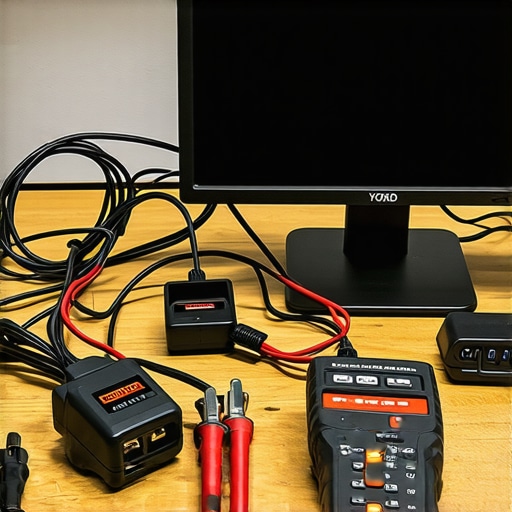
Visualize bespoke jumper wire configurations at critical sensor nodes, illustrating how targeted connections simulate or bypass faulty circuits during testing phases.
Beyond Basic Checks: Customized Solutions for Advanced Systems
Modern ABS modules integrate AI algorithms and sensor fusion technologies, demanding equally advanced troubleshooting approaches. For example, configuring jumper wires to selectively emulate wheel speed signals, combined with live data analysis, can reveal subtle discrepancies in sensor responsiveness or ECU interpretation. Such methods are vital when diagnosing vehicles with multiplexed bus systems where multiple sensors share common pathways, or in cases where traditional methods yield inconclusive results.
What role does machine learning play in pre-emptive ABS failure detection, and how can technicians prepare for it?
Machine learning models, trained on extensive datasets encompassing vehicle operating conditions and fault patterns, are increasingly capable of diagnosing impending ABS failures before warning indicators activate. These predictive analytics employ complex algorithms to analyze sensor response patterns, voltage anomalies, and system response times, enabling technicians to implement proactive maintenance strategies. Staying current with developments from authoritative sources like SAE’s publications ensures technicians are equipped to interpret and utilize AI-driven diagnostic insights effectively. Embracing these tools transitions troubleshooting from reactive fixes to strategic maintenance planning.
Engage with specialized training modules or workshops that focus on integrating AI diagnostics and advanced electrical testing. Sharing case studies related to AI failure prediction fosters a community-centric knowledge development, elevating industry standards and promoting safer, more reliable vehicle operation.
Operational Excellence Through Combined Diagnostic Methodologies
Integrating jumper wire techniques with high-fidelity data capture and AI analytics forms a triad of diagnostic precision. Meticulous documentation of jumper setups, voltage readings, and sensor responses establishes a knowledge base that accelerates future troubleshooting. Aligning these practices with industry standards—drawing from SAE’s technical documentation—ensures measurement consistency, safety, and reproducibility, which are cornerstones of expert vehicle diagnostics.
Is the future of ABS fault detection rooted in software-inspired innovations?
Indeed, advancements in automotive AI hint at a shift towards software-centric fault prediction and management. Machine learning and predictive analytics can analyze patterns across multiple sensors, environmental conditions, and operational histories to forecast failures well before symptoms manifest. This proactive approach not only reduces downtime but also enhances safety margins. For technicians, cultivating familiarity with these emerging technologies—through continuous education and practical experimentation—becomes essential. Exploring resources such as the SAE publications on AI integration prepares professionals for this transition, ensuring they remain at the forefront of diagnostic innovation.
Insights from Industry Veterans on ABS System Complexity
Veteran automotive technicians emphasize that a nuanced understanding of electronic control modules and sensor networks is essential for precise diagnostics. Recognizing the subtle electrical patterns and wiring intricacies often distinguishes expert-level troubleshooting from amateur guesswork. In particular, appreciating the interplay between sensor signals and ECU commands leads to more targeted repairs, reducing unnecessary component replacements.
Develop Your Diagnostic Intuition to Detect Subtle Faults
Seasoned professionals advocate cultivating a keen sense for electrical anomalies, such as minute voltage fluctuations or response delays, which often indicate deeper issues within complex ABS architectures. Utilizing high-resolution data loggers alongside jumper wire techniques allows for a multi-layered analysis, enabling accurate fault localization even in the most multiplexed systems.
Trusted Resources for Deepening Your Vehicle System Knowledge
- SAE International Technical Publications: An authoritative source for standards and detailed system analyses that underpin advanced diagnostics.
- OEM Service Manuals: Critical for wiring diagrams, sensor specifications, and system-specific troubleshooting procedures.
- Automotive Circuit Analysis Books: Offer foundational knowledge essential for interpreting complex electrical interactions.
Elevate Your Skills with Cutting-Edge Diagnostic Strategies
Integrating live data analysis with traditional jumper wire testing elevates fault detection precision. Modern scan tools, coupled with AI-powered diagnostics, facilitate preemptive fault identification, allowing technicians to address issues proactively. Moreover, embracing systematic elimination practices—starting from power sources to sensor outputs—ensures comprehensive and effective repairs. For those committed to professional mastery, exploring resources like this in-depth guide can provide valuable insights into emerging AI-driven systems. Engaging with industry communities and sharing complex cases cultivates a knowledge-rich environment essential for staying ahead in automotive diagnostics.
Comments are closed.