Deciding to greenlight a major automotive overhaul is one of the most financially significant choices a vehicle owner will face. Modern vehicles are highly sophisticated, meaning that a recommendation for a engine rebuild or a complete powertrain intervention is rarely a straightforward, simple fix. Navigating these recommendations requires a balance of technical literacy, diagnostic verification, and an understanding of workshop operations. When confronted with an estimate that approaches the actual cash value of your vehicle, distinguishing between preventative necessity and premature replacement is crucial for your financial and mechanical peace of mind.
The Complex Intersection of Modern Vehicle Diagnostics and Heavy Hardware Repair
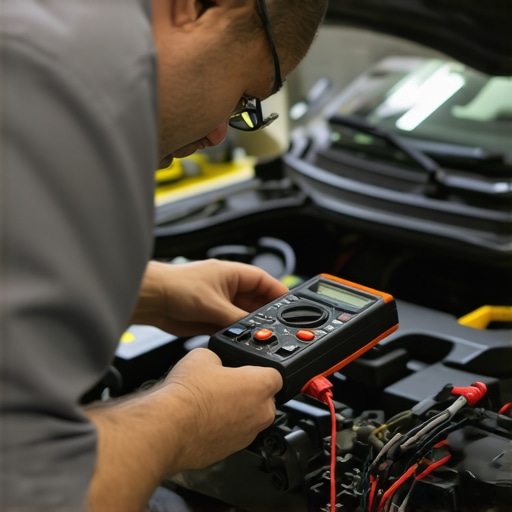
When an advisor recommends a major intervention, their assessment should always be backed by objective data. In the era of computerized engine management, a simple dashboard warning light is merely the starting point of an investigation. True professional precision relies on advanced telemetry and physical testing. For instance, before agreeing to extensive internal repairs, you should demand to see the physical evidence of the failure. This includes digital readouts from specialized scan tools, cylinder compression test values, or physical oil analysis reports showing metal contamination.
A critical area where this analytical approach is mandatory is the drivetrain. If your vehicle struggles to shift gears, you must determine whether you are dealing with a localized electronic issue or an internal mechanical failure. Misdiagnoses here are costly. To protect your investment, it is highly beneficial to educate yourself on the specific signs of drivetrain distress by reading transmission failures decoded signs and expert fixes. This level of technical literacy allows you to ask the right questions before authorizing thousands of dollars in labor.
Why Complex Mechanical Recommendations Require Verifiable Physical Proof
A reputable workshop will never hesitate to walk you through their diagnostic path. If a technician asserts that your vehicle requires a complete component overhaul, they should easily be able to demonstrate why a simpler sub-component replacement is not viable. For example, if you are told that a complete unit swap is necessary due to hydraulic pressure loss, ask if they have verified the integrity of the seals, solenoids, and valve body first. In many scenarios, a localized repair can resolve the issue for a fraction of the cost.
Consider the common scenario where a vehicle exhibits shifting anomalies only under specific thermal conditions. This is a highly nuanced issue that often gets misdiagnosed as a catastrophic mechanical failure. Understanding the physics of how fluids behave under thermal stress, such as why your transmission slips only when the fluid is hot, can save you from paying for an unnecessary rebuild when a simple fluid exchange or sensor replacement was all that was required.
How Can You Verify a Major Diagnostic Claim Before Authorizing Work?
The most reliable method to verify a major diagnostic claim is to request a written, itemized diagnostic report that details the exact trouble codes (DTCs), physical measurements, and pressure readings. According to the National Institute for Automotive Service Excellence (ASE), a professional diagnostic process should follow a standardized flow: verifying the symptom, performing visual inspections, retrieving computer data, and conducting targeted pinpoint testing. If your service advisor cannot provide these specific test results, it is highly advisable to seek a second opinion. To further safeguard your vehicle and your wallet, consider studying the nuances of modern troubleshooting by exploring the hidden world of vehicle diagnostics what you need to know to understand how modern technicians interface with your car’s onboard computers.
We encourage you to share your experiences with complex mechanical recommendations in the comments below, or reach out to our team of certified specialists to schedule a detailed review of your vehicle’s current diagnostic reports.
Why Thermal Stress and Fluid Dynamics Mimic Internal Component Failures
Many vehicle owners authorize expensive mechanical overhauls because they confuse the physical symptoms of fluid degradation with catastrophic hardware failures. Transmission fluids, lubricants, and hydraulic oils lose their viscosity and shear stability over time, particularly under extreme operating temperatures. When this breakdown occurs, internal pressures drop, resulting in erratic shifting, slipping, or delayed gear engagement. Before you agree to a multi-thousand-dollar replacement, ask the technician if they have performed a chemical analysis of the fluid or checked its level at operating temperature. Understanding the mechanical difference, such as why your transmission fluid smells like its burning, can help you identify whether a simple maintenance service will resolve the issue or if internal damage has truly occurred.
Similarly, thermal variations can cause seals to contract or expand, causing symptoms that appear only during cold starts or only after prolonged highway driving. For instance, cold weather can introduce unique hydraulic pressures that mimic mechanical wear. Knowing why your transmission slips when the weather gets cold is vital for establishing a baseline diagnostic path before committing to heavy hardware replacements.
How to Spot the Difference Between Secondary Component Wear and Systemic Failure
A common trap in automotive repair is replacing an entire major system when only an external, peripheral accessory has failed. Modern powertrains rely heavily on external sensors, vacuum lines, and electrical connections to regulate internal mechanics. A cracked vacuum hose or a failing solenoid can trigger safe-mode protocols that make the vehicle feel as though its engine or gearbox has failed completely. An experienced technician will isolate these external components first. If you are experiencing structural anomalies like severe vibrations, you should investigate localized components such as motor mounts or wheel assemblies before assuming internal engine or drivetrain ruin. For example, learning why your steering wheel vibrates while idling can point you directly toward worn rubber mounts rather than a failing cylinder head.
By systematically ruling out these external variables, you protect your bank account from unnecessary work. Professional diagnostic standards, such as those published by the Society of Automotive Engineers (SAE), emphasize that systematic isolation of subsystems is the only scientifically valid way to diagnose modern computer-controlled vehicles. Skipping these foundational checks often leads to the costly replacement of perfectly functional major assemblies.
Are You Authorizing a Rebuild When a Cheap Electrical Fix is All You Need?
An overlooked ground wire, a blown fuse, or a corroded connector can interrupt communication between the engine control module (ECM) and the transmission control module (TCM), causing the vehicle to exhibit catastrophic driving symptoms. When communication breaks down, the system defaults to maximum line pressure or enters a single-gear “limp mode” to prevent physical damage. This sudden loss of performance often panics drivers into believing their vehicle needs a brand-new powertrain. In reality, restoring solid electrical continuity can instantly bring the vehicle back to perfect operational health. For instance, clean power delivery is so critical that minor issues can cause unexpected starting or shifting anomalies. Understanding the impact of small electrical faults, like the battery terminal trick for stubborn starting issues, highlights how easily simple electrical connections can mimic major physical failures.
Have you ever saved a vehicle from a major mechanical death sentence with a simple electrical or fluid fix? Tell us your story in the comments below, or read our deep-dive guide on transmission troubles how to save time and money with proven repairs to arm yourself with more expert diagnostic strategies.
Why Physical Tolerances and Micrometer Inspections Matter More Than Diagnostic Codes
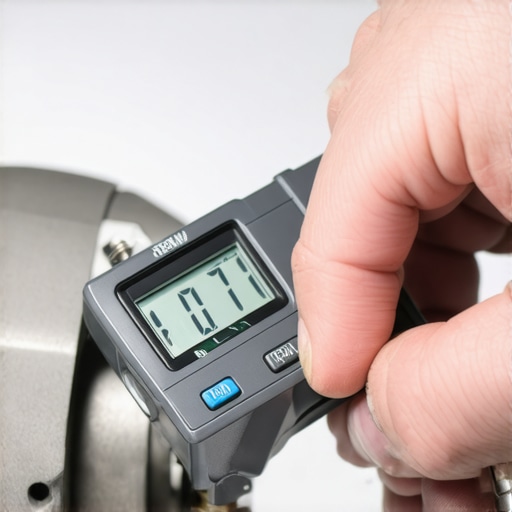
When a service advisor presents you with a massive estimate for a complete mechanical rebuild, the decision should never rest solely on a list of active diagnostic trouble codes (DTCs). True mechanical diagnostics require physical measurements to determine if a component has actually exceeded its structural service limits. Professional engine builders and drivetrain specialists rely on precise tools like dial indicators, micrometers, and feeler gauges to measure tolerances down to the thousandth of an inch. For example, before accepting that an engine block is ruined, a technician must measure cylinder bore taper and out-of-roundness. If these measurements fall within the original equipment manufacturer (OEM) specifications, a complete replacement is structurally unjustified.
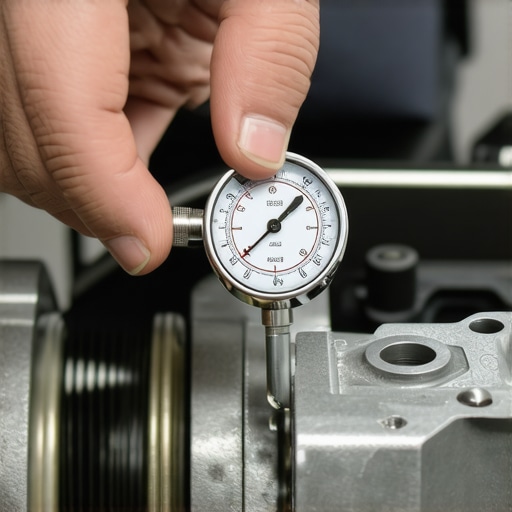
This level of precision is even more critical in modern multi-clutch and planetary gear systems. When internal components wear down, they shed microscopic particles that can clog the tiny orifices within the hydraulic control circuit. This blockage restricts fluid flow and mimics the symptoms of severe mechanical slipping. Rather than immediately authorizing a multi-thousand-dollar rebuild, demand to know if the technician performed a hydraulic line pressure test. Comparing actual pressure readings against the target values specified by the manufacturer will reveal whether the issue is a simple hydraulic restriction or a terminal mechanical failure.
The Critical Role of Torque Converter Diagnostics in Drivetrain Evaluations
A highly frequent source of misdiagnosis in modern automotive service is the torque converter. This fluid coupling device sits between the engine and the gearbox, playing a crucial role in multiplying torque and transferring rotational power. When a torque converter’s internal stator clutch fails or its lock-up clutch begins to slip, the vehicle will experience severe shuddering, stalling, or a dramatic drop in fuel economy. Because these symptoms closely mirror those of internal gear failure, inexperienced shops often recommend a complete, expensive replacement of the entire assembly when only the torque converter needs attention.
To isolate this component, a qualified specialist will perform a stall speed test, monitoring engine RPM while the vehicle is stationary and the drivetrain is loaded. This test helps identify if the torque converter is slipping internally or failing to lock up at highway speeds. According to technical specifications maintained by the Automatic Transmission Rebuilders Association (ATRA), verifying torque converter lock-up clutch duty cycles via live scanner data is a non-negotiable step before condemning a modern electronic gearbox. Skipping this validation process frequently results in car owners paying for an entire structural overhaul when replacing the standalone converter would have completely resolved the issue.
How Do You Safely Differentiate Between Torque Converter Shudder and Actual Gear Slipping?
To differentiate between these two closely related issues, look at when the symptom occurs. Torque converter shudder typically feels like driving over rumble strips and occurs at specific, steady speeds (usually between 35 and 60 mph) when the vehicle is in a high gear and the lock-up clutch engages. In contrast, actual mechanical gear slipping presents as a sudden spike in engine RPM (flaring) during an active gear change, accompanied by a loss of forward acceleration. To definitively isolate the root cause, a professional diagnostic technician can use a high-bidirectional scan tool to temporarily disable the lock-up clutch solenoid during a road test; if the vibration instantly disappears while the solenoid is commanded off, the fault lies entirely within the converter assembly rather than the internal gear train.
Have you recently received a massive repair estimate that left you feeling skeptical? Let us know your vehicle’s symptoms in the comments below, or connect with our master technicians for a transparent, step-by-step review of your diagnostic options.
What Lies Beneath the Heavy Metal of an Engine Block Recommendation
When an automotive facility suggests a complete engine block replacement, the technical justification must extend beyond a basic physical inspection. Sophisticated testing processes like cylinder leakage testing must be performed alongside standard wet and dry compression tests. A cylinder leak-down test introduces pressurized air directly into each cylinder at top dead center, allowing the technician to locate exactly where the pressure is escaping. If air escapes through the dipstick tube, the piston rings are failing; if it escapes through the tailpipe or intake manifold, the valves are worn. For the consumer, verifying these microscopic sealing failures prevents the unnecessary scraping of an engine that might only require top-end cylinder head work.
According to the highly specialized technical reference databases maintained by the National Fire Protection Association, fluid contamination and high-pressure oil misting inside the compartment pose severe risks if thermal stress is ignored. Ensuring that your technician utilizes precision dial indicators to check crankshaft endplay is just as critical. If the thrust bearings have walked out of tolerance, the resulting crankshaft movement can destroy the engine block casing from the inside out, turning a potential repair into an unavoidable replacement.
Can a Blown Head Gasket Be Confused with a Cracked Engine Block?
Yes, these two distinct failures share identical physical symptoms, such as rapid overheating, white exhaust smoke, and coolant consumption. To safely differentiate them, technicians use a chemical combustion leak test, which detects the presence of carbon dioxide gases inside the radiator neck. While a positive chemical test confirms that combustion gases are breaching the cooling system, it does not distinguish between a failed head gasket and a structural crack in the cylinder wall. Unmasking the precise failure requires a professional cooling system pressure test combined with an endoscopic borescope inspection of the cylinder walls while the system is under pressure; if coolant is seen weeping through a metal pore rather than the gasket mating surface, the block is indeed compromised.
If you are facing a massive repair estimate and want to verify the diagnostic integrity of your shop’s findings, share your vehicle’s test results in the comments below, or reach out to our master technicians today for a comprehensive physical evaluation.
Deciding to greenlight a major automotive overhaul is one of the most financially significant choices a vehicle owner will face. Modern vehicles are highly sophisticated, meaning that a recommendation for an engine rebuild or a complete powertrain intervention is rarely a straightforward, simple fix. Navigating these recommendations requires a balance of technical literacy, diagnostic verification, and an understanding of workshop operations. When confronted with an estimate that approaches the actual cash value of your vehicle, distinguishing between preventative necessity and premature replacement is crucial for your financial and mechanical peace of mind.
The Complex Intersection of Modern Vehicle Diagnostics and Heavy Hardware Repair
When an advisor recommends a major intervention, their assessment should always be backed by objective data. In the era of computerized engine management, a simple dashboard warning light is merely the starting point of an investigation. True professional precision relies on advanced telemetry and physical testing. For instance, before agreeing to extensive internal repairs, you should demand to see the physical evidence of the failure. This includes digital readouts from specialized scan tools, cylinder compression test values, or physical oil analysis reports showing metal contamination.
A critical area where this analytical approach is mandatory is the drivetrain. If your vehicle struggles to shift gears, you must determine whether you are dealing with a localized electronic issue or an internal mechanical failure. Misdiagnoses here are costly. To protect your investment, it is highly beneficial to educate yourself on the specific signs of drivetrain distress by reading transmission failures decoded signs and expert fixes. This level of technical literacy allows you to ask the right questions before authorizing thousands of dollars in labor.
Why Complex Mechanical Recommendations Require Verifiable Physical Proof
A reputable workshop will never hesitate to walk you through their diagnostic path. If a technician asserts that your vehicle requires a complete component overhaul, they should easily be able to demonstrate why a simpler sub-component replacement is not viable. For example, if you are told that a complete unit swap is necessary due to hydraulic pressure loss, ask if they have verified the integrity of the seals, solenoids, and valve body first. In many scenarios, a localized repair can resolve the issue for a fraction of the cost.
Consider the common scenario where a vehicle exhibits shifting anomalies only under specific thermal conditions. This is a highly nuanced issue that often gets misdiagnosed as a catastrophic mechanical failure. Understanding the physics of how fluids behave under thermal stress, such as why your transmission slips only when the fluid is hot, can save you from paying for an unnecessary rebuild when a simple fluid exchange or sensor replacement was all that was required.
How Can You Verify a Major Diagnostic Claim Before Authorizing Work?
The most reliable method to verify a major diagnostic claim is to request a written, itemized diagnostic report that details the exact trouble codes (DTCs), physical measurements, and pressure readings. According to the National Institute for Automotive Service Excellence (ASE), a professional diagnostic process should follow a standardized flow: verifying the symptom, performing visual inspections, retrieving computer data, and conducting targeted pinpoint testing. If your service advisor cannot provide these specific test results, it is highly advisable to seek a second opinion. To further safeguard your vehicle and your wallet, consider studying the nuances of modern troubleshooting by exploring the hidden world of vehicle diagnostics what you need to know to understand how modern technicians interface with your car’s onboard computers.
We encourage you to share your experiences with complex mechanical recommendations in the comments below, or reach out to our team of certified specialists to schedule a detailed review of your vehicle’s current diagnostic reports.
Why Thermal Stress and Fluid Dynamics Mimic Internal Component Failures
Many vehicle owners authorize expensive mechanical overhauls because they confuse the physical symptoms of fluid degradation with catastrophic hardware failures. Transmission fluids, lubricants, and hydraulic oils lose their viscosity and shear stability over time, particularly under extreme operating temperatures. When this breakdown occurs, internal pressures drop, resulting in erratic shifting, slipping, or delayed gear engagement. Before you agree to a multi-thousand-dollar replacement, ask the technician if they have performed a chemical analysis of the fluid or checked its level at operating temperature. Understanding the mechanical difference, such as why your transmission fluid smells like its burning, can help you identify whether a simple maintenance service will resolve the issue or if internal damage has truly occurred.
Similarly, thermal variations can cause seals to contract or expand, causing symptoms that appear only during cold starts or only after prolonged highway driving. For instance, cold weather can introduce unique hydraulic pressures that mimic mechanical wear. Knowing why your transmission slips when the weather gets cold is vital for establishing a baseline diagnostic path before committing to heavy hardware replacements.
How to Spot the Difference Between Secondary Component Wear and Systemic Failure
A common trap in automotive repair is replacing an entire major system when only an external, peripheral accessory has failed. Modern powertrains rely heavily on external sensors, vacuum lines, and electrical connections to regulate internal mechanics. A cracked vacuum hose or a failing solenoid can trigger safe-mode protocols that make the vehicle feel as though its engine or gearbox has failed completely. An experienced technician will isolate these external components first. If you are experiencing structural anomalies like severe vibrations, you should investigate localized components such as motor mounts or wheel assemblies before assuming internal engine or drivetrain ruin. For example, learning why your steering wheel vibrates while idling can point you directly toward worn rubber mounts rather than a failing cylinder head.
By systematically ruling out these external variables, you protect your bank account from unnecessary work. Professional diagnostic standards, such as those published by the Society of Automotive Engineers (SAE), emphasize that systematic isolation of subsystems is the only scientifically valid way to diagnose modern computer-controlled vehicles. Skipping these foundational checks often leads to the costly replacement of perfectly functional major assemblies.
Are You Authorizing a Rebuild When a Cheap Electrical Fix is All You Need?
An overlooked ground wire, a blown fuse, or a corroded connector can interrupt communication between the engine control module (ECM) and the transmission control module (TCM), causing the vehicle to exhibit catastrophic driving symptoms. When communication breaks down, the system defaults to maximum line pressure or enters a single-gear “limp mode” to prevent physical damage. This sudden loss of performance often panics drivers into believing their vehicle needs a brand-new powertrain. In reality, restoring solid electrical continuity can instantly bring the vehicle back to perfect operational health. For instance, clean power delivery is so critical that minor issues can cause unexpected starting or shifting anomalies. Understanding the impact of small electrical faults, like the battery terminal trick for stubborn starting issues, highlights how easily simple electrical connections can mimic major physical failures.
Have you ever saved a vehicle from a major mechanical death sentence with a simple electrical or fluid fix? Tell us your story in the comments below, or read our deep-dive guide on transmission troubles how to save time and money with proven repairs to arm yourself with more expert diagnostic strategies.
Why Physical Tolerances and Micrometer Inspections Matter More Than Diagnostic Codes
When a service advisor presents you with a massive estimate for a complete mechanical rebuild, the decision should never rest solely on a list of active diagnostic trouble codes (DTCs). True mechanical diagnostics require physical measurements to determine if a component has actually exceeded its structural service limits. Professional engine builders and drivetrain specialists rely on precise tools like dial indicators, micrometers, and feeler gauges to measure tolerances down to the thousandth of an inch. For example, before accepting that an engine block is ruined, a technician must measure cylinder bore taper and out-of-roundness. If these measurements fall within the original equipment manufacturer (OEM) specifications, a complete replacement is structurally unjustified.
This level of precision is even more critical in modern multi-clutch and planetary gear systems. When internal components wear down, they shed microscopic particles that can clog the tiny orifices within the hydraulic control circuit. This blockage restricts fluid flow and mimics the symptoms of severe mechanical slipping. Rather than immediately authorizing a multi-thousand-dollar rebuild, demand to know if the technician performed a hydraulic line pressure test. Comparing actual pressure readings against the target values specified by the manufacturer will reveal whether the issue is a simple hydraulic restriction or a terminal mechanical failure.
The Critical Role of Torque Converter Diagnostics in Drivetrain Evaluations
A highly frequent source of misdiagnosis in modern automotive service is the torque converter. This fluid coupling device sits between the engine and the gearbox, playing a crucial role in multiplying torque and transferring rotational power. When a torque converter’s internal stator clutch fails or its lock-up clutch begins to slip, the vehicle will experience severe shuddering, stalling, or a dramatic drop in fuel economy. Because these symptoms closely mirror those of internal gear failure, inexperienced shops often recommend a complete, expensive replacement of the entire assembly when only the torque converter needs attention.
To isolate this component, a qualified specialist will perform a stall speed test, monitoring engine RPM while the vehicle is stationary and the drivetrain is loaded. This test helps identify if the torque converter is slipping internally or failing to lock up at highway speeds. According to technical specifications maintained by the Automatic Transmission Rebuilders Association (ATRA), verifying torque converter lock-up clutch duty cycles via live scanner data is a non-negotiable step before condemning a modern electronic gearbox. Skipping this validation process frequently results in car owners paying for an entire structural overhaul when replacing the standalone converter would have completely resolved the issue.
How Do You Safely Differentiate Between Torque Converter Shudder and Actual Gear Slipping?
To differentiate between these two closely related issues, look at when the symptom occurs. Torque converter shudder typically feels like driving over rumble strips and occurs at specific, steady speeds (usually between 35 and 60 mph) when the vehicle is in a high gear and the lock-up clutch engages. In contrast, actual mechanical gear slipping presents as a sudden spike in engine RPM (flaring) during an active gear change, accompanied by a loss of forward acceleration. To definitively isolate the root cause, a professional diagnostic technician can use a high-bidirectional scan tool to temporarily disable the lock-up clutch solenoid during a road test; if the vibration instantly disappears while the solenoid is commanded off, the fault lies entirely within the converter assembly rather than the internal gear train.
Have you recently received a massive repair estimate that left you feeling skeptical? Let us know your vehicle’s symptoms in the comments below, or connect with our master technicians for a transparent, step-by-step review of your diagnostic options.
What Lies Beneath the Heavy Metal of an Engine Block Recommendation
When an automotive facility suggests a complete engine block replacement, the technical justification must extend beyond a basic physical inspection. Sophisticated testing processes like cylinder leakage testing must be performed alongside standard wet and dry compression tests. A cylinder leak-down test introduces pressurized air directly into each cylinder at top dead center, allowing the technician to locate exactly where the pressure is escaping. If air escapes through the dipstick tube, the piston rings are failing; if it escapes through the tailpipe or intake manifold, the valves are worn. For the consumer, verifying these microscopic sealing failures prevents the unnecessary scraping of an engine that might only require top-end cylinder head work.
According to the highly specialized technical reference databases maintained by the National Fire Protection Association, fluid contamination and high-pressure oil misting inside the compartment pose severe risks if thermal stress is ignored. Ensuring that your technician utilizes precision dial indicators to check crankshaft endplay is just as critical. If the thrust bearings have walked out of tolerance, the resulting crankshaft movement can destroy the engine block casing from the inside out, turning a potential repair into an unavoidable replacement.
Can a Blown Head Gasket Be Confused with a Cracked Engine Block?
Yes, these two distinct failures share identical physical symptoms, such as rapid overheating, white exhaust smoke, and coolant consumption. To safely differentiate them, technicians use a chemical combustion leak test, which detects the presence of carbon dioxide gases inside the radiator neck. While a positive chemical test confirms that combustion gases are breaching the cooling system, it does not distinguish between a failed head gasket and a structural crack in the cylinder wall. Unmasking the precise failure requires a professional cooling system pressure test combined with an endoscopic borescope inspection of the cylinder walls while the system is under pressure; if coolant is seen weeping through a metal pore rather than the gasket mating surface, the block is indeed compromised.
If you are facing a massive repair estimate and want to verify the diagnostic integrity of your shop’s findings, share your vehicle’s test results in the comments below, or reach out to our master technicians today for a comprehensive physical evaluation.
Expert Insights & Advanced Considerations
Why Oscilloscope Graphing Exposes Phantom Mechanical Failures
While standard diagnostic scan tools merely report stored trouble codes, an automotive lab scope measures voltage over microsecond intervals. Sensor waveforms that appear normal on basic OBD-II displays often reveal severe signal dropouts when graphed. By demanding an oscilloscope test, you can quickly verify whether erratic engine behaviors are caused by actual mechanical deterioration or simply a glitching reference signal from a camshaft position sensor.
Why True Fluid Diagnostics Go Far Beyond Your Dipstick Color
Judging fluid condition based purely on color or smell is an outdated and unreliable diagnostic practice. Modern synthetic lubricants are highly complex and can darken rapidly under normal operating conditions without losing their protection properties. Professional physical testing requires a viscosity comparator or a formal spectrographic oil analysis to prove that internal shearing or microscopic bearing wear has actually compromised the oil.
Why Bidirectional Actuation Tests Rule Out Mechanical Scrape Decisions
Before allowing a workshop to drop your drivetrain, ensure they have performed bidirectional actuation tests. An advanced diagnostic scanner can manually command solitary electronic solenoids, active engine mounts, or hydraulic relief valves to open and close. If a component operates flawlessly when commanded manually, the problem lies within the wiring harness or engine control module software, entirely sparing you from physical metal tear-downs.
Curated Expert Resources
Automatic Transmission Rebuilders Association (ATRA) Technical Library
An exceptional repository of real-world transmission telemetry and service bulletins. This resource provides technicians and advanced car owners with actual factory-spec hydraulic pressure diagrams, making it simple to double-check whether a complex shifting failure is mechanical or electrical.Society of Automotive Engineers (SAE) Standards Database
The definitive gateway to global engineering standards for diagnostic trouble codes and physical tolerancing procedures. Consulting SAE standards ensures that physical evaluations are conducted according to strict scientific and mathematical guidelines rather than mechanic guesswork.
National Institute for Automotive Service Excellence (ASE) Study Materials
This credentialing body outlines the strict diagnostic flow charts that certified master technicians must follow. Accessing their guidelines helps you verify whether your repair facility is rushing to a conclusion or using systematic testing paths.
Final Expert Perspective
Steering clear of major repair traps requires a transition from passive car owner to assertive investigator. When a workshop recommends a heavy engine or drivetrain rebuild, technical verification is your ultimate line of financial defense. By insisting on physical measurements, sensor waveform graphs, and targeted pressure tests, you force the facility to prove that a total replacement is structurally necessary. Safeguarding your vehicle and budget always starts with choosing the right workshop. To ensure you partner with an ethical facility that respects scientific diagnostic protocols, read our comprehensive guide on how to find reliable car service near you in 2025 to confidently protect your automotive assets. If you are currently looking at a complex diagnostic quote, we invite you to share your results in the comments or contact our certified master technicians today for an objective, evidence-based second opinion.