Modern internal combustion engines operate within a narrow thermal window where efficiency and longevity intersect. When a radiator—the primary heat exchanger—becomes internally restricted due to particulate accumulation or calcium scaling, the resulting thermal runaway can be catastrophic for both the engine block and the transmission. While traditional mechanics might reach for the radiator cap immediately, advanced vehicle diagnostics allow for a non-invasive assessment of the cooling core’s integrity. By analyzing thermal gradients and pressure differentials, an expert can pinpoint a clog without risking the spray of pressurized, scalding coolant.
Detect Thermal Inconsistencies with Infrared Precision
The most effective method for non-invasive radiator analysis involves the use of an infrared (IR) thermometer or a thermal imaging camera. A healthy radiator should exhibit a relatively uniform temperature drop from the inlet (hot side) to the outlet (cold side). If you observe “cold spots” across the surface of the core while the engine is at operating temperature, it indicates restricted flow in those specific tubes. This is a common precursor to why your engine temperature spikes only in stop-and-go traffic, as the reduced surface area cannot keep up with the heat load without significant airflow.
The Hidden Impact of Scale and Sludge on Heat Exchange
Internal clogging often stems from “silicate dropout” or the use of tap water, which introduces minerals that precipitate out of the solution. This scale acts as an insulator, preventing the heat from transferring from the coolant to the aluminum fins. In the context of professional auto repair, we look for a temperature differential of less than 20 degrees Fahrenheit across the core; anything less suggests the coolant is moving too fast through too few open passages, or moving too slow to be effective. According to research published by SAE International, even a 1mm layer of scale can reduce thermal conductivity by up to 40%, significantly increasing the risk of head gasket failure.
Observe Coolant Behavior in the Overflow Reservoir
Even without opening the system, the overflow or expansion tank provides vital clues. When the radiator is clogged, the water pump creates excessive backpressure. This can cause the radiator hose to feel unusually hard or “pressurized” even before the engine reaches full temp. Furthermore, if you notice the coolant level rising rapidly in the reservoir after a short drive, it may be due to the radiator’s inability to accept the volume of fluid being pushed by the pump. This lack of flow often necessitates a comprehensive car service to flush the system before the high pressure causes a catastrophic leak.
Can You Trust the Infrared Thermometer for Precision Scans?
While an IR thermometer is an excellent tool, it can be misled by the emissivity of different surfaces. For the most accurate diagnostic, aim the laser at the tank ends and several points across the center of the core. If the center is significantly cooler than the tanks, the core is restricted. This level of detail is part of the hidden world of vehicle diagnostics that separates guesswork from professional-grade maintenance. If you suspect your cooling system is compromised, we invite you to share your findings or ask our technicians about advanced flow-testing procedures.
Evaluate the Water Pump’s Interaction with Core Resistance
A restricted radiator forces the water pump to work against higher head pressure, which can accelerate wear on the pump’s internal seals. If you are learning how to spot a failing water pump, remember that a clogged radiator is often the root cause of the pump’s demise. The increased resistance leads to cavitation, which erodes the pump impeller and further degrades the cooling capacity of the entire vehicle.
The Internal Transmission Cooler Danger Zone
In many modern vehicles, the radiator serves a dual purpose: cooling the engine and regulating the temperature of the automatic transmission fluid (ATF). Inside the radiator’s side tank or bottom tank lies a separate heat exchanger. When the main radiator core is restricted, the ambient temperature within those tanks remains excessively high, preventing the ATF from shedding its heat. This heat soak is a primary driver behind the hidden reason your automatic transmission hesitates on hills. If the core is completely blocked, the transmission may never reach its ideal operating window, leading to fluid oxidation and eventual mechanical failure. Unlike engine coolant, which is designed to handle extreme heat, ATF degrades rapidly once it exceeds 220 degrees Fahrenheit. Overlooking a radiator clog is essentially an invitation for a total gearbox rebuild.
Why Does Your Gearbox Temp Climb When the Coolant Core is Restricted?
It comes down to the laws of thermal equilibrium. The transmission relies on the radiator’s ‘cold’ side to stay cool. If the radiator cannot effectively drop the coolant temperature by at least 15-20 degrees before it reaches the transmission cooler section, you are essentially attempting to cool your transmission with boiling liquid. This often results in transmission failures decoded as overheating-related clutch wear. Monitoring your ATF color is crucial; if it smells burnt or appears dark brown, you might be dealing with more than just a gearbox issue—your radiator might be the silent killer. A failing internal cooler can even leak coolant into the transmission, creating the dreaded ‘strawberry milkshake’ fluid that destroys friction plates instantly.
Stop Betting on Chemical Flushes Alone
When a vehicle owner identifies a flow restriction, the first instinct is often to reach for a high-acid chemical flush. However, in an aged system, these chemicals can be a double-edged sword. While they may dissolve some calcium scaling, they can also eat through the weakened aluminum of the core, leading to why your car smells like maple syrup and how to fix it—a classic sign of a fresh external leak. Furthermore, heavy sludge often settles in the hidden drain plug most people miss during a radiator flush, meaning the debris never actually leaves the system. Instead, it just gets redistributed and jammed into narrower passages. According to the Car Care Council, cooling system neglect is the most frequent cause of roadside breakdowns, a statistic that underscores the importance of proactive flow testing rather than reactive chemical treatments. Beyond the core itself, professional diagnostics should include a ‘pressure drop’ test. By using specialized gauges, a technician can determine if the internal resistance exceeds the manufacturer’s specifications, which is a far more definitive test than a simple visual inspection of the coolant.
Check the Airflow Path for Obstructions
It is a common diagnostic mistake to assume an internal clog when the problem is actually external. The air fins of a radiator can become packed with road debris, insects, or even bent from pressure washing. If the air cannot pass through the core, the coolant cannot release heat, mimicking the symptoms of an internal restriction. This is why we recommend checking for obstructions between the AC condenser and the radiator. Have you noticed any debris trapped in your grille recently? Tell us about your maintenance routine in the comments or check out choosing the right car service for seamless vehicle maintenance to ensure your cooling system gets the professional attention it deserves. Proactive airflow management can sometimes solve an ‘overheating’ issue without the need for expensive component replacement.
Identify the Silent Core Killer Known as Electrolysis
When discussing internal radiator restrictions, many technicians overlook the chemical transformation of the fluid itself. Over time, the protective additives in your coolant deplete, causing the liquid to become acidic and electrically conductive. This phenomenon, known as electrolysis, essentially turns your cooling system into a giant battery. As current flows through the aluminum core to find a ground, it pulls metal ions from the tube walls and redeposits them elsewhere as a hard, crusty buildup. This isn’t just a simple clog; it is a structural degradation of the heat exchanger. You can test for this by placing the positive lead of a digital multimeter into the coolant (without touching the metal) and the negative lead on the battery’s ground terminal. Any reading above 0.3 volts suggests that your radiator is actively being eaten from the inside out. 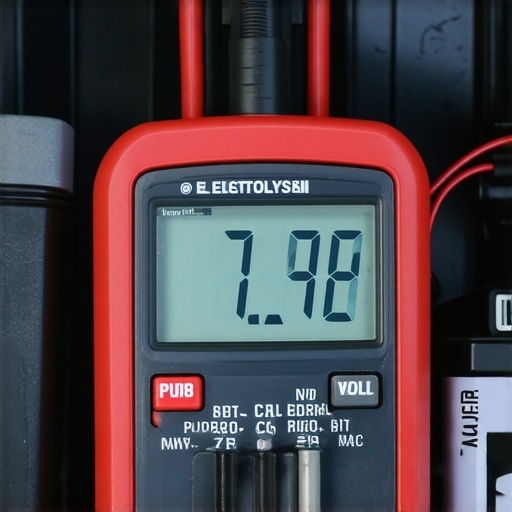
Is Your Coolant Actually Turning Into a Battery?
This sophisticated query often arises when vehicle owners notice recurring pinhole leaks despite frequent flushes. When the cooling system’s ground path is compromised—often due to a frayed engine ground strap—the coolant becomes the easiest path for electrical return. This stray current accelerates the precipitation of silicates and phosphates, which then lodge themselves in the narrowest cooling fins. If you are seeing readings closer to 0.5 volts, your radiator is not just clogged; it is effectively a sacrificial anode for your car’s electrical system. This underscores the necessity of checking electrical grounds during any comprehensive vehicle diagnostics session.
The Physics of Laminar Flow in a Restricted Radiator
A common misconception in auto repair is that if water flows through the radiator, it must be cooling properly. However, heat exchange relies heavily on turbulent flow. Engineers design radiator tubes to create slight turbulence so that every molecule of coolant touches the aluminum walls. When scale builds up, it smooths out the internal surface or narrows the passage so much that the fluid enters a state of ‘laminar flow.’ In this state, the coolant in the center of the tube stays hot while only the outer layer cools, drastically reducing efficiency. This is why a radiator can feel hot to the touch and have flow, yet still fail to prevent an engine temperature spike. According to the standards set by ASTM International (specifically ASTM D3306), engine coolants must maintain specific chemical balances to prevent this type of surface smoothing and scale formation.
Why Your New Thermostat Might Be Masking a Core Failure
Often, a technician will replace a thermostat hoping for a quick fix for a car service client. While a new thermostat might temporarily stabilize the temperature by opening wider or sooner, it cannot compensate for a radiator core that has lost 30% of its surface area to internal blockages. If the engine still runs ‘warm’ under load—such as when towing or climbing a grade—the core is likely the culprit. This is where the transmission health becomes a major concern again; the added heat load from a struggling engine core directly impacts the ATF’s ability to stay within its thermal limits. Have you ever performed a multimeter test on your own cooling system to check for stray voltage? Tell us your results in the comments below, as your data might help others catch a failing ground before it ruins their radiator.
Calculate the Temperature Drop Under Load
To truly verify a clog, you must measure the temperature drop while the engine is under a simulated or real load. At idle, even a partially blocked radiator might show a sufficient delta. However, as the RPMs rise and the water pump increases the flow rate, a restricted core will reveal itself. The pressure on the inlet side will climb significantly higher than the outlet side, a clear sign of resistance that no amount of superficial cleaning can resolve.While the temperature delta is a foundational metric, advanced vehicle diagnostics often require more than a surface-level reading. A radiator can exhibit a correct temperature drop across its tanks yet still possess significant ‘dead zones’ within its core matrix. These zones, caused by solidified debris, might be bypassed by the coolant, which then moves through a smaller volume of tubes at a higher velocity. This reduces the ‘dwell time’ of the fluid, preventing adequate heat dissipation even if the inlet and outlet appear functionally normal. This phenomenon is particularly dangerous because the dashboard gauge might remain in the ‘normal’ range while the engine’s internal components experience localized hot spots.
Surface Readings Often Hide Internal Reality
To move beyond basic IR thermometry, master technicians often employ ultrasonic flow meters. These devices measure the actual velocity of the fluid moving through the hoses without the need to disconnect a single fitting. If the flow rate fluctuates wildly or remains significantly below the manufacturer’s specified gallons-per-minute (GPM) at a set RPM, the internal restriction is confirmed. 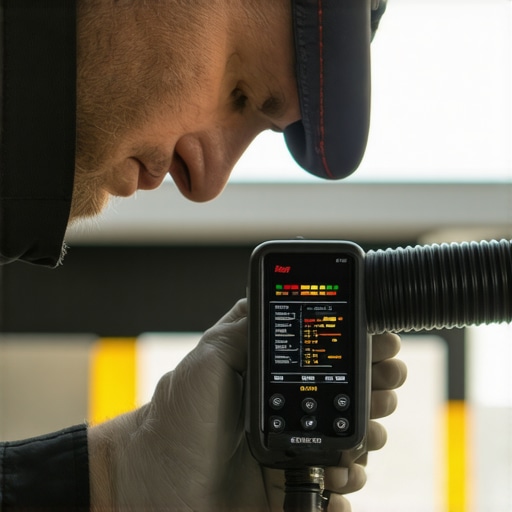 This level of precision is the hallmark of a high-tier car service that prioritizes preventative maintenance over reactive parts swapping. According to technical bulletins from Gates Corporation, ignoring these flow inconsistencies is the primary precursor to premature water pump seal failure due to ‘dry running’ conditions caused by air pockets trapped behind clogs.
Does Your Transmission Fluid Suffer from Latent Thermal Soak?
When the radiator’s efficiency drops, the internal transmission cooler is the first to feel the secondary effects. Because the transmission fluid relies on the radiator’s ‘cold tank’ for its final cooling stage, even a minor 10% reduction in radiator flow can raise ATF temperatures by 30 degrees or more. This heat soak doesn’t just degrade the fluid; it hardens internal rubber seals and leads to pressure losses within the valve body. If you’ve noticed your car shifts harshly only after a long highway drive, your radiator is likely failing to shed heat fast enough to keep the transmission in its safe operating window.
Why New Coolant Won’t Fix an Eroded Engine Path
It is a common mistake in auto repair to assume that a simple fluid change restores a system to its factory state. If a core has been restricted for an extended period, the resulting lack of flow creates stagnant pockets of coolant that become highly acidic. This acid begins to leach the protective zinc and magnesium from the aluminum alloys of the cylinder head. By the time you notice a leak or a clog, the structural integrity of the mating surfaces may already be compromised. This is why we advocate for a full system ‘passivation’—a process that uses specific chemical neutralizers to restore the pH balance and stop the electrical erosion in its tracks. Have you checked your coolant pH lately, or are you waiting for a warning light to appear? Share your diagnostic challenges below, and let’s discuss how to save your engine from these invisible killers.
Expert Insights & Advanced Considerations
Static Pressure Tests Miss Dynamic Flow Failures
Many technicians rely solely on a cooling system pressure tester to find leaks, but this tool is useless for identifying a core restriction. A system can hold 15 PSI perfectly while still suffering from a 50% flow reduction. True vehicle diagnostics require observing the system under load to see if the return temperature matches the engineered cooling curve. Without flow analysis, you are only seeing half the picture.
Acidic Coolant Acts Like a Battery
When the pH balance of your antifreeze shifts, it stops being a lubricant and starts being an electrolyte. This leads to galvanic corrosion, which is often the primary reason why how to spot a bad ground wire before it kills your new battery becomes a relevant topic; the electrical system seeks the path of least resistance through the radiator core. This chemical degradation is irreversible once it reaches the internal scaling stage.
The Secondary Loop Trap in Modern Engines
Modern turbocharged vehicles often use an auxiliary cooling loop for the intercooler or the transmission. If you focus only on the main radiator, you might miss a restriction in these secondary heat exchangers. This is a common pitfall in standard auto repair, where a technician clears the main core but ignores the very component responsible for preventing transmission failures decoded in high-stress driving conditions. #IMAGE_PLACE_HOLDER_D#
Curated Expert Resources
- SAE International Technical Papers: The gold standard for understanding thermal management architecture and laminar flow physics in automotive heat exchangers.
- Gates Corporation Cooling System Diagnostics: Provides granular data on water pump cavitation and the relationship between belt tension and cooling efficiency.
- ASE Training Manuals for Advanced Engine Performance (L1): Excellent for mastering the integration of electrical diagnostics with mechanical cooling failures.
Final Expert Perspective
Mastering the cooling system requires moving beyond the “replace the thermostat” mentality. By integrating infrared thermometry, electrical ground testing, and flow analysis into your car service routine, you protect not just the engine block, but the expensive transmission internals as well. If you are struggling with a persistent overheat, we recommend looking for a reliable car service near you in 2025 that utilizes thermal imaging as a standard protocol. What is the most baffling cooling issue you have ever encountered? Share your experiences in the comments so we can keep the diagnostic conversation moving forward.