The psychological weight of discovering a fresh, crimson puddle on your driveway cannot be overstated for any car owner. In the realm of auto repair, transmission fluid loss is frequently perceived as a harbinger of a multi-thousand-dollar rebuild. However, a high-level analytical approach to vehicle diagnostics often reveals that the root cause of these overnight leaks isn’t internal mechanical disintegration, but rather the failure of a secondary external seal. Modern automatic transmissions operate on highly specific hydraulic pressures; even a marginal decrease in fluid volume can lead to solenoid malfunctions and thermal degradation of friction materials. Identifying the specific $10 culprit before panic sets in is the hallmark of a savvy owner.
Stop the Bleed Before Your Clutch Packs Burn
Fluid is the lifeblood of the gearbox, serving simultaneously as a coolant, a lubricant, and a hydraulic medium. When seals fail, the resulting pressure drop causes the internal clutches to slip, generating localized heat that can glaze plates in seconds. Many drivers ignore a small drip, not realizing that transmission failures often start with these minor breaches. Field-tested data suggests that the shift selector shaft seal or the pan gasket are the most frequent points of failure. These components are subjected to constant heat cycles and environmental debris, causing the rubber to become brittle over time. If you notice your car hesitating, it might be due to the hidden reason your automatic transmission hesitates on hills, which is often tied to fluid level irregularities.
Can a simple seal really prevent a $4,000 rebuild?
The answer is a resounding yes, provided the intervention occurs before mechanical damage is sustained. Professional mechanics often see vehicles where a $10 gasket was the only thing standing between a reliable daily driver and a total scrap heap. The key lies in precise car service and refusing to accept the industry myth of “maintenance-free” systems. For instance, many manufacturers tout “lifetime” fluids, but expert consensus disagrees. As documented in the truth about lifetime transmission fluid, these fluids eventually break down and lose the ability to keep seals pliable, leading directly to the leaks we see overnight. According to technical bulletins from the National Institute for Automotive Service Excellence (ASE), preventative seal replacement is one of the most cost-effective ways to extend the lifespan of high-mileage drivetrains.
Why Precision Installation Beats Stop-Leak Chemicals
In a moment of desperation, many consumers reach for “stop-leak” additives. From an engineering perspective, this is a mistake. These chemicals work by causing rubber seals to swell, which may temporarily stop a leak but can also soften vital internal components, leading to eventual total failure. The only professional-grade solution is a manual replacement of the degraded gasket. Utilizing the hidden world of vehicle diagnostics allows technicians to use dye tests to pinpoint exactly where the breach is occurring, ensuring the repair is surgical rather than speculative. If you suspect your transmission is underperforming, do not wait for a warning light. Book a professional evaluation today to secure your vehicle’s long-term health. This proactive stance ensures that a minor leak doesn’t escalate into a catastrophic mechanical event.
Beyond the visible driveway stains lies a more insidious threat: internal pressure loss. While external leaks are obvious, internal seal failure within the valve body can lead to erratic shifting without a single drop ever hitting the pavement. This internal bypass causes a significant drop in the line pressure required to keep clutch packs engaged, leading to micro-slippage that degrades fluid quality at an accelerated rate. When the hydraulic integrity of the system is compromised, the friction plates rub against one another with insufficient clamping force, creating fine metallic debris that further destroys the sensitive solenoids responsible for gear changes.
Stop Ignoring the Temperature Gauge on Your Dashboard
Many modern vehicles include a dedicated transmission temperature sensor, yet owners rarely monitor this data until a warning light appears. Excessive heat is the primary catalyst for seal hardening; when the fluid exceeds 220°F, the chemical bonds in the rubber seals begin to break down, turning once-pliable gaskets into brittle plastic. When you are towing or driving in steep terrain, the fluid thins significantly, and old seals that were previously holding on suddenly give way. This is often the surprising reason your transmission overheats while driving uphill. By the time the dashboard illuminates, the chemical structure of the fluid has likely already begun to oxidize, losing its protective properties and leaving your gears vulnerable to metal-on-metal contact.
Will a cheap scan tool reveal why your shifts feel sluggish?
For the DIY-inclined owner, the barrier to entry for professional-level data has effectively vanished. Using the $20 scan tool that actually finds hidden transmission codes allows you to monitor real-time Clutch Volume Indexes (CVI). These values indicate how much fluid is required by the computer to apply a specific clutch pack. If the CVI is out of the manufacturer’s specified range, you are looking at an internal leak or worn friction material, even if your driveway remains spotless. The Automatic Transmission Rebuilders Association (ATRA) notes in their technical guidelines that early detection of these ghost codes can reduce repair costs by up to 70% by preventing hard-part damage to the planetary gear sets. 
Fluid Dynamics and the Cold Start Dilemma
A common diagnostic puzzle involves a vehicle where the transmission slips when cold but runs fine when warm. This phenomenon occurs because cold fluid is more viscous and struggles to pass through partially clogged internal filters or hardened piston seals that have lost their flexibility. As the powertrain reaches operating temperature, the rubber seals expand slightly due to thermal expansion, temporarily restoring the seal and masking the underlying defect. This self-healing behavior is a dangerous illusion that often leads to complacency among owners who believe the problem has vanished. Addressing these transmission troubles during the early stages of seal hardening is the only way to ensure long-term reliability. If your car is exhibiting these intermittent symptoms, don’t wait for the inevitable breakdown—dive deeper into our library of repair strategies to stay ahead of the curve and protect your investment.
The torque converter often acts as a silent partner in the drivetrain’s demise. While we focus on gaskets and pans, the internal piston seal of the torque converter clutch is where silent efficiency dies. If this seal loses its ability to hold hydraulic pressure, the lock-up mechanism slips, leading to a localized temperature spike that effectively cooks the fluid in the most inaccessible part of the system. This thermal stress doesn’t just stay in the converter; it travels through the input shaft, hardening every O-ring it touches. Modern Transmission Control Modules (TCMs) are programmed with ‘Adaptive Learning’ algorithms that mask this decay. By monitoring shift timing in milliseconds, the computer senses a delay and commands the solenoids to increase line pressure. You won’t feel the leak because the software is over-working the pump to compensate, essentially forcing the system to operate at its absolute limit just to maintain a standard shift feel.
Why does my car shudder between 40 and 60 mph?
Often mistaken for a tire balance issue, a vibration or shuddering sensation at highway speeds frequently indicates Torque Converter Clutch (TCC) slip. This occurs when the hydraulic fluid is either too thin or contaminated to provide the necessary friction, or when the internal seals are leaking just enough to prevent a solid mechanical lock-up. According to technical documentation from the Society of Automotive Engineers (SAE), specifically in their research on Automatic Transmission Fluid Friction Stability, the loss of specific chemical additives over time reduces the static-to-dynamic friction ratio, leading to this ‘chatter.’ If you ignore this vibration, the constant micro-impacts will eventually destroy the dampening springs inside the converter, leading to a catastrophic mechanical failure. 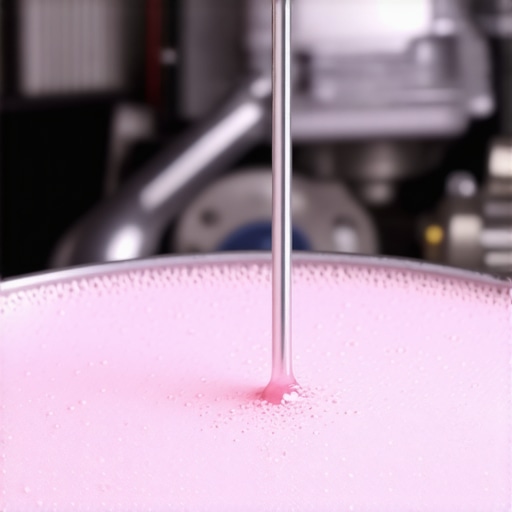
The Strawberry Milkshake Threat to Your Gearbox
Perhaps the most terrifying discovery during a routine fluid check is a pink, frothy substance on the dipstick. This phenomenon, colloquially known in the industry as the ‘strawberry milkshake,’ occurs when the internal barrier of the transmission cooler—usually located inside the radiator—fails. This breach allows engine coolant to mix with the transmission fluid. Water is the natural enemy of transmission internals; it dissolves the water-soluble adhesives that bond the friction material to the steel clutch plates. Once this occurs, the friction material literally peels off in sheets, clogging the valve body and rendering the gearbox useless within miles. This isn’t just a leak; it is a chemical attack on the system’s structural integrity that demands immediate auto repair intervention.
Save Your Clutches from Invisible Friction Loss
Professional-grade car service necessitates more than just topping off a reservoir; it requires a deep dive into the chemical health of the lubricant. When the fluid’s viscosity index changes due to shear or contamination, the hydraulic logic of the valve body is thrown into chaos. Vehicle diagnostics should include a glycol test if any discoloration is noted, as catching a cooler leak early can save the entire unit from a total teardown. Contact our specialists for a comprehensive fluid analysis to ensure your gears aren’t grinding themselves into oblivion. This high-level monitoring is the only way to catch the invisible killers before they manifest as a permanent ‘limp mode’ state. Beyond the chemistry, we must look at the physical stressors of modern stop-and-go traffic and how they impact the mechanical life of the planetary gear sets…
This mechanical fatigue often manifests as pitting on the sun and planet gears, a direct result of “torque spikes” during aggressive downshifts. When the fluid’s film strength is compromised by heat or dilution, the thin layer of protection between these hardened steel components vanishes. This leads to spalling—microscopic flakes of metal breaking off and circulating through the system. These particulates act as an abrasive slurry, wearing down the precise tolerances of the valve body bores and causing “hydraulic hysteresis,” where the valves no longer move freely in response to electronic commands.
Save Your Drivetrain from the Silent Grind of City Traffic
In high-density urban environments, the constant cycling between first and second gear creates a specific type of thermal load that highway driving never replicates. Every time the auto repair specialist sees a “burnt” unit from a city-driven car, the culprit is usually the repetitive engagement of the low-reverse clutch. This component is not designed for the perpetual friction of creeping through traffic with a degraded lubricant. High-level vehicle diagnostics now utilize “clutch fill times” to measure this wear. If the time it takes for a clutch to apply increases by even a few milliseconds, it indicates that the seals are hardening or the friction material is thinning. #IMAGE_PLACE_HOLDER_D#
Can you reset your transmission’s memory to fix a shift flare?
Many owners attempt to solve shifting issues by performing a “battery disconnect” to reset the Transmission Control Module. While this might temporarily mask a shift flare—that momentary rise in RPM between gears—it is often a dangerous gambit. Modern TCMs use “Adaptive Learning” to compensate for physical wear. By clearing these adaptive values without addressing the underlying mechanical or hydraulic fault, you force the transmission to operate on “base” settings that may not provide enough pressure for the now-worn components. According to the technical service bulletins from ZF Aftermarket, resetting adaptations should only be performed after a physical repair or a complete fluid service to prevent premature clutch burnout. Without the software’s learned compensation, a worn seal can lead to immediate and catastrophic slipping.
Why High-Viscosity Cold Starts Kill Modern Solenoids
The evolution of car service has seen a shift toward ultra-low viscosity fluids designed for fuel efficiency. However, these fluids behave differently under extreme cold. In the first few minutes of operation, a cold-start creates a “high-pressure event” within the solenoid bank. If the fluid is contaminated or has reached the end of its chemical life, it can cause the delicate pintles inside the solenoids to stick. This results in the harsh “clunk” many drivers feel when shifting into Drive on a winter morning. Over time, these high-pressure spikes can crack the plastic manifolds within the valve body, leading to internal leaks that no external gasket change can fix. To avoid this, ensuring your vehicle diagnostics include a “cold-state pressure test” is vital for identifying solenoid lag before it destroys the valve body housing.
Ultimately, the health of your drivetrain is a balance between mechanical integrity and electronic precision. Ignoring the subtle cues of a delayed engagement or a slight highway vibration is an invitation to a total system collapse. Reach out to a certified technician today for a bi-directional scan of your transmission’s health to ensure your adaptive software isn’t hiding a ticking mechanical time bomb. By moving beyond basic fluid checks and embracing advanced data analysis, you can preserve the performance of your vehicle for hundreds of thousands of miles.
Expert Insights & Advanced Considerations
Stop letting software hide mechanical decay
Modern Transmission Control Modules are engineering marvels designed to smooth out shifts as parts wear, but this adaptive software can be a double-edged sword. By the time you feel a hard shift, the computer has likely already exhausted its ability to compensate for pressure loss. Smart owners use advanced scan tools to look at Clutch Volume Indexes before symptoms manifest. Relying solely on the dashboard ‘Check Engine’ light is a reactive strategy that often leads to avoidable auto repair bills.
Why a cooling system failure is actually a gearbox death sentence
The relationship between your radiator and your transmission is closer than most realize. If the internal cooler fails, the resulting mixture is catastrophic. This is why we monitor for the “strawberry milkshake” effect; once glycol enters the system, it destroys friction material bonding agents. If you’ve noticed your coolant levels dropping without a leak, check your transmission fluid immediately. Understanding why fluids cross-contaminate can save you from a total powertrain replacement.
Pressure tests reveal more than a dipstick ever will
Fluid level is only one metric of health; hydraulic integrity is another entirely. A transmission can be full of fluid but still failing due to internal seal bypass. Professional vehicle diagnostics involve checking line pressure in various gears to pinpoint exactly which circuit is losing the force required to hold the clutches. This surgical approach prevents the “parts cannon” method of repair, ensuring you only replace what is truly broken.
Cold start behavior is your early warning system
If your transmission slips when cold but runs fine when warm, do not ignore it. This is the hallmark of hardening seals that require heat to expand and function. This window of opportunity is the best time for a high-quality car service. Ignoring this phase allows friction plates to glaze, turning a simple seal job into a full-scale rebuild.
Curated Expert Resources
The ATRA Technical Library
The Automatic Transmission Rebuilders Association (ATRA) provides the most comprehensive data on specific gearbox failures and technical service bulletins. It is the gold standard for identifying factory defects and engineering flaws in modern drivetrains.
ZF Aftermarket Service Data
As a primary manufacturer for global brands, ZF offers deep-dive technical manuals on fluid shear and solenoid health. Their research into lifetime fluid myths is essential reading for anyone looking to exceed 100,000 miles.
ASE Certification Standards
The National Institute for Automotive Service Excellence sets the benchmark for technician proficiency. Their training modules on vehicle diagnostics ensure that repairs are performed with precision rather than guesswork.
Final Expert Perspective
Maintaining a healthy transmission requires a move from reactive maintenance to proactive data analysis. By identifying the early signs of transmission failures—from minor seal leaks to subtle shift delays—you preserve the mechanical and financial value of your vehicle. Comprehensive auto repair isn’t just about fixing what’s broken; it’s about preventing the break before it happens. If you suspect your gears aren’t performing at their peak, contact our expert team today to schedule a high-level diagnostic review and secure your car’s long-term reliability.