The auditory signature of a failing serpentine belt is unmistakable—a high-pitched piercer that signals a breakdown in the friction-to-tension ratio required for efficient accessory drive operation. While many drivers dismiss this as a mere annoyance, a seasoned technician views it as a critical failure in energy transfer. Effective auto repair starts with understanding that the screech is often the result of slip-induced glazing or a loss of elastic memory within the belt’s EPDM (Ethylene Propylene Diene Monomer) structure. Proper car service protocols dictate a diagnostic approach that differentiates between simple contaminants and mechanical misalignment. Understanding the physics of torque transfer is essential when performing even the most basic maintenance.
Diagnose the Root Cause Before Buying Parts
Before reaching for a replacement, delve into the hidden world of vehicle diagnostics to determine if the noise is environmental or mechanical. A common mistake is assuming the belt is “loose” when, in modern vehicles, the automatic tensioner may have reached its travel limit or the internal dampening spring has succumbed to fatigue. Professional-grade vehicle diagnostics often involve a simple “water test”—misting the ribbed side of the belt while the engine is running. If the noise vanishes instantly, you are dealing with a belt-specific issue like glazing or contamination. If it persists or intensifies, the problem likely lies in a misaligned pulley or a failing bearing. [image_placeholder_1]
Why Your Car Only Squeals When the Air Conditioning is On?
This specific symptom often points toward a failing compressor clutch or a belt that can no longer handle high-torque loads. When the A/C clutch engages, it introduces significant parasitic drag; if the belt’s coefficient of friction is compromised, it will slip across the pulley. You can read more about why your car only squeals when the air conditioning is on to isolate whether the fault is in the belt tension or the compressor itself. In many cases, the additional load reveals a weakened tensioner that would otherwise seem functional under lighter loads.
High-Value Mitigation Strategies for Minimal Expense
Silencing a belt doesn’t always require a $200 shop visit. For less than the price of a sandwich, you can utilize a bar of dry soap or a specialized belt dressing—though the latter is often a temporary “band-aid.” A more permanent low-cost solution involves cleaning the pulley grooves with a wire brush to remove accumulated rubber deposits. This restores the mechanical “bite” of the belt ribs. As noted by the Society of Automotive Engineers (SAE), maintaining proper rib-to-groove contact is essential for preventing the heat buildup that leads to premature belt failure. This simple mechanical cleaning can extend the life of your drive system by thousands of miles.
Restore Performance Without the Premium Price Tag
If the belt is simply glazed but still holds structural integrity, a light scuffing with sandpaper on the non-ribbed side can sometimes provide a temporary reprieve by increasing the friction coefficient against idler pulleys. However, for those looking for long-term reliability, following expert auto repair tips for 2025 is the best path forward. If you have noticed other drive-train issues, it may be time to evaluate your transmission health as well, as dragging accessories can sometimes mask broader power delivery symptoms. Are you seeing signs of wear elsewhere? Share your diagnostic findings in our community forum or consult our deeper technical guides to refine your maintenance strategy.
While a belt change is the standard first step, the modern technician must account for the Overrunning Alternator Pulley (OAP) or Overrunning Alternator Decoupler (OAD). These components are designed to absorb the rotational inertia of the alternator’s heavy internal rotor, preventing the belt from vibrating excessively when the engine speed drops. When these pulleys seize, they send violent ripples through the belt, often mimicking the sound of a failing tensioner or a worn-out belt. If you ignore these vibrations, you risk catastrophic failure where the belt snaps and takes out nearby sensors or wiring harnesses. Understanding the nuance between a belt chirp and a pulley rattle is critical for anyone performing vehicle diagnostics at home. 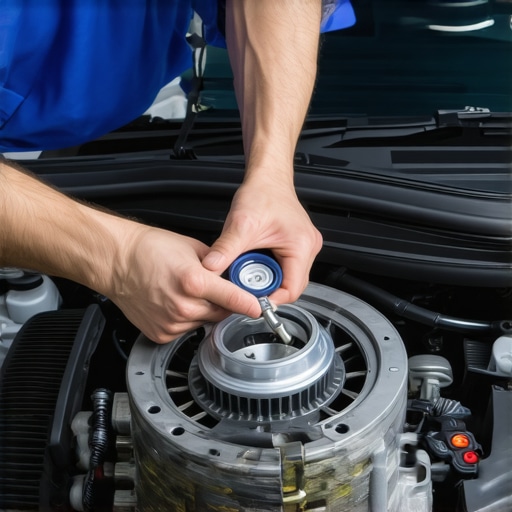
Why Does the Squeak Stop Only When You Shift into Neutral?
If you notice the noise is speed-dependent or changes based on the transmission load, it may not be the belt alone. A shift in engine RPM can alter the resonant frequency of the entire accessory drive. Sometimes, a dragging alternator or a failing idler pulley manifests as a ‘groan’ rather than a ‘squeak.’ If you hear any of these 3 noises your engine makes that mean you should stop driving immediately, it is vital to pull over and inspect the belt’s alignment. A thrown belt can lead to an immediate loss of power steering and cooling, leaving you stranded in traffic without critical safety systems.
Test Your Alternator Without a Lab Scope
You don’t need a $2,000 oscilloscope to check if your alternator is contributing to belt noise. Expert technicians often use a stethoscope or even a long screwdriver to isolate mechanical noise from the alternator housing. Learning how to test an alternator using only a screwdriver allows you to pinpoint whether the bearings are failing before you start unbolting parts. This method utilizes bone conduction to amplify internal mechanical sounds, making it obvious if the internal races are pitted or dry. According to technical bulletins from Gates Corporation, a leader in power transmission technology, ignoring a faulty pulley can lead to premature failure of the crankshaft dampener and the alternator’s internal components due to excessive harmonic stress.
Spotting Electrical Interference in the Drive System
Sometimes what sounds like a mechanical squeal is actually an electrical load issue. If your battery is struggling to hold a charge, the alternator works overtime, increasing the magnetic resistance on the belt. This can lead to intermittent slipping that only occurs during high-draw moments, such as when your headlights and rear defroster are both active. If you suspect your charging system is at fault, you can use the $5 tool for finding electrical shorts in minutes to ensure there isn’t a parasitic drain forcing the alternator into a high-output state constantly. This level of investigative depth separates a ‘parts changer’ from a true expert in auto repair. We want to hear from you—have you ever replaced a belt only to find the noise came from a tiny idler pulley? Tell us your troubleshooting stories in the comments or share this guide with a friend who is currently battling a mystery engine squeal.
Stop the Morning Screech by Checking Thermal Flexibility
The first thirty seconds of an engine’s operation provide a wealth of data that a warm engine simply cannot replicate. During a cold start, the EPDM (Ethylene Propylene Diene Monomer) material is at its most rigid state, requiring maximum torque from the starter and crankshaft to overcome initial inertia. If your car service history shows a recurring squeak that vanishes once the engine reaches operating temperature, the belt has likely lost its elasticity or ‘memory.’ Unlike older neoprene belts that cracked visibly, modern EPDM belts experience ‘loss of rib profile,’ where the valleys between the ribs widen. This allows the belt to bottom out in the pulley grooves, reducing the effective surface area for friction. Professionals utilize a specific wear gauge to measure this depth, as a belt can appear perfectly intact while lacking the physical geometry to maintain grip under load.
How Does Humidity Affect the Friction Coefficient of Your Serpentine Drive?
Environmental factors play a massive role in vehicle diagnostics that many DIYers overlook. High humidity or dew can form a microscopic layer of moisture on the pulleys, acting as a lubricant. While a healthy tensioner and belt can quickly ‘sweep’ this moisture away, a glazed belt will hydroplane across the pulley surface. This isn’t just about noise; every second of slip is converting kinetic energy into heat, which further hardens the belt material and accelerates the degradation of the internal polyester tensile cords. If you find that your belt only slips on rainy mornings, it is a definitive sign that the friction-to-tension ratio is on the edge of failure, even if the belt tensioner appears to be within its operational range.
Spotting the Silent Killer in the Crankshaft Damper
One of the most elusive causes of persistent auto repair headaches is the failure of the harmonic balancer, or crankshaft damper. This component consists of two metal sections bonded together by a thick rubber ring designed to absorb torsional vibrations from the crankshaft. Over time, oil leaks or heat cycles cause this rubber to swell or degrade, allowing the outer ring—which drives the serpentine belt—to shift independently of the inner hub. This misalignment creates a subtle ‘wobble’ that can shred a brand-new belt in days. To diagnose this, a technician will often draw a straight chalk line across the diameter of the balancer. After a brief drive, if the lines no longer align, the balancer has slipped and requires immediate replacement before it detaches and causes catastrophic engine bay damage. 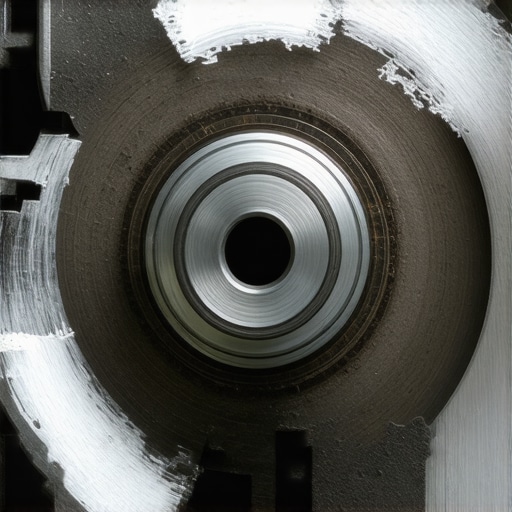
Ensuring that your drive system remains perfectly orthogonal is critical for long-term reliability. According to technical standards established in SAE J2432, even a one-degree misalignment can lead to a 10% increase in belt temperature, which exponentially decreases the lifespan of the EPDM compound. When you are performing your next oil change, take a moment to look at the edge of your belt; if one side appears shinier or more frayed than the other, you are likely dealing with a pulley that is no longer parallel to the engine block. Addressing these alignment issues early prevents the excessive lateral load that kills alternator and water pump bearings prematurely. Do you have a persistent ‘chirp’ that won’t go away even after replacing the belt? Check your harmonic balancer marks before you spend another dime on tensioners.
The Critical Link Between Transmission Loads and Belt Tension
In vehicles equipped with heavy-duty cooling fans or high-output alternators, the transmission state can actually influence belt behavior. When you shift from Park to Drive, the engine’s physical orientation on its mounts changes slightly due to torque reaction. This shift can tighten or loosen the path of the serpentine belt if the engine mounts are worn. This creates a scenario where a belt might be silent in neutral but begins to protest the moment the drivetrain is under load. This complex interplay between the mechanical mounting of the engine and the accessory drive system is why a holistic approach to car service is necessary. You must observe the belt’s tracking while an assistant cycles the vehicle through its gears—with the parking brake firmly engaged—to see if the tensioner arm ‘dances’ excessively under load. If the tensioner arm moves more than a few millimeters during gear transitions, the dampening mechanism inside the tensioner has likely failed, leading to uncontrolled resonance…
When the PCM (Powertrain Control Module) detects these fluctuations in engine RPM, it often attempts to compensate by adjusting the alternator’s field current. This creates a feedback loop where the mechanical vibration is exacerbated by rapid changes in electromagnetic resistance. In sophisticated vehicle diagnostics, this is known as “load hunting.” If you notice your headlights flickering in sync with the belt chirp, you aren’t just looking at a mechanical slip; you’re witnessing the electrical system’s struggle to maintain stability against a fluctuating drive speed. Modern smart charging systems can vary alternator output from 12.5V to 15.5V in milliseconds, and each jump in voltage increases the physical torque required to turn the pulley.
Beat Load Hunting by Interrogating the Smart Charging System
Modern alternators are no longer simple “one-wire” devices; they are high-torque components managed by pulse-width modulation (PWM). If your battery is aging or has high internal resistance, the PCM will command a higher duty cycle, essentially turning the alternator into a magnetic brake. This sudden increase in mechanical load can cause even a relatively new belt to squeal during gear shifts or when the cooling fans kick in. #IMAGE_PLACE_HOLDER_D# Analyzing the charging system’s duty cycle with a scan tool can reveal if the belt noise is a symptom of an electrical system under duress rather than a component failure.
Can a High-Resistance Ground Strap Mimic a Failing Belt?
It sounds improbable, but a corroded engine ground strap can significantly increase the torque load on the alternator. When the electrical return path is compromised, the alternator must overcome that resistance by increasing its magnetic field strength, which increases the physical drag on the rotor. This extra drag is often the tipping point for a belt that is already slightly worn. During a comprehensive car service, checking the voltage drop between the alternator housing and the negative battery terminal is a vital step. If you see more than 0.2 volts of drop, your “belt noise” might actually be an electrical bottleneck. Replacing a $15 ground cable could save you from unnecessary auto repair bills involving more expensive pulleys.
Identify the Telltale Wobble of a Seized Decoupler Pulley
The Overrunning Alternator Decoupler (OAD) is a marvel of engineering that contains an internal torsion spring to smooth out the pulses of the engine. When this spring fails or the internal clutch seizes, the belt loses its primary dampening mechanism. You will see the belt “flutter” on the longest span between pulleys, especially at idle. According to the National Institute for Automotive Service Excellence (ASE), failing to replace an OAD with the correct part number—often mistakenly replaced with a standard solid pulley—will lead to rapid wear of the transmission front pump seals due to the excessive vibrations transmitted through the crankshaft. This is a classic example of how a small accessory component can have a ripple effect on the entire drivetrain’s longevity.
Catch Silent Wear by Measuring Your Belt’s Rib Profile
Because modern EPDM compounds do not crack like old-school neoprene, you must use a specialized depth gauge to assess the health of the drive system. The “valley” of the belt rib should never be deep enough to allow the gauge to sit flush. If the ribs are too thin, the belt “bottoms out” in the pulley, which removes the side-wall friction necessary for torque transfer. This is why a belt can look brand new but still fail to turn the water pump under high-load conditions. Use an OBD2 scanner to monitor your alternator duty cycle; if it’s consistently above 80% while idling with no accessories on, your belt might be slipping silently, forcing the alternator to run longer to maintain battery voltage. Have you checked your alternator’s duty cycle lately to see if your belt is silently costing you fuel economy? Share your scanner data in the comments below to compare with our community experts.
Expert Insights & Advanced Considerations
Stop the Harmonic Balancer from Eating Your New Belt
A frequent oversight in auto repair is neglecting the crankshaft damper. If the rubber bond between the inner and outer rings fails, the resulting lateral ‘wobble’ will shred a new belt regardless of tensioner health. To catch this, use the chalk-line method described in our guide on the hidden world of vehicle diagnostics to verify structural alignment before installing expensive replacements.
Why Smart Charging Systems Cause Unexpected Slip
Modern alternators use Pulse-Width Modulation (PWM) to vary output, which can create sudden torque spikes. If your electrical system has a parasitic drain or a failing battery, the alternator works at a higher duty cycle, increasing physical resistance against the belt. Using the $5 tool for finding electrical shorts in minutes can help you determine if your ‘belt noise’ is actually an electrical system under extreme duress.
The Hidden Vibration Buffer Most DIYers Miss
The Overrunning Alternator Decoupler (OAD) is critical for smoothing out engine pulses. When it seizes, it causes ‘belt flutter’ that can lead to transmission troubles by transmitting crankshaft vibrations through the entire driveline. Always verify the OAD’s internal clutch function by hand-spinning the pulley before assuming the belt itself is the root cause.
Curated Expert Resources
Gates Corporation Technical Support: This is the industry gold standard for power transmission data. Their technical bulletins offer deep dives into rib profile wear and EPDM chemical resistance that go far beyond standard owner manuals.
ASE Certification Modules: For those looking to master vehicle diagnostics, the National Institute for Automotive Service Excellence provides rigorous testing standards that differentiate between basic parts changing and true mechanical analysis.
SAE International Standards: Consult documents like SAE J2432 to understand the specific thermal tolerances and tension requirements for modern multi-rib belts in high-heat engine bays.
Final Expert Perspective
Mastering your vehicle’s drive system requires moving beyond the ‘replace and hope’ mentality. By integrating high-level vehicle diagnostics with a deep understanding of component synergy—from the alternator’s electrical load to the transmission’s mechanical influence—you ensure long-term reliability and peak performance. If you have ever encountered one of those 3 noises your engine makes that mean you should stop driving immediately, you know that a proactive car service strategy is the only way to prevent roadside failure. We invite you to share your most challenging diagnostic breakthroughs in our community or reach out for more advanced technical guides.