High Torque Demands Turn Your Transmission Into a Heat Generator
Climbing steep grades represents the ultimate stress test for a modern drivetrain, shifting the balance from simple locomotion to high-torque thermal management. When you push your vehicle up a long incline, the transmission works significantly harder to overcome gravity and maintain momentum. This increased load forces the torque converter to operate in a high-slip state more frequently, a process that converts mechanical energy into significant thermal energy. If your car service history is spotty, this is precisely when minor inefficiencies escalate into catastrophic failures.
The primary defense against this heat is the Automatic Transmission Fluid (ATF). Under heavy load, the fluid’s viscosity breaks down if it cannot be cooled fast enough. Professional mechanics often point out that uphill driving causes the gears to generate friction at a rate that standard cooling systems can barely handle. When the fluid degrades, it loses its ability to protect internal clutches and bands, leading to the dreaded “slipping” sensation. You can learn more about these specific failure points in our guide on transmission failures decoded.
Is Your Integrated Heat Exchanger Silently Choking Under Pressure?
Many vehicle owners are unaware that their transmission cooling system is often tethered directly to the engine’s radiator. In many modern designs, an oil-to-water heat exchanger sits inside the radiator tank. If the radiator’s efficiency is compromised by scale or debris—even if the engine temp gauge looks normal—the transmission fluid may not be shedding heat effectively. This is where advanced vehicle diagnostics become essential; standard dashboard gauges often fail to show the true temperature of the ATF until it is too late. For a deeper look at what your car is trying to tell you, see the hidden world of vehicle diagnostics.
[image_placeholder]
Stop the Destructive Cycle of Gear Hunting Before It Toasts Your Clutches
When driving uphill, a transmission that is struggling will frequently “hunt” for the right gear, shifting back and forth between a lower and higher ratio. Each shift involves a momentary engagement and disengagement of internal components, generating a pulse of heat. This cycling is one of the fastest ways to burn through your fluid. According to technical standards from the Society of Automotive Engineers (SAE), transmission fluid temperatures exceeding 220°F (104°C) can cause rapid oxidation, which creates varnish that clogs internal passages. This is a primary reason why auto repair specialists suggest manual gear selection when towing or climbing.
Maintaining fluid health is the most cost-effective insurance policy you can buy. Many manufacturers claim “lifetime” intervals for their fluids, but under extreme conditions like mountain driving, this claim rarely holds up. In fact, many experts argue the truth about lifetime transmission fluid is that it leads to premature gearbox death. If you are worried about your current levels, you should learn how to check your transmission fluid level without a dipstick before your next big trip.
Are you hearing strange noises during these shifts? Don’t ignore the warning signs. If your car is struggling on inclines, contact our expert team today for a comprehensive inspection to ensure your cooling system is up to the task.
Gravity Fights Your Fuel Pump More Than You Think
When your car is angled upward, the fuel delivery system faces physical resistance that flat-road driving simply does not replicate. An aging fuel pump may maintain enough pressure for cruising at sea level, but the demand for volume increases significantly under the heavy load of a climb. If the pump internal motor is weakening, the engine experiences a lean condition just as it needs more power to overcome gravity. This starvation often mimics a transmission slip because the engine hesitates and bogs down at the exact moment the gearbox is trying to manage a downshift. Identifying this requires checking the fuel rail pressure under load, a nuance often missed in a basic car service. You can often spot these early warnings by knowing 3 signs your fuel pump is dying before your car wont start.
Why a Dirty Sensor Can Trick Your Transmission Into the Wrong Gear
Modern drivetrains rely on a complex handshake between the engine control module (ECM) and the transmission control module (TCM). If the Mass Air Flow (MAF) sensor is coated in a thin layer of oil or dust, it reports incorrect air density to the computer. Consequently, the TCM may calculate the wrong shift points for an incline, keeping the car in a higher gear than necessary and causing the engine to struggle under load. According to the National Institute for Automotive Service Excellence (ASE), sensor-related data errors are among the most common causes of misdiagnosed transmission failures. Simply learning how to clean your mass air flow sensor can sometimes restore uphill performance without a single wrench being turned on the gearbox itself.
Could a Twenty-Dollar Tool Save Your Gearbox from a Multi-Thousand Dollar Rebuild?
Most drivers wait for a Check Engine or Transmission Overheat light before seeking help, but many failures begin as silent soft codes stored in the computer memory. These codes do not always trigger a dashboard warning immediately. By using an OBD-II scanner capable of reading manufacturer-specific P-codes, you can monitor the slip RPM of your torque converter in real-time. If the slip remains high while the lock-up clutch is supposed to be engaged, you are essentially cooking your transmission from the inside out. For those who want to take control of their vehicle health, using the $20 scan tool that actually finds hidden transmission codes is a game-changer for preventative maintenance.
#IMAGE_PLACE_HOLDER_B#
Stop Overlooking the Torque Converter Lock-Up Solenoid
The lock-up solenoid is a small but vital component that creates a direct mechanical link between the engine and transmission at cruising speeds. On an incline, this solenoid is frequently cycling to balance power and cooling. If the solenoid becomes sticky due to debris—often a result of ignoring proven transmission repairs—the car will feel like it is shuddering or vibrating as you accelerate uphill. This is frequently confused with an engine misfire or a bad spark plug. Understanding why your car loses power uphill but runs fine on flat roads involves distinguishing between these mechanical and electronic hiccups. If you have noticed your car losing momentum on hills, do not wait for a total breakdown. Explore our guide on expert auto repair tips for 2025 to keep your drivetrain in peak condition and ensure every mountain pass is a smooth ride.
The Hidden Math of Tire Diameter and Its Toll on Your Planetary Gears
Many drivers overlook how seemingly minor modifications, like installing oversized off-road tires, completely rewrite the physics of an uphill climb. When you increase the outer diameter of your tires, you effectively lengthen the final drive ratio of your vehicle. This means that for every revolution of the engine, the car travels further, but with significantly less mechanical advantage. On a flat highway, the engine easily compensates, but on a 6% grade, this creates a massive increase in the load placed on the transmission. The internal planetary gear sets must endure higher torque stresses to move the same weight, which generates localized hot spots on the gear teeth. If you have recently upgraded your wheels without re-gearing your differentials, you are essentially forcing your gearbox to work in a permanent state of over-exertion. Maintaining a strict car service schedule becomes non-negotiable in these scenarios to ensure the gear teeth remain coated in high-pressure additives.
Why does my car struggle to downshift at higher altitudes?
As you ascend into thinner mountain air, your engine naturally loses a percentage of its volumetric efficiency because there is less oxygen to support combustion. While the ECU attempts to compensate by adjusting fuel trim, it often fails to account for the physical lag in torque production. The transmission control module (TCM) relies on vacuum signals or calculated load data to initiate a downshift. At high altitudes, the manifold absolute pressure (MAP) readings can be deceptive. This results in a ‘lazy’ transmission that stays in a high gear for too long, lugging the engine and creating immense backpressure on the torque converter. According to research from the Automotive Service Association (ASA), vehicles operating regularly above 5,000 feet require specialized vehicle diagnostics to recalibrate shift points and prevent premature clutch pack wear. Without this adjustment, the constant mismatch between engine output and gear selection creates a silent, grinding wear pattern.
Bypass the Radiator Loop with a Dedicated Stacked-Plate Cooler
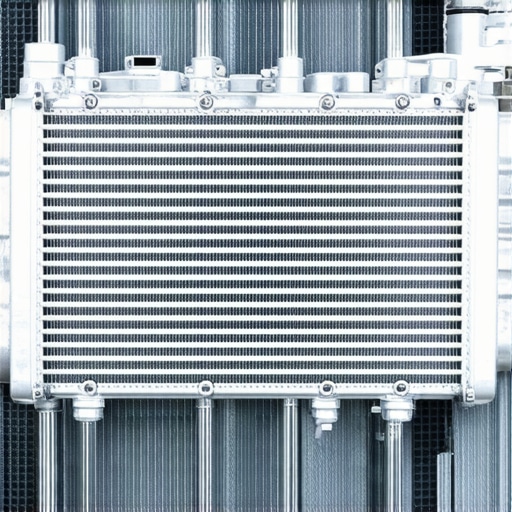
For those who frequently tackle mountain passes or tow heavy trailers, the factory cooling system is often the weakest link in the auto repair chain. As discussed previously, the integrated heat exchanger inside your radiator is a compromise of space and cost. A far superior solution is the installation of an auxiliary stacked-plate transmission cooler. These units act like a secondary radiator specifically for your ATF, mounted in the direct airflow behind the front grille. By lowering the fluid temperature by even 20 degrees, you can potentially double the lifespan of the seals and friction plates inside your transmission. This is the gold standard for preventative maintenance in high-load environments. If you are noticing a burnt smell after a long climb, it is a clear sign your current cooling capacity has been exceeded. You can dive deeper into these high-performance upgrades by reading our analysis on expert auto repair tips for 2025. Implementing these modifications now can prevent a total mechanical failure in the middle of a remote mountain range.
The Subtle Danger of Vacuum Leaks in Older Drivetrains
While modern cars use electronic solenoids, many older or ‘young-timer’ vehicles still rely on vacuum modulators to tell the transmission when to shift. A tiny, hairline crack in a rubber vacuum line might not cause a rough idle, but under the high-load conditions of an uphill climb, it can prevent the transmission from sensing the need for a kick-down. This leads to a dangerous situation where the engine is at full throttle but the gearbox remains in overdrive, causing the internal clutches to slip and glaze. Detecting these leaks requires more than a visual check; a professional car service will often use a smoke machine to find these elusive pressure drops. If your older vehicle feels ‘numb’ to throttle inputs on a hill, the solution might be a five-dollar piece of rubber hose rather than a three-thousand dollar rebuild.
Your TCM is probably sabotaging your mountain climb
Modern transmissions utilize adaptive learning algorithms to tailor shift points to your specific driving habits. If your weekly routine consists of low-speed suburban commuting, the Transmission Control Module (TCM) prioritizes fuel economy and soft engagement over high-load performance. When you suddenly confront a steep mountain pass, this stored memory works against you. The TCM may hesitate to downshift or may apply a lazy pressure curve to the clutch packs, leading to micro-slippage that generates immense heat. This software-induced lag is a hidden culprit in many vehicle diagnostics reports. Resetting these adaptations before a long trek can often restore the crispness required for heavy-duty grades.
#IMAGE_PLACE_HOLDER_D#
Why does your gearbox refuse to forget your daily commute?
The conflict arises because the computer assumes your current high-load state is a temporary anomaly rather than a sustained demand. It tries to return to its learned efficiency maps as soon as the throttle position stabilizes, even if the grade remains steep. This tug-of-war between software expectations and physical reality is why auto repair professionals often recommend a specialized software flash for vehicles frequently used for towing. Without correcting the adaptive logic, you are effectively forcing the mechanical components to fight a digital ghost of your city driving habits.
Don’t let a failed mount crack your transmission case
While most enthusiasts focus on fluid and gears, the physical stabilization of the drivetrain is equally critical during a climb. When you apply high torque to move a vehicle uphill, the engine and transmission naturally want to rotate in the opposite direction of the wheels—a phenomenon known as torque reaction. Worn rubber or hydraulic mounts allow excessive movement, which can misalign the driveshaft or put undue stress on the transmission housing itself. Under extreme load, this flex can even lead to linkage bind, where the physical gear selector or internal solenoids struggle to move because the entire unit is twisting out of its designated plane. A routine car service should always include a pry-bar test of the mounts to ensure they can withstand these rotational forces.
The hidden thermal bridge between your differential and gearbox
In many rear-wheel and all-wheel-drive configurations, the heat generated by the differential can migrate toward the transmission. On a long incline, the ring and pinion gears in the differential are under constant pressure, frequently reaching temperatures that exceed 250°F. If your differential fluid is old or the breather is clogged, this heat builds up and transfers through the driveshaft and housing. Technical bulletins from ZF Aftermarket emphasize that drivetrain longevity depends on the thermal equilibrium of the entire system, not just the gearbox. Failing to service your gear oil can indirectly cook your transmission from the back forward. If you suspect your drivetrain is running hot, reach out to our diagnostic specialists to perform a full thermal mapping of your undercarriage before your next adventure.
Expert Insights & Advanced Considerations
Stop Blaming Heat and Start Watching Fluid Shear
While many drivers fixate on the temperature gauge, the physical breakdown of long-chain polymer molecules in your ATF—known as fluid shear—happens at a microscopic level under high-torque climbs. Even if your cooling system keeps the bulk temperature in check, localized shear at the gear mesh can leave metal surfaces unprotected. This is why high-mileage vehicles benefit from specific chemistry; for instance, some shops have found that the $5 additive that stopped our shops worst transmission shudder can help restore film strength where standard fluids fail under pressure.
PWM Solenoids Fail Long Before the Gears Do
Modern vehicle diagnostics often overlook the duty cycle of Pulse Width Modulation (PWM) solenoids. On a steep grade, these components cycle thousands of times per minute to maintain precise line pressure. If they become sluggish due to micro-particulates, the shift overlap becomes sloppy, causing internal friction. Instead of a full rebuild, many owners find success by learning how to flush your own transmission fluid without a machine, which removes the suspended debris that causes solenoid hang-up without the risks associated with high-pressure cleaning.
Thermal Bridging Is the Silent Killer of All-Wheel Systems
In all-wheel-drive vehicles, the proximity of the transfer case and rear differential can create a ‘thermal bridge.’ Heat generated by the rear gears under load migrates through the driveline, preventing the transmission from shedding its own thermal energy effectively. Addressing this requires a holistic look at auto repair, ensuring every gearbox in the chain is properly lubricated and vented. If you are unsure about the safety of standard procedures, read up on the truth about transmission flushes and why they can be dangerous before taking your car to a generic quick-lube shop.
Curated Expert Resources
ZF Aftermarket Technical Bulletins: These provide the actual engineering tolerances for some of the world’s most advanced gearboxes, offering a level of technical detail far beyond a standard owner’s manual or basic car service guide.
SAE International Research Papers: For those who want to understand the tribology of fluid breakdown under extreme uphill loads, the SAE library is the gold standard for peer-reviewed drivetrain data and lubricant performance.
ASE Certification Training Modules: These resources help you understand the logic behind complex vehicle diagnostics, teaching you how to interpret ‘soft codes’ and adaptative learning data before they become hard mechanical failures.
Final Expert Perspective
Mastering the demands of steep terrain requires moving beyond basic maintenance and embracing a strategy of proactive thermal management. By monitoring fluid shear, protecting your electronic solenoids, and looking at the drivetrain as a single thermal unit, you ensure your transmission remains a reliable partner rather than a mechanical liability. Integrating top auto repair techniques every car owner should know into your routine is the best way to safeguard your investment against gravity. If you have noticed any change in how your vehicle handles the heights, we invite you to share your observations or consult with our master technicians to keep your journey smooth and your clutches cool.