How the PCM Fails the Torque Demand Test
When a vehicle’s RPM dips and the engine feels like it is gasping for breath the moment the A/C clutch engages, we are observing a failure in the vehicle’s dynamic load-leveling system. Modern internal combustion engines are marvels of efficiency, yet the parasitic draw of an A/C compressor—often requiring 5 to 15 horsepower—can destabilize an engine if the Powertrain Control Module (PCM) fails to anticipate the torque demand. In a healthy system, the hidden world of vehicle diagnostics reveals that the PCM should receive an ‘AC Request’ signal before the clutch even engages, allowing it to bump up the Idle Air Control (IAC) or adjust the electronic throttle plate to compensate. When this digital handshake is delayed or ignored, the engine ‘bogs’ as it struggles to maintain its rotational inertia against the sudden mechanical resistance.
The Silent Culprits Behind Idle Air Control Latency
Expert-level auto repair often uncovers that the root cause isn’t the compressor itself, but rather the components responsible for engine breathing at low speeds. Carbon buildup in the throttle body or a sticking IAC valve can introduce significant latency into the system. According to research published by SAE International regarding automotive energy management, even minor deviations in idle stability are magnified under the 20-30% additional load placed by a high-pressure refrigeration cycle. If your vehicle is already suffering from a marginal sensor, such as an aging Mass Air Flow (MAF) sensor that is reporting ‘lazy’ data, the sudden load of the AC will expose these inefficiencies. Often, the solution is as simple as fixing the sensor issues that cause engine stumbles at red lights, which restores the PCM’s ability to react with precision.
Can a Slipping Transmission Mimic AC Load Bogging?
It is a common misconception among DIYers that every engine stumble is purely a fuel or spark issue. However, from a professional car service perspective, we must consider the total drivetrain load. If a torque converter clutch is partially engaging or if there is internal hydraulic drag within the transmission, the engine is already operating under a higher-than-normal baseline load. Adding the AC compressor to this equation can be the ‘tipping point’ that leads to a near-stall condition. This is why a comprehensive transmission diagnostic is often necessary when traditional engine-side fixes fail to resolve heavy bogging. High-level diagnostics must look at the synergy between the engine and the gearbox to ensure the load is being distributed correctly across the entire powertrain.
Rectifying the Electronic Mismatch Before Hard Parts Fail
Ignoring a car that bogs down isn’t just a matter of comfort; it is a matter of longevity. Persistent engine lugging puts immense stress on motor mounts, crank bearings, and the compressor clutch itself. Field-tested data suggests that vehicles operating in extreme heat are most susceptible, as the higher refrigerant pressures require even more torque to compress. Professionals use advanced scanners to monitor ‘Desired Idle’ vs. ‘Actual Idle’ during the AC trigger event. If the desired idle doesn’t rise immediately, the logic circuit or the pressure switch may be faulty. If your vehicle continues to struggle despite these checks, consider choosing the right car service for seamless vehicle maintenance to ensure your diagnostic profile is fully up to date and your engine can handle the summer heat without compromise.
The Hidden Voltage Drop Killing Your Idle
While most mechanics focus on the mechanical resistance of the compressor, the electrical surge required to engage the A/C clutch and high-speed cooling fans can be just as destabilizing. A failing alternator or a battery with high internal resistance cannot always keep up with the instantaneous amperage spike. This results in a temporary voltage drop that weakens the ignition system precisely when the engine needs maximum torque to stay alive. If your dashboard lights dim significantly when the A/C kicks in, you are likely dealing with an electrical bottleneck rather than a mechanical one. You can often verify this by using a simple test for your alternator without a multimeter, which helps isolate whether the charging system is providing the necessary buffer for high-load operations.
Could a $14 Vacuum Leak Be Masquerading as a Dying Compressor?
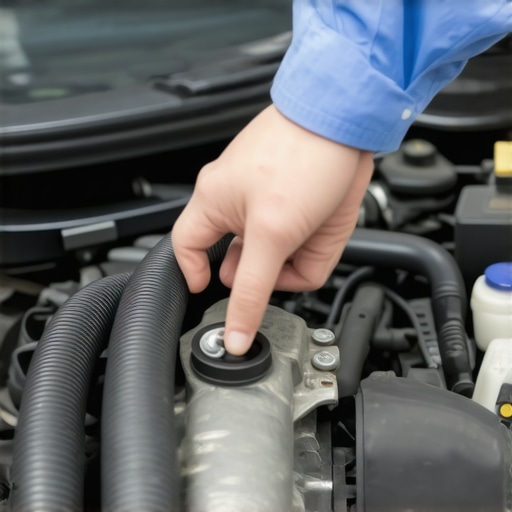
Airflow management is the cornerstone of a stable idle. In many older vehicles, and even some modern turbocharged platforms, the PCM relies on a steady vacuum signal to calculate engine load via the Manifold Absolute Pressure (MAP) sensor. A pinhole leak in a vacuum line might be unnoticeable at a cruise, but once the A/C compressor adds mechanical drag, the engine’s inability to precisely meter air leads to a lean condition and a subsequent stumble. Instead of jumping to replace expensive hard parts, seasoned technicians often find that they can stop an engine from dying at stoplights by simply replacing brittle rubber hoses. This minor fix restores the pressure signals the PCM needs to properly adjust fuel trim and spark timing during high-torque demand events.
Why Grounding Straps Are the Unsung Heroes of AC Stability
Electrical interference is the silent enemy of modern vehicle diagnostics. When the A/C compressor engages, it creates a significant amount of electrical ‘noise’ and requires a clear path back to the negative terminal. If the engine’s grounding straps are corroded or loose, this return path is compromised, forcing the current through sensitive sensor circuits. This can cause the Crankshaft Position Sensor or the Camshaft Sensor to send erratic signals to the PCM, resulting in a momentary misfire or ‘bog’ that feels like a mechanical stall. The National Institute for Automotive Service Excellence (ASE) notes that over 30% of intermittent engine performance issues under load can be traced back to poor electrical grounds or high-resistance connections. Ensuring these paths are clean and tight is a foundational step before assuming the PCM or the compressor itself is faulty.
Stop the Cycle of Guesswork with Precise Data
Real-world diagnostic success requires moving away from the ‘parts cannon’ approach. By monitoring Short-Term Fuel Trims (STFT) while cycling the A/C, you can see exactly how the engine is struggling. If the trims skyrocket the moment the clutch engages, you are looking at a fuel delivery or air leak issue. Conversely, if the trims remain steady but the RPM drops, the issue is likely a mechanical drag or a failure in the idle control logic. Many owners find that the $15 fix for engines that stumble under pressure is often just a matter of cleaning the throttle plate or replacing a cheap sensor. If you are tired of the guessing game, take a moment to explore our guide on top auto repair techniques to refine your troubleshooting process and keep your vehicle running smoothly through the summer heat.
Stop the RPM Dip with a PCM Flash
In many instances, the mechanical components are functioning exactly as intended, yet the engine still falters. This is often due to outdated software calibration within the Powertrain Control Module. Manufacturers frequently release Technical Service Bulletins (TSBs) that include software updates designed to refine the torque reserve calculations. When the A/C clutch engages, the PCM needs a “look-ahead” strategy to pre-emptively increase fuel injector pulse width. If your vehicle is running on an early software version, it may lack the refined logic required to handle the parasitic load of a modern high-output compressor. Many technicians have found that a simple “reflash” can solve a decade of stalling issues without turning a single physical bolt. It is worth investigating whether your vehicle’s manufacturer has issued a calibration update specifically targeting idle quality under high-load conditions.

The Variable Displacement Valve Trap
Unlike the older “on-off” compressors, many modern vehicles utilize variable displacement compressors. These units use an internal swash plate and an electronic control valve to modulate the amount of refrigerant they move. While highly efficient, these systems introduce a unique failure mode: the control valve can become sluggish or stuck. According to technical documentation from Delphi Technologies, a failing control valve can cause the compressor to stay at maximum displacement regardless of the actual cooling demand. This creates an unexpected, massive mechanical drag that the PCM cannot account for because it expects the compressor to be at a lower displacement. This mismatch between “expected load” and “actual drag” is a primary reason for engine bogging in vehicles manufactured after 2010.
How Does Low Refrigerant Kill Your Idle Stability?
A common query among drivers is whether a simple leak can lead to a stall. While it seems counterintuitive—less gas should mean less work—the reality lies in the cycling frequency. When refrigerant is low, the low-pressure switch rapidly engages and disengages the compressor clutch to prevent the evaporator from freezing or the compressor from running dry. This “rapid cycling” creates a chaotic environment for the Idle Air Control system. The IAC motor or electronic throttle plate must constantly chase a moving target, opening and closing in a frantic attempt to stabilize the RPM. Eventually, the latency in the mechanical components causes the system to overcorrect, leading to a “hunting” idle or a complete stall at a stoplight. If your A/C is blowing lukewarm and your engine is stumbling, the root cause might be a pressure imbalance rather than a mechanical failure.
Why Your Speed Sensor Dictates AC Performance
The PCM uses the Vehicle Speed Sensor (VSS) to determine which “idle map” to use. When the car is moving, the PCM is much more forgiving of load changes because the engine’s rotational inertia is higher. However, when the VSS signal is weak or noisy, the PCM may fail to switch into its “stationary idle” mode. This mode is critical because it specifically prioritizes anti-stall logic. If you notice that your car only bogs down when you are coming to a complete stop with the A/C on, but it performs fine while cruising, you are likely looking at a VSS-related logic error. Ensuring that the PCM accurately recognizes the vehicle’s stationary state is a vital step in high-level car service, as it allows the computer to engage the necessary torque buffers before the mechanical load of the compressor hits the crankshaft.
The Critical Role of the ECT Sensor in Load Management
Engine Coolant Temperature (ECT) sensors do more than just move the needle on your dashboard; they are the primary input for the PCM’s fueling strategy. When an engine is running hot, the oil viscosity thins and the internal friction changes. Simultaneously, the A/C system’s high-side pressure increases, making the compressor harder to turn. A “lazy” ECT sensor that reports a lower-than-actual temperature can prevent the PCM from adjusting the idle speed high enough to compensate for these environmental factors. By accurately measuring the thermal load, the PCM can advance the ignition timing to provide the extra torque needed to keep the engine spinning. If you are struggling with a persistent stumble, exploring advanced diagnostic tools to monitor real-time ECT data can help you identify if your engine is “flying blind” during the hottest part of the day.
When Weak Spark Hides Behind A/C Load
As we transition from sensor-driven data to the raw physics of combustion, the role of the secondary ignition system becomes paramount. When the A/C compressor engages, the PCM increases the air-fuel charge to maintain RPM. This higher cylinder pressure increases the dielectric resistance across the spark plug gap. If your ignition coils or spark plug wires are suffering from microscopic insulation breakdown, the added “work” required to jump that gap can lead to an intermittent misfire. This isn’t just a stumble; it’s a symptom of a voltage-starved combustion chamber. High-level diagnostic routines often utilize an oscilloscope to monitor “burn time” during the A/C trigger event, ensuring that the coil has sufficient saturation to overcome the increased load without collapsing the magnetic field prematurely.
How Fuel Pressure Latency Starves the Crankshaft
While the PCM can command a longer fuel injector pulse width, it assumes that the fuel rail pressure remains constant. In high-mileage vehicles, the fuel pump may provide enough volume for a steady idle but lack the instantaneous recovery speed needed when the A/C clutch hits. This latency creates a momentarily lean condition. According to technical bulletins from MACS Worldwide (Mobile Air Climate Solutions Association), a sudden drop in fuel pressure—even by 3 to 5 PSI—can cause the engine to “search” for stability as the feedback loop from the oxygen sensors struggles to keep up with the rapid change in torque demand. It’s a delicate dance where the mechanical fuel delivery must perfectly mirror the electronic command to prevent a RPM nosedive.
Does an Overcharged System Mimic a Failing Engine?
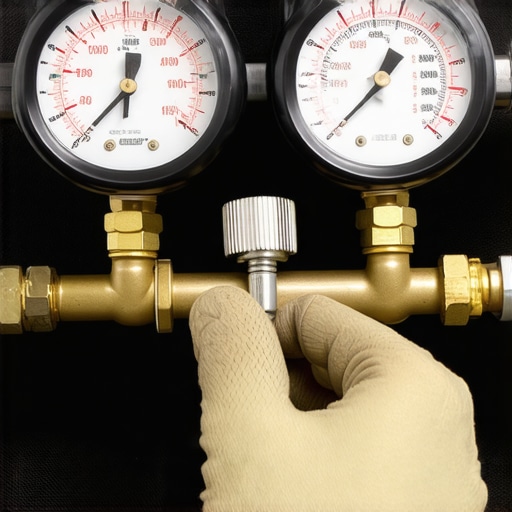
Technicians often overlook the possibility that the A/C system itself is “too full.” If a previous DIY recharge kit was used without a proper manifold gauge set, the system might be overcharged with refrigerant or oil. This creates excessive head pressure on the high-side of the compressor. When the clutch engages, the mechanical force required to compress the liquid/gas mixture exceeds the PCM’s programmed torque-reserve limit. Instead of a standard 5-10 horsepower draw, an overcharged compressor can pull significantly more, effectively “braking” the crankshaft. If your engine only bogs when the weather is at its hottest, it may be time to perform a refrigerant recovery and recharge to the exact manufacturer specifications to eliminate this parasitic drag.
Check Your Harmonic Balancer Before It Destroys the Crank
The harmonic balancer (or crankshaft pulley) acts as a dampener for the engine’s internal vibrations. It consists of an inner hub and an outer ring bonded by rubber. Over time, this rubber degrades. When the A/C compressor—which is driven by the outer ring—engages, the sudden torque can cause the outer ring to slip momentarily against the inner hub. This doesn’t just cause a “bog” feel; it throws off the engine’s rotational balance and can cause the PCM to detect a “phantom” misfire via the crankshaft position sensor. Inspecting the alignment marks on your pulley is a critical step in advanced car service; if the marks don’t line up after a few A/C cycles, the balancer is failing and could lead to catastrophic engine damage if left unaddressed. If you’re ready to stop the guesswork and ensure your vehicle is handled by experts, choosing the right car service for seamless vehicle maintenance is the final step in securing your car’s reliability and performance.
Expert Insights and Advanced Considerations
Torque Reserve Math Explains Your RPM Nosedive
When you activate the climate control, the Powertrain Control Module (PCM) doesn’t just react; it calculates a torque reserve based on historical idle stability data. If the engine has been struggling with minor issues like a hidden oil consumption problem or carbon buildup, the buffer of power the computer expects simply isn’t there. This mathematical mismatch leads to a momentary RPM crash before the closed-loop system can correct the fueling and air ratios. High-level diagnostics must account for these learned adaptive values in the PCM memory.
Why High-Side Pressure Often Outmuscles the Engine
Many mechanics check the low-side pressure, but the high-side is where the mechanical work happens. If your condenser is partially blocked with debris or if there is air in the system, the compressor has to work twice as hard to push refrigerant through the cycle. This extreme load can overwhelm even a healthy engine. Regular professional car service includes cleaning the condenser fins to ensure the heat exchange is efficient and the torque demand remains within factory specifications, preventing the engine from gasping for air.
Stop Chasing Ghost Sensors and Check Your Grounding Path
Electrical noise from a worn compressor clutch coil can back-feed into the vehicle’s communication bus via a poor ground. This electromagnetic interference (EMI) confuses the crankshaft sensor, making the PCM think the engine is misfiring when it is actually just an electrical spike. Always verify that your charging system is robust and that all engine-to-chassis grounding straps are free of corrosion before you start replacing expensive sensors or the PCM itself.
Curated Expert Resources
MACS Worldwide (Mobile Air Climate Solutions): This is the gold standard for mobile A/C diagnostics. Their technical bulletins are essential for anyone trying to solve complex cycling issues or pressure imbalances that lead to engine instability.
SAE International Technical Papers: For those who want to understand the deep fluid dynamics and thermodynamics of automotive refrigeration, SAE provides peer-reviewed research on energy management and parasitic loss mitigation.
ASE Certification Training: Specifically the A7 (Heating and Air Conditioning) and L1 (Advanced Engine Performance) modules. These certifications bridge the gap between mechanical A/C repair and electronic engine management, which is where the car bogs down when the AC is on.
Final Expert Perspective
Solving a vehicle that bogs down when the A/C is on requires a holistic view of the entire powertrain. It is rarely a single component failure; rather, it is a synergy between the charging system, the idle control logic, and the mechanical health of the compressor. By addressing root causes—whether they are minor vacuum leaks or complex software calibration errors—you ensure your vehicle remains reliable under the most demanding thermal loads. If you have explored basic sensors and the issue persists, it may be time to seek a specialist who understands advanced vehicle diagnostics. What has been your most challenging mystery stall? We invite you to share your experiences or contact us for a professional consultation to restore your engine’s peak performance during the summer heat.