Decoding the Mechanical Imbalance Behind Asymmetric Friction Loss
Asymmetric friction wear in modern automotive braking systems is rarely a fluke of manufacturing; it is the physical manifestation of a systemic failure in kinetic energy distribution. When a technician identifies that the inboard or outboard pad on a single corner has depleted while its counterpart remains thick, they aren’t just looking at a replacement task—they are looking at a diagnostic puzzle involving mechanical, hydraulic, and sometimes electronic variables. Professional auto repair requires moving beyond the friction material to evaluate the environment in which the brake operates. According to research by the Society of Automotive Engineers (SAE), thermal management and consistent clamping force are the two most critical factors in maintaining pad longevity and stopping distance. If one pad is working harder than the others, the resulting heat can glaze the rotor, boil the brake fluid, and eventually lead to catastrophic failure.
When Caliper Slide Pins Turn Into Anchors
The most common culprit for one-sided wear is the failure of the caliper’s sliding mechanism. In a floating caliper system, the piston pushes the inner pad against the rotor, and the resulting reaction pull draws the outer pad in. This entire movement relies on grease-slathered slide pins. When these pins corrode or the rubber boots perish, the caliper becomes ‘cocked’ or stuck. This results in one pad staying in constant contact with the rotor even after you release the pedal. Without regular car service to clean and lubricate these components, the friction material will incinerate itself in a matter of months. This isn’t just a maintenance oversight; it’s a mechanical drag that kills fuel economy and places unnecessary strain on your hub bearings.
Is a Collapsed Brake Hose Trapping Pressure in Your Caliper?
While mechanical seizing is frequent, hydraulic ‘check valves’ are the more insidious cause. Over time, the internal lining of a flexible rubber brake hose can delaminate. This creates a flap of rubber that allows high-pressure fluid to reach the caliper when you step on the pedal but prevents it from returning to the master cylinder when you let go. This traps residual pressure against the piston, keeping the pad ‘on’ indefinitely. This is where professional vehicle diagnostics prove their worth, as a simple visual inspection won’t reveal an internal hose failure. If you suspect your braking system is fighting against itself, we recommend you contact our specialists for a comprehensive pressure test.
The Surprising Link Between Wheel Alignment and Brake Longevity
It is a common misconception that brakes only wear when the pedal is depressed. If your vehicle’s alignment is significantly out of spec, the tire is essentially ‘scrubbing’ across the pavement. This creates lateral forces that can cause the rotor to tilt slightly within the caliper’s path. This misalignment leads to tapered wear, where one end of the brake pad is thinner than the other. This often occurs in conjunction with steering wheel vibration or a pull to one side. Addressing the pads without correcting the geometry is a temporary fix that ignores the root cause. Proper maintenance involves looking at the vehicle as a holistic machine where the transmission, suspension, and braking systems must act in harmony to ensure safety and performance.
How Modern Stability Control Secretly Burns Through Your Brake Pads
Beyond the physical geometry of the suspension, we must consider the invisible hand of the vehicle’s on-board computers. Modern Electronic Stability Control (ESC) and Traction Control Systems (TCS) use the braking system as a primary tool for vehicle orientation. If the computer detects even a hint of wheel slip or yaw instability, it can autonomously apply the brake to a single wheel. If a wheel speed sensor is contaminated or failing, it might trigger these micro-braking events without ever illuminating a warning lamp. This constant, subtle friction is often why your ABS light stays on after changing your brake pads or why one corner is significantly hotter than the others. According to technical documentation from Bosch Mobility, the original pioneers of Electronic Stability Control, these systems are capable of modulating pressure at millisecond intervals, meaning your pads could be dragging for miles without you feeling a single vibration in the pedal. 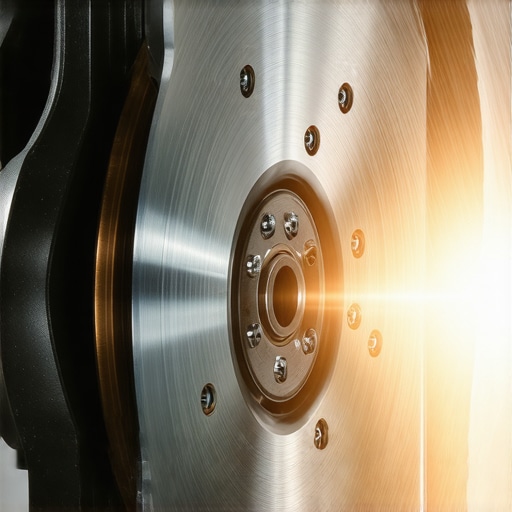
Could a Faulty Wheel Speed Sensor Mimic a Seized Caliper?
The intersection of electronics and mechanics often creates diagnostic ‘ghosts.’ When a sensor provides skewed data, the ABS module may hold a small amount of residual pressure in the line, preventing the piston from fully retracting. This creates an identical wear pattern to a seized slide pin but requires a completely different repair strategy. For those operating on a budget or working on older models, you can often identify why your ABS light is on without a scan tool using this jumper wire trick to see if the computer is actively fighting your mechanical repairs.
Stop Chasing Squeaks and Start Measuring Lateral Runout
Lateral runout is the ‘invisible’ killer of brake pads and a major contributor to asymmetric wear. If the hub surface is not perfectly clean before a new rotor is installed, or if the rotor itself is warped, it will wobble as it spins. This wobble physically strikes the brake pad twice during every single rotation, pushing the piston back into the bore. This ‘knock-back’ effect is the real reason why your brake pedal feels spongy after bleeding the lines. Over time, this constant contact at high spots thins the friction material in a tapered pattern. To fix this, you don’t always need expensive equipment; sometimes, the simple 12 dollar fix for squeaky brakes simply involves using a wire brush to clean the mating surface between the hub and the rotor to ensure 100% flatness. If you have ever encountered a situation where we fixed a spongy brake pedal when bleeding the lines failed, it was likely due to this mechanical runout issue. Have you noticed one wheel producing more dust than the others lately? Share your findings in the comments below so we can help you diagnose whether it’s a stuck pin or a computer glitch.
The Hidden Role of the Square-Cut Seal in Piston Retraction
Most drivers assume that a mechanical spring pulls the brake piston back into its bore after the pedal is released, but the reality is far more elegant and prone to failure. Inside the caliper, a square-cut rubber seal performs a dual role: it prevents fluid leaks and acts as a torsional spring. When you apply pressure, this seal deforms. When you release, the seal’s ‘memory’ pulls the piston back just enough to create a microscopic air gap. Over time, heat cycles and contaminated fluid cause this rubber to harden and lose its elasticity. Once the seal becomes brittle, the piston stays exactly where it stopped, leaving the pad in constant, light contact with the rotor. This subtle friction generates enough heat to glaze the pad surface long before the other side shows wear. If you find your wheels are consistently coated in dark dust despite gentle driving habits, your calipers might be suffering from ‘lazy’ seals that no longer retract. 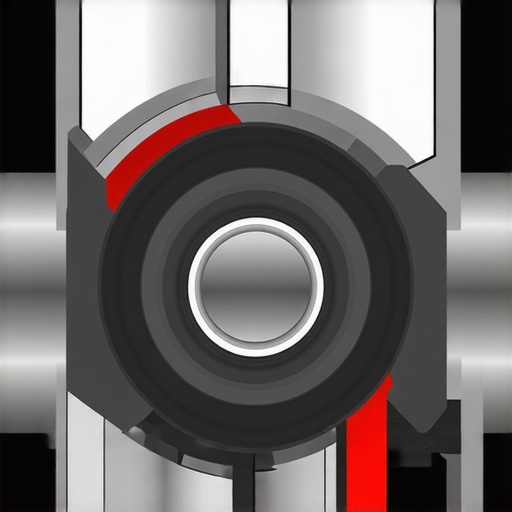
Does the Master Cylinder Hold the Key to Unexplained Pad Drag?
While we often blame the hardware at the wheel, a blockage in the master cylinder’s compensating port can turn your entire braking system into a pressurized trap. This tiny orifice allows brake fluid to return to the reservoir when the pedal is at rest. If the master cylinder is misadjusted or if internal debris clogs this port, the fluid cannot expand back into the reservoir as it heats up. This creates a rising floor of residual pressure that typically affects the wheels furthest from the master cylinder first. According to technical safety data from the National Highway Traffic Safety Administration (NHTSA), hydraulic system malfunctions related to fluid contamination remain a leading cause of secondary braking failures. If you have replaced calipers and hoses only to find the drag remains, the fault likely lies in the heart of the hydraulic circuit.
Look Beyond the Wheels When One Side Drags
A neglected aspect of brake longevity is the chemical state of the brake fluid itself. Brake fluid is hygroscopic, meaning it actively absorbs moisture from the atmosphere. This water content lowers the boiling point of the fluid, but more importantly, it promotes internal corrosion within the steel lines and valves. This corrosion can create ‘sludge’ that settles in the lowest points of the system—usually the calipers. This sludge acts as a physical shim, preventing the piston from fully seating. Professional vehicle diagnostics should always include a copper-strip test or a moisture refractometer reading to ensure the fluid hasn’t turned into a corrosive acid. Ignoring fluid health while replacing pads is like putting clean bandages over an infected wound; the mechanical symptoms will return until the environment is stabilized.
Cheap Rotors and the Geometry of Thermal Distortion
Not all iron is created equal, and the metallurgy of your brake rotors plays a massive role in how pads wear. Low-grade aftermarket rotors often lack the proper carbon content or cooling vane design found in OEM components. Under heavy braking, these inferior rotors undergo ‘thermal judder,’ where the metal expands unevenly and creates thick-and-thin spots. This isn’t just about a shaky steering wheel; it creates a situation where the pad is physically knocked back by the rotor’s high spots. This ‘knock-back’ creates a momentary delay in braking response followed by uneven pressure application. To maintain peak performance, we recommend you book a consultation with our technicians to discuss the benefits of high-carbon rotors, which offer superior thermal stability and prevent the ‘hot spotting’ that prematurely kills friction material. Have you ever felt your brakes ‘tighten up’ after a long descent? This is often the first sign that your rotors are warping under load and pushing the pads into an uneven wear cycle.
Why the Electronic Parking Brake Motor Is Your Newest Maintenance Rival
The evolution of the Electronic Parking Brake (EPB) has introduced a new layer of complexity to rear-end friction management. Unlike traditional cable systems that might stretch or snap, an EPB uses a high-torque electric motor to clamp the pads. If the motor’s internal gearing fails or the sensor calibration drifts, the system may never truly release the pad from the rotor face. This ‘phantom drag’ is notorious for burning through a single inboard pad while the outboard remains pristine. Without specialized vehicle diagnostics to reset the air gap or enter ‘service mode,’ a DIY pad swap often leads to immediate overheating and premature component fatigue. Technical experts note that failure to recalibrate these motors after a brake job is a primary cause of rapid friction loss in modern luxury and performance vehicles.
Can a Worn Wheel Bearing Masquerade as a Braking Problem?
The intersection of the drivetrain and the braking system often leads to deceptive wear patterns. Even a high-quality rotor cannot overcome a failing wheel bearing. If the bearing race has developed even five-thousandths of an inch of play, the entire rotor assembly will tilt slightly under cornering loads. This misalignment causes the rotor to rub against the pads even when you aren’t touching the pedal. It is a subtle, mechanical interference that often defies standard visual checks and leads technicians to wrongly blame the caliper. Professional auto repair requires a dial indicator to check hub runout, ensuring the foundation is stable before fresh friction material is installed. 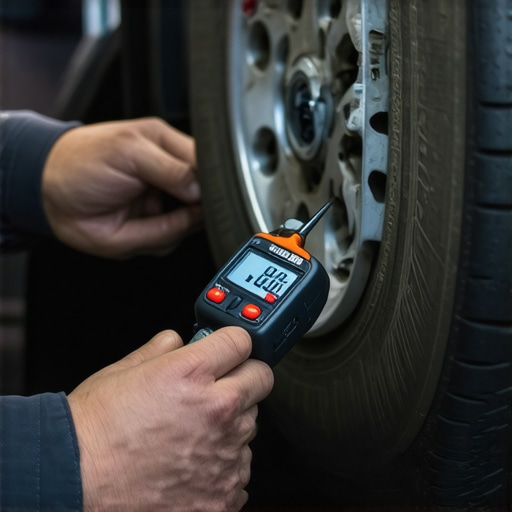
Stop Overlooking the Microscopic Transfer Layer on Your Rotors
Modern ceramic pads do not work through simple abrasion; they function via adherent friction, which requires a consistent ‘transfer layer’ of pad material on the rotor surface. According to technical bulletins from the Akebono Brake Corporation, the original pioneers of ceramic friction technology, an uneven transfer layer is a leading cause of localized heat spots. If you skip the ‘bedding-in’ procedure—a series of controlled stops designed to bake the pad material into the iron—you risk creating ‘cementite’ formations. These ultra-hard spots act like sandpaper, grinding away the pad at an accelerated rate on just one side of the vehicle. This chemical imbalance is just as damaging as a mechanical seize but far harder to see with the naked eye.
The High Cost of Reusing Old Anti-Rattle Hardware
Precision is the enemy of friction, and the small stainless steel clips that hold your pads in place are more than just noise dampeners. These ‘abutment clips’ provide a smooth, slick surface for the pad ears to slide upon. Over thousands of miles, brake dust and heat cycles turn the lubricant underneath these clips into a sticky paste. Reusing old hardware or failing to clean the caliper brackets results in ‘pad hang,’ where the friction material remains pinched against the rotor after the hydraulic pressure is gone. If you want to avoid the headache of a three-month brake life, ensure every car service includes a complete hardware replacement kit. If your rear wheels are running hot or you notice a distinct ‘dragging’ sensation when coasting, contact our specialists today to secure a precision-focused inspection of your entire braking geometry.
Precision-Level Diagnostic Field Notes
How Worn Bushings Sabotage Your Clamping Force
Even if your caliper is perfect, a degraded control arm bushing allows the entire knuckle to shift under braking torque. This deflection forces the rotor to enter the caliper at an angle, creating the tapered wear patterns often mistaken for seized pins. Professional vehicle diagnostics should always involve a pry-bar test on the suspension to ensure the braking foundation remains rigid under load.
See the Heat: Using Infrared to Find Hydraulic Blocks
A laser pyrometer or thermal imaging camera is the fastest way to differentiate between a mechanical seize and a hydraulic restriction. After a short drive without heavy braking, a wheel with a dragging pad will show a massive heat signature at the hub. If the temperature remains high even after cooling the rotor, you are likely dealing with a collapsed hose or a master cylinder issue. Mastering these top auto repair techniques separates parts-changers from true diagnosticians.
Don’t Forget the Regenerative Braking Factor
On hybrid and electric vehicles, traditional friction brakes are used less frequently, making them more prone to oxidation and “freezing” in place. The lack of heat cycles allows moisture to settle in the slide pins faster than on internal combustion vehicles. Owners of these cars need a more proactive car service schedule specifically focused on lubricating the mechanical hardware, even if the pads look thick.
Essential Literature for the Modern Technician
SAE International Technical Papers: The gold standard for understanding the metallurgy of friction materials and thermal dissipation in rotors. Brake & Front End Magazine: Excellent for real-world case studies on electronic parking brake failures and sensor-driven drag issues. Bosch Mobility Solutions Portal: The primary source for deep-diving into the logic behind ABS and ESC intervention strategies that cause “ghost” brake wear. Akebono Technical Bulletins: Critical for mastering the chemistry of the ceramic transfer layer and proper bedding-in procedures.
#IMAGE_PLACEHOLDER_E#
Synthesizing the Friction Puzzle
Solving asymmetric wear requires looking past the pad and rotor to see the braking system as a complex interplay of hydraulics, electronics, and suspension geometry. Whether it is a “lazy” square-cut seal or a ghost signal from a wheel speed sensor, every wear pattern tells a story of energy being mismanaged. When you choose professional vehicle diagnostics, you aren’t just buying a repair; you are investing in the safety and efficiency of your vehicle. If your car is showing signs of uneven wear or pulling under braking, contact our specialists to get a definitive answer before a minor drag becomes a major failure.