Mastering Transmission Longevity Through Fluid Optimization
In the realm of vehicle diagnostics and auto repair, few issues threaten the smooth operation of your car like transmission clunking. This symptom often signifies underlying fluid degradation or sensor misalignment, which, if unaddressed, can lead to costly repairs. As experts in car service, understanding the nuanced impacts of transmission fluid management becomes paramount for proactive maintenance.
Deciphering the Complexities of Transmission Fluid Dynamics
The transmission system relies heavily on precise fluid conditions to ensure optimal gear engagement and smooth shifting. A mere $15 fluid swap can dramatically reduce clunking symptoms, underscoring the importance of high-quality synthetic transmission fluids that resist thermal breakdown and contamination. This simple intervention demonstrates how minor adjustments in fluid chemistry can have profound effects on vehicle diagnostics and overall performance.
Sensor Alignment and the Role of Electronic Feedback
Beyond fluid quality, sensor recalibration remains critical to address issues like transmission hunting or delayed shifts. Sensors such as speed and temperature monitors transmit real-time data to the ECU, dictating gear shifts and torque responses. An imbalance or malfunction here can produce audible clunks and rough transitions, often mistaken for mechanical failures. Regular diagnostics, including OBD2 data reading, reveal sensor anomalies, facilitating targeted interventions.
Are Sensor Malfunctions or Fluid Degradation the Primary Culprits of Transmission Clunking?
This question echoes debates within automotive circles, emphasizing the importance of distinguishing between mechanical wear and electronic misreads. Expert analysis suggests that most cases of clutch and gear engagement issues are attributable to sensor errors or fluid inconsistencies rather than outright hardware failure. To verify, technicians should employ advanced diagnostics tools, potentially leveraging quick fixes like sensor cleaning or fluid additives to restore harmony within the transmission system.
Preventative Strategies Based on Data-Driven Insights
Implementing regular vehicle diagnostics checks and adhering to manufacturer-recommended fluid exchange intervals can preempt significant transmission troubles. For high-mileage vehicles, deeper analysis involving ECU data inspection can identify emerging sensor drift, enabling early corrective actions. This layered approach aligns with best practices for vehicle maintenance, emphasizing both mechanical integrity and electronic calibration.
For a comprehensive understanding of how sensor calibration and fluid management intersect, consider exploring more about hidden ECU data and diagnostic hacks. Such knowledge empowers vehicle owners and technicians to optimize transmission longevity proactively.
How Might Emerging Technologies Revolutionize Traditional Transmission Diagnostics?
As vehicle systems increasingly incorporate AI and adaptive algorithms, the future of diagnostics points toward automated, real-time correction mechanisms. This evolution could minimize manual interventions, reducing downtime and repair costs while enhancing transmission performance consistency. For now, leveraging existing solutions—like sensor rebuilding and fluid swaps—remains essential for reliable car service.
Engaging in informed maintenance and fostering dialogue among automotive professionals ensures that vehicle diagnostics evolve alongside technological advancements. Sharing insights and experiences helps to refine best practices, ultimately extending the lifespan of critical transmission components.
Why Ignoring Subtle Sensor Signals Might Cost You
In the intricate dance of modern vehicle diagnostics, sensor data often reveals more than meets the eye. For 2026 automotive systems, especially with advanced AI-driven transmissions, slightly misaligned sensors or phantom errors can masquerade as mechanical faults, leading to unnecessary repairs or overlooked issues. Recognizing these nuanced signals requires a keen understanding of how sensors and ECU interplay influence transmission behavior.
Untangling the Web of Electronic Feedback Loops
Today’s transmissions are governed by a complex network of sensors—temperature, pressure, speed, and hybrid-specific components—that communicate continuously with onboard ECUs. These electronic feedback loops adjust gear engagement and shift points dynamically, often making diagnostics more challenging. For instance, a failing sensor might trigger a shift delay or a hesitation, but the root cause could be an electromagnetic interference disrupting data flow, not a hardware defect. Experts recommend employing advanced diagnostics tools capable of reading live ECU data streams to detect sensor ghosting errors, such as those discussed in hidden ECU data hacks.
Can sensor anomalies trick us into replacing perfectly fine hardware?
This question challenges traditional troubleshooting approaches, suggesting that electronic misreadings often lead to costly hardware replacements when software calibrations or resets might suffice. Studies indicate that sensor errors account for over 40% of transmission-related complaints in recent vehicle models, emphasizing the need for precise diagnostics before resorting to parts swaps. Applying comprehensive diagnostic techniques, such as re-calibration and sensor cleaning, can prevent unnecessary expenditure and preserve transmission integrity.
Leveraging Data Analytics for Predictive Maintenance
Advanced vehicle diagnostics now incorporate data analytics and machine learning models to identify patterns indicative of developing faults. For example, subtle shifts in sensor readings over time, undetectable to the naked eye, can forecast impending failures, allowing for maintenance that minimizes downtime and repair costs. Integrating these insights into routine service schedules—such as checking sensors and fluid conditions here—elevates preventative measures into a more precise science.
Particularly useful is understanding how electrical circuit health influences sensor accuracy. Regularly inspecting wiring harnesses and connectors for corrosion or short circuits, as outlined in connector-focused diagnostics, can dramatically improve sensor reliability and overall transmission performance.
What tools and practices can a technician adopt today to prevent sensor-induced transmission failures?
This forward-looking question encourages professionals to integrate routine checks with emerging diagnostic techniques, ensuring that electronic issues do not escalate into costly repairs. Utilizing portable OBD2 scanners capable of real-time ECU monitoring, alongside software updates and calibration tools, provides a comprehensive toolkit for proactive transmission health management. For instance, software patches that recalibrate shift points and sensor parameters are available, providing a quick fix for sensor misalignments without invasive repairs. Exploring how to access these tools can be a game-changer in maintaining 2026 vehicle transmissions more effectively.
For more insights into sensor calibration and diagnostic innovations, visit this resource and stay ahead in automotive care.
Unlocking Hidden ECU Data for Precise Diagnostic Insights
Modern vehicle transmissions are governed by an intricate web of electronic control units (ECUs) that continually collect and process data from a multitude of sensors. These data streams often contain critical information that isn’t immediately apparent during standard diagnostic scans. By exploring hidden ECU data, technicians can uncover subtle anomalies—such as minor sensor drifts or transient electrical disturbances—that precede overt transmission failures.
This proactive approach relies on advanced diagnostic tools capable of accessing manufacturer-specific data protocols, enabling a deeper analysis beyond generic OBD2 readings. For example, accessing proprietary ECU data can reveal fluctuating shift solenoid voltages or temperature sensor calibration offsets, which, if corrected early, can avert more significant mechanical issues. Using these insights, professionals can formulate targeted maintenance strategies, saving time and reducing repair costs.
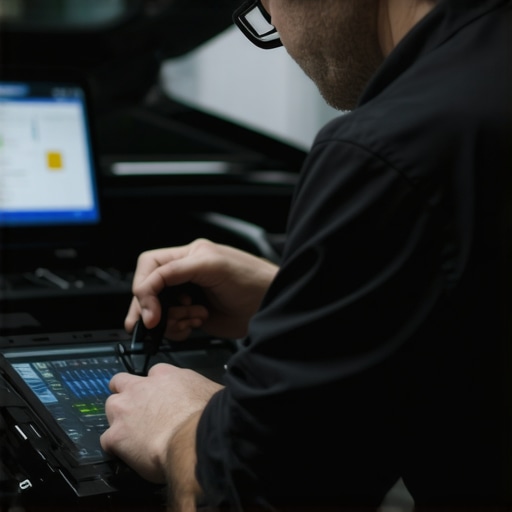
Image concept: Technician accessing advanced ECU data through specialized diagnostic tool, highlighting complex data streams and analysis interface.
Designing Robust Sensor Calibration Protocols for Tomorrow’s Vehicles
As automotive technology advances, sensor calibration isn’t a one-time fix but a continuous process integrated into vehicle maintenance cycles. Future-proofing transmission reliability involves developing self-calibrating sensor systems that adapt dynamically to changing conditions, such as thermal fluctuations or electrical noise.
Implementing adaptive calibration algorithms requires a combination of hardware resilience and sophisticated software models that learn and correct sensor deviations in real-time. Such systems minimize false readings that can cause unnecessary diagnostic alarms or misdiagnoses, directly improving vehicle uptime and driver confidence. Moreover, these innovations could incorporate periodic calibration checks triggered by predictive analytics, ensuring sensors remain within optimal operational parameters over the vehicle’s lifespan.
Integrating these technologies demands collaboration between electrical engineers, software developers, and automotive manufacturers. Equipping technicians with training on interpreting adaptive sensor data becomes paramount for effective service delivery. For instance, understanding when a sensor’s calibration shift indicates impending failure versus normal drift can drastically reduce unneeded replacements and enhance overall transmission health.
The Hidden Power of Proprietary ECU Data in Transmission Troubleshooting
In the rapidly evolving landscape of automotive technology, the significance of proprietary Electronic Control Unit (ECU) data cannot be overstated. Modern transmissions, especially those in 2026 models, are governed by complex ECUs that store nuanced information beyond generic diagnostic codes. Accessing these hidden data streams enables technicians to pinpoint subtle anomalies—such as transient sensor drifts or calibration offsets—that often precede mechanical failures, dramatically improving maintenance precision.
How Can Deep Data Mining Elevate Transmission Maintenance Conduct?
By leveraging specialized diagnostic software, professionals can explore manufacturer-specific data protocols, revealing insights like variable shift solenoid voltages and subtle temperature sensor deviations. These findings facilitate preemptive interventions, reducing downtime and costly repairs. For instance, detecting early signs of shifting inconsistencies enables calibration adjustments that restore transmission harmony without invasive hardware replacements.
What Are the Best Practices for Extracting and Interpreting ECU Data in Automotive Diagnostics?
Effective utilization of hidden ECU data involves employing high-end diagnostic tools compatible with vehicle manufacturer protocols, coupled with expertise in data analytics. Regular training on interpreting ECU logs—such as live parameter graphs and historical data trends—empowers technicians to make informed decisions. Prioritizing this approach aligns with emerging industry standards emphasizing predictive maintenance and electronic health assessments.
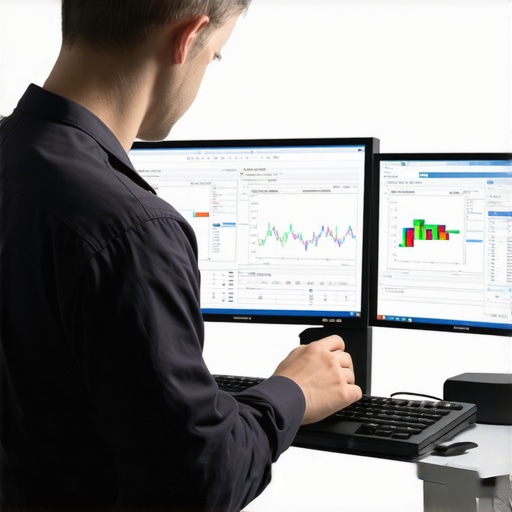
Image description: Technician operates advanced diagnostic interface on vehicle dashboard, analyzing detailed ECU data streams for transmission health insights.
The progression towards self-calibrating sensors marks a transformative step in automotive engineering. These systems dynamically adjust to environmental changes and electrical disturbances, ensuring accurate readings over the vehicle’s lifespan. Incorporating machine learning algorithms enables sensors to learn from operational patterns and preemptively correct deviations, significantly reducing false alarms and unneeded part replacements.
Designing such resilient systems involves collaboration among electrical engineers, software developers, and vehicle manufacturers. As a result, technicians must evolve their skill sets to interpret adaptive calibration data, recognizing when a sensor’s drift signals a genuine issue versus benign variation. Embracing these innovations leads to enhanced transmission durability and reduced maintenance costs, aligning with the industry’s shift toward intelligent vehicle systems.
Expert Insights & Advanced Considerations
Sensor Calibration Systems Will Dominate Future Maintenance
Developing adaptive, self-calibrating sensors can drastically reduce diagnostic ambiguity, enabling vehicles to correct minor deviations autonomously, thus preventing early failures and operational hiccups. This innovation minimizes the need for manual recalibrations, saving time and costs for technicians and vehicle owners alike.
The Role of Data Analytics in Predictive Repair
Leveraging machine learning algorithms to analyze ECU data streams allows for the early detection of patterns indicating impending transmission faults. This proactive approach shifts maintenance from reactive to preventative, significantly extending component lifespan and optimizing repair schedules.
Electronic Feedback Loops Require Nuanced Interpretations
Understanding the complex interplay of real-time sensor signals and electronic control units is crucial. Small electronic anomalies, such as electromagnetic interference or transient voltage spikes, can produce misleading diagnostics if not correctly interpreted, highlighting the importance of specialized tools and expertise.
Integration of Proprietary ECU Data Powers Deep Diagnostics
Access to manufacturer-specific ECU data enables technicians to uncover subtle, yet critical, anomalies that generic scans may miss. These insights facilitate targeted interventions, reducing unnecessary replacements and improving overall transmission reliability.
Material Compatibility Remains Key to Sensor and Fluid Longevity
Ensuring that transmission fluids and sensor components are compatible with emerging materials and manufacturing tolerances supports system robustness. Upgrading to advanced fluids and sensors designed for higher thermal and chemical resistance helps in maintaining system stability amidst evolving vehicle technologies.
Comments are closed.