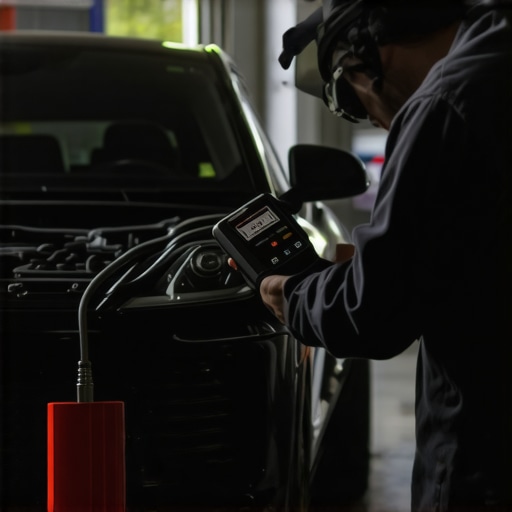
Run 2026 Vehicle Diagnostics on Your Phone for Under $30
Unlocking the Future of Vehicle Diagnostics with Budget-Friendly Tools
In an era where vehicle technology is advancing at an unprecedented pace, the ability for car owners to perform comprehensive diagnostics without professional intervention has transitioned from a luxury to a practical necessity. The convergence of affordable Bluetooth adapters and sophisticated smartphone applications now empowers enthusiasts and everyday drivers alike to analyze critical vehicle parameters—particularly when it comes to complex systems such as transmissions and control modules—directly from their phones at a fraction of traditional costs.
How Mobile Technology Transforms Automotive Troubleshooting
Smartphone-based diagnostics leverage the vehicle’s OBD-II port, a standardized connector mandated in vehicles post-1996, to access real-time data. Advanced apps, complemented by inexpensive adapters costing less than $30, decode a multitude of sensor outputs, error codes, and operational metrics. This democratization of diagnostic capability fosters proactive maintenance, reducing reliance on costly shop visits and enabling users to interpret subtle signs of transmission issues or engine misfires with greater confidence.
Harnessing Deep Diagnostic Data for Transmission and Auto Repair
For transmission systems—particularly in vehicles with complex setups like CVTs or dual-clutch automatics—access to detailed diagnostic information can clarify the root causes of symptoms such as slippage, shuddering, or delayed shifts. Expert users utilize software features like live sensor data streaming and freeze frame analysis to identify underlying sensor faults or control module glitches that traditional scans might overlook. The depth of insight gained here surpasses basic code clearing, facilitating targeted interventions and informing decisions about necessary auto repairs or software updates.
Are Canned Codes Enough or Is There Hidden Data That Matters?
While generic scan tools can identify common fault codes, advanced diagnostic techniques involve examining manufacturer-specific data or accessing hidden diagnostic menus. For example, certain sensor calibrations or transient faults are not readily visible through standard OBD-II scans. Exploring these hidden diagnostics—often accessible via specialized apps or USB connections—can reveal anomalies in transmission control sensors, clutch engagement data, or recent software updates, informing more effective repair strategies.
Maximizing the Value of DIY Vehicle Diagnostics Without Overreliance
Expert technicians recognize the importance of corroborating data from these mobile tools with physical inspections and lab tests, especially for transmission-related issues. Understanding the limitations of low-cost adapters and ensuring regular calibration can mitigate inaccuracies. Moreover, staying informed through authoritative sources such as SAE International ensures that DIY diagnostics adhere to industry standards and avoid diagnostic pitfalls that could lead to misdiagnoses or unnecessary repairs. For comprehensive guidance, refer to resources like this detailed guide on running vehicle diagnostics at home.
What are the most common pitfalls when diagnosing transmission issues with basic smartphone scans, and how can professionals avoid these errors?
Professionals emphasize the importance of cross-referencing diagnostic data with physical inspections, understanding the specific limitations of low-cost Bluetooth adapters, and recognizing the significance of manufacturer-specific codes. Avoiding assumptions based solely on generic error codes prevents misdiagnosis. Continuous education and experience with OEM diagnostic protocols are crucial for accurate interpretation and effective repair planning.
For enthusiasts seeking to deepen their understanding or contribute advanced insights into vehicle diagnostics, exploring specialized forums and professional networks can unlock valuable expertise and the latest industry developments.
Revolutionize Your Car Troubleshooting with Pro-Level Techniques
Many vehicle owners underestimate the depth of diagnostics achievable with affordable tools and a bit of know-how. While basic scans reveal their share of faults, advanced methods allow enthusiasts to uncover hidden issues lurking beneath the surface. Utilizing manufacturer-specific codes, accessing hidden menus through specialized apps, or interpreting live sensor data enables precise pinpointing of transmission anomalies or engine misfires without jumping to costly repairs.
Unlocking Hidden Diagnostic Menus for Precision Repairs
Modern vehicles often hide vital data within secret menus accessible via specific app commands or USB connections. For instance, some manufacturers embed calibration info or transient fault details that standard scans overlook. By exploring these hidden diagnostic modes—using trusted software and adhering to manufacturer protocols—owners can gather comprehensive data, helping them make informed repair decisions. Learning to navigate these menus demands a nuanced understanding, which can be enhanced through online expert communities or official service manuals. Discover how to access hidden menus for your vehicle’s specific model and unlock insights previously confined to dealership level diagnostics.
The Role of Advanced Sensor Data in Diagnosing Transmission Slips
Beyond fault codes, live sensor data streams can reveal subtle irregularities in clutch engagement, line pressure, or motor torque that precede noticeable symptoms. For example, analyzing transmission fluid temperature variations or clutch pedal position can shed light on impending failures—information that standard scans simply don’t provide. Expert mechanics often employ software capable of real-time monitoring, allowing for early intervention. Gaining proficiency in interpreting these signals empowers DIYers to detect issues like slipping or shuddering long before they escalate into costly repairs. To master this approach, consider reviewing tools discussed in resources such as sensor hacking techniques that expand your diagnostic toolkit.
Is Your Scanner Truly Reliable? Advanced Methods to Verify Diagnostic Data
While many rely on Bluetooth adapters and apps, questions remain about their accuracy, especially for complex systems like transmissions. Conducting validation through cross-comparison with manufacturer-specific diagnostic software or using a second, trusted tool can prevent misleading conclusions. Reliable diagnostics involve not only reading codes but also correlating data points, performing calibration checks, and understanding recent software updates. For optimal results, stay informed through authoritative sources such as SAE International standards or dedicated automotive forums. Experts recommend verifying your tools’ reliability periodically; for instance, testing your scanner against known-good diagnostics can prevent costly misdiagnoses. For detailed strategies, visit this expert guide.
If you’re eager to sharpen your diagnostic skills further and avoid common pitfalls, engaging with professional communities online offers invaluable insights and the latest industry advancements.
Elevate Your Transmission Troubleshooting: Going Beyond Basic Scans
While initial diagnostic scans provide valuable insights into transmission performance issues, true mastery involves interpreting nuanced data and recognizing the subtle signs that precede major faults. For example, fluctuations in line pressure or clutch engagement timing often manifest as minor irregularities before escalating into severe problems. Advanced users leverage their smartphone-enabled diagnostic setups to monitor these parameters in real-time, gathering granular data that can differentiate between sensor anomalies and genuine mechanical failures. Harnessing this depth of information accelerates targeted repairs, reduces unnecessary parts replacement, and fosters a proactive maintenance approach.
Maximize Data Extraction: Harnessing Manufacturer-Specific Diagnostics
Standard OBD-II protocols offer a broad stroke overview, but manufacturer-specific diagnostic modes unveil a detailed landscape tailored to your vehicle’s unique systems. Many professional-grade apps and adapters provide access to these proprietary data streams, revealing aspects such as clutch actuation patterns, solenoid states, and adaptive learning parameters. For instance, a perfectly functioning transmission in a modern vehicle might still flag a fault if the adaptive learning maps fall out of calibration—an issue only exposed through manufacturer-specific data. Exploring these advanced diagnostics requires familiarity with the manufacturer’s diagnostic architecture, often documented in official service manuals or specialized online forums.
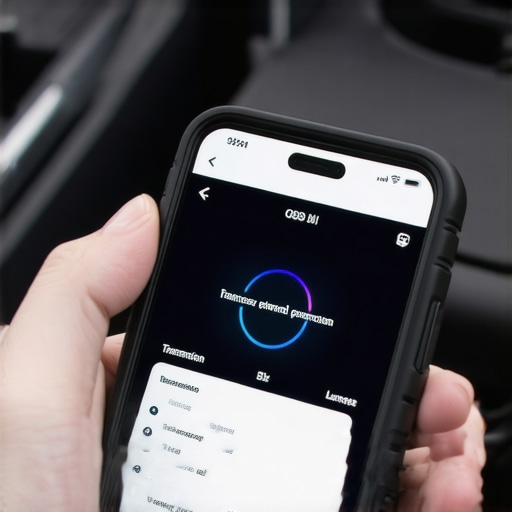
Illustration of accessing manufacturer-specific diagnostic menus via smartphone app connected to vehicle’s OBD-II port.
Deciphering Complex Sensor Data for Predictive Maintenance
The real power of today’s diagnostics lies in predictive analytics—interpreting sensor trends to forecast failures before they occur. Monitoring clutch pedal position consistency, transmission fluid temperature cycles, and line pressure stability over time allows mechanic and enthusiast alike to identify patterns indicative of impending slippage or mechanical wear. Implementing software capable of logging these parameters over extended periods transforms reactive repair into preventative care. This proactive stance not only enhances vehicle longevity but also minimizes costly breakdowns, especially under demanding driving conditions or in high-mileage applications.
Bridging the Gap: Reliability of Budget Adapters Versus Professional Equipment
Despite their affordability, low-cost Bluetooth adapters are often questioned regarding their precision and durability. To mitigate these concerns, integrating periodic calibration routines and cross-validating data with higher-end diagnostic tools becomes essential. For example, pairing a budget adapter with manufacturer-specific diagnostics—if accessible—serves as a validation step, ensuring that data interpretation remains accurate. Additionally, staying aware of firmware updates for adapters and software ensures compatibility with evolving vehicle systems. Ultimately, adopting a layered approach—combining inexpensive tools with expert knowledge—maintains diagnostic accuracy without exorbitant costs, fostering a democratization of advanced vehicle repair capabilities.
How can enthusiasts develop a keen eye for distinguishing between sensor anomalies and genuine mechanical failures in transmission diagnostics?
By cultivating an understanding of normal sensor behavior and anomaly patterns through hands-on experience and data logging, DIYers and professionals alike can develop a diagnostic intuition. Techniques include performing baseline measurements when the vehicle is known to be functioning correctly, then comparing these with real-time data during suspected faults. Recognizing transient faults versus persistent issues is crucial—Transient faults may indicate wiring problems or momentary sensor glitches, whereas consistent deviations signal mechanical wear or control system malfunctions. Deep familiarity with vehicle-specific sensor thresholds, provided in technical manuals or OEM training materials, enhances diagnostic precision. Continuous education through industry seminars, official standards from organizations like SAE International, and participation in online expert communities likewise sharpen diagnostic acumen.
To deepen your expertise and prevent misdiagnoses, consider engaging with professional diagnostic training modules or peer-reviewed automotive research, which offer insights into the latest detection strategies and emerging sensor technologies.
Harnessing the Power of Custom Firmware for Diagnostic Precision
Implementing custom firmware in your diagnostic adapters can significantly enhance data accuracy and expand access to manufacturer-specific parameters. While most budget-friendly Bluetooth tools operate with standard firmware, customizing the software can unlock hidden features, improve stability, and allow deeper integration with specialized diagnostic protocols. This practice, however, demands a sophisticated understanding of firmware architecture and adherence to manufacturer warranties, to circumvent potential voids or compatibility issues. Engaging with reputable online communities and open-source firmware projects, such as those documented on forums like OBDLink Community, can provide invaluable guidance for advanced users seeking to push the boundaries of their diagnostic capabilities.
Decoding the Data Stream of Hybrid and Electric Vehicles
As automotive technology gravitates toward electrification, diagnostic strategies must evolve to interpret complex data streams unique to hybrid and EV systems. Motors, battery management units, inverter controllers, and regenerative braking sensors generate high-frequency data that can surpass standard OBD-II capabilities. Advanced users leverage tailored software solutions and high-bandwidth data logging tools capable of capturing transient events and subtle anomalies. Understanding parameters such as State of Charge (SoC), inverter temperature, and regenerative energy flow—often only accessible with specialized diagnostics—can preempt failures and optimize maintenance schedules. For authoritative insights into EV diagnostics, refer to the comprehensive standards set forth by the International Electrotechnical Commission.
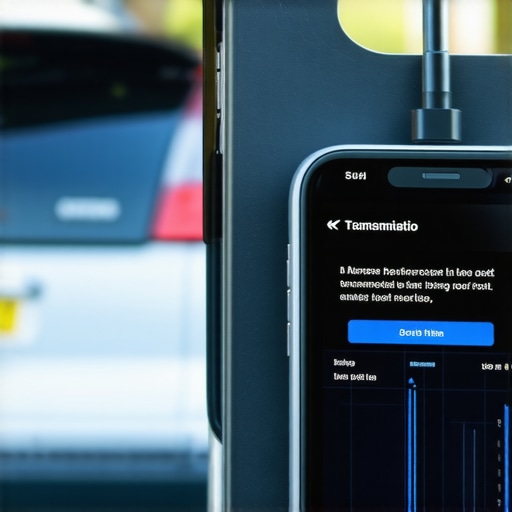
Diagram illustrating high-speed data collection in hybrid and electric vehicle systems via specialized diagnostic tools.
Integrating Machine Learning for Predictive Transmission Maintenance
Emerging trends in auto diagnostics involve leveraging machine learning algorithms that analyze extensive sensor data to predict transmission failures proactively. By training models on datasets capturing normal operational patterns versus fault conditions—such as clutch wear progression or solenoid malfunctions—technicians can receive early warnings fostering timely interventions. Sophisticated AI platforms integrate seamlessly with smartphone diagnostics, transforming raw data into actionable insights through pattern recognition and anomaly detection. Implementing these systems requires interdisciplinary expertise combining automotive knowledge with data science, but the payoff manifests in significantly reduced downtime and repair costs. For a deep dive into these innovations, explore resources from the Automotive IQ network specializing in predictive analytics.
What are the challenges of applying machine learning to real-time vehicle diagnostics, and how can they be overcome?
Real-time application of machine learning in automotive diagnostics faces hurdles such as data noise, variability across vehicle models, and hardware limitations. Overcoming these challenges involves collecting extensive, high-quality datasets, standardizing sensor calibration procedures, and deploying edge computing solutions optimized for low latency. Moreover, collaboration with OEMs to access proprietary data schemas enhances model accuracy. Continuous model refinement through feedback loops and validation in diverse operational contexts ensures reliability. To stay ahead in this field, practitioners should engage with ongoing research, industry standards like ISO 26262 for functional safety, and participate in cross-disciplinary forums that foster innovation in automotive AI applications.
Capitalizing on Hidden Diagnostic Portals for Advanced Troubleshooting
Many modern vehicles hide diagnostic options within proprietary interfaces accessible only through specialized equipment or firmware. Unlocking these portals provides access to calibration data, firmware versions, or transient error logs, offering a granular view of vehicle health that standard tools cannot reveal. These hidden menus often require specific manufacturer keys or software scripts found in official service manuals or through professional training programs. Utilizing these portals responsibly—within the scope of legal and warranty considerations—can drastically facilitate pinpointing elusive transmission or control module issues. For more technical guidance, consult dedicated OEM diagnostic manuals or authorized technician training modules, which disseminate the exact procedures for safe access.
Elevate Your Diagnostic Knowledge with Expert Precision
For those serious about automotive diagnostics, embracing manufacturer-specific data streams can reveal issues hidden beneath standard scans, paving the way for accurate, proactive repairs. Recognizing subtle sensor trends in clutch engagement or line pressure helps in predicting failures before symptoms surface. Additionally, implementing custom firmware updates enhances adapter capabilities, providing access to exclusive diagnostic modes and boosting data fidelity. Leveraging machine learning algorithms to analyze sensor patterns offers a futuristic edge, transforming reactive fixes into preventative maintenance. Finally, exploring proprietary diagnostic portals unlocks a trove of granular information, ensuring no detail remains concealed in your vehicle’s health assessment.
Seek Wisdom from Elite Resources to Sharpen Your Skills
- SAE International: Stay aligned with industry standards and latest diagnostic protocols endorsed by automotive experts.
- OEM Service Manuals: Gain in-depth, model-specific insights and procedures maintained by vehicle manufacturers.
- Automotive Forums & Communities: Engage with professionals sharing real-world experiences on complex diagnostic techniques.
- Specialized Diagnostic Software Providers: Access advanced tools tailored for deep vehicle analysis, offering capabilities beyond generic scanners.
Harness Expertise for Real Impact in Vehicle Diagnostics
As automotive technology continues to evolve rapidly, integrating advanced diagnostic techniques becomes essential for precise auto repair and transmission maintenance. Embracing manufacturer-specific data, custom firmware, and AI-powered analytics elevates your proficiency beyond basic troubleshooting. These insights not only save time and money but also position you at the forefront of automotive diagnostics. For those committed to excellence, engaging with authoritative resources and community expertise is the pivotal step forward. Dive deeper, share your findings, and contribute to the collective knowledge that propels automotive repair into the future—your vehicle’s health may depend on it.