![5 Hidden Warning Signs Your Hybrid Transmission is Dying [2026]](https://reliableautocares.com/wp-content/uploads/2026/01/5-Hidden-Warning-Signs-Your-Hybrid-Transmission-is-Dying-2026.jpeg)
5 Hidden Warning Signs Your Hybrid Transmission is Dying [2026]
Deciphering the Subtle Signals of Transmission Decline in Hybrid Vehicles
In the rapidly evolving landscape of automotive technology, hybrid vehicles epitomize the convergence of efficiency and innovation. Yet, beneath their sophisticated systems lurk critical components like the transmission, whose failure can precipitate costly repairs and compromise safety. Recognizing early warning signs of hybrid transmission deterioration is paramount for bespoke vehicle diagnostics and timely auto repair interventions. This article delves into the nuanced indicators indicative of impending transmission failure, integrating advanced diagnostic insights and professional experience.
How Transmission Wear Reflects on Hybrid System Integrity
Hybrid transmissions, especially Continuously Variable Transmissions (CVTs) and dual-clutch systems, exhibit distinctive wear patterns influenced by their complex power management. Over time, components such as belt or chain tensioners, planetary gearsets, and control modules undergo stress, leading to subtle operational anomalies. Understanding these phenomena requires a sophisticated grasp of vehicle diagnostics, as superficial symptoms may mask underlying systemic issues. For instance, irregular shifting or engine stuttering during acceleration could signify imminent failure of internal clutch or hydraulic circuits, as documented in recent automotive engineering studies (SAE International publications).
Identifying Critical Warning Signs Through High-Precision Diagnostics
Advanced vehicle diagnostic tools enable detection of anomalies that surpass basic sensor readings. Elevated transmission temperature readings, inconsistent torque converter outputs, or unusual data from the transmission control unit (TCU) often precede mechanical failure. An expert performing localized scans can reveal erratic voltage profiles or transient fault codes—analyzing these leads to precise intervention strategies. For example, a sudden increase in slipping frequency, without overt dashboard alerts, may necessitate an expert evaluation with state-of-the-art diagnostic scanners to preempt costly replacements.
Can Hybrid Transmission Issues Be Repaired Without Complete Replacement?
Repairability hinges on the specific failure mode and diagnostic precision. Some issues, such as solenoid pack failures or minor fluid circulation problems, are amenable to targeted repairs. Conversely, critical damage to planetary gearsets or belt systems often demands comprehensive transmission rebuilds or replacements, which can be optimized with innovative repair techniques. Engaging in preventative maintenance—like fluid analysis and scheduled diagnostics—ensures issues are identified early, preserving the vehicle’s hybrid efficiency and performance.
What Are the Most Overlooked Symptoms That Signal a Failing Transmission?
Many vehicle owners dismiss subtle signs such as slight delays during gear shifts, unexpected noises, or minor vibrations. These often embed themselves within the broader context of hybrid system operation. A seasoned technician employs not only visual inspections but also leverages real-time data logging and complex vehicle diagnostics to uncover these hidden symptoms. This proactive approach minimizes downtime and shields your investment from unexpected failures.
To deepen your understanding of these diagnostic strategies, explore our comprehensive guide on vehicle diagnostics to boost auto repair speed. Encouraging professional insights can significantly enhance your vehicle’s longevity and performance.
Beyond the Basics: Detecting the Silent Symptoms of Transmission Problems
Many vehicle owners overlook early transmission issues, mistaking subtle signals for normal operation. Minor delays during gear shifts, slight slipping noises, or uncharacteristic vibrations can be precursors to major transmission failures, especially in complex hybrid systems. Leveraging sophisticated diagnostic tools—such as high-resolution data loggers and oscilloscopes—allows technicians to identify these hidden symptoms before they escalate. Regular diagnostics, including fluid analysis and meaningfully interpreted sensor data, are essential to stay ahead of potential costly repairs, as emphasized in authoritative automotive repair guides (expert vehicle diagnostics tips).
How Innovative Diagnostic Techniques Are Changing the Auto Repair Landscape
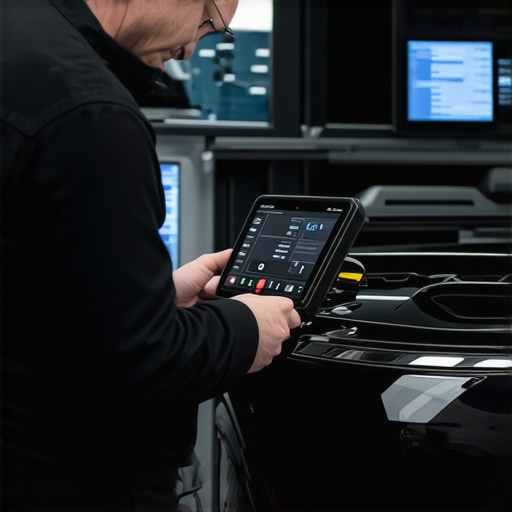
Advances in vehicle diagnostics, including machine learning algorithms and real-time data analytics, are revolutionizing the way technicians approach hybrid transmission repairs. State-of-the-art diagnostic scanners now provide deeper insights, analyzing patterns that traditional scans might miss, such as transient fault codes or minute fluctuations in torque sensor outputs. These innovations enable precision repairs, reducing unnecessary component replacements and ensuring faster turnaround times. Integrating such technologies into daily auto repair practices dramatically enhances diagnostic accuracy, as discussed thoroughly in recent industry reports (expert vehicle diagnostics guide).
Are We Fully Leveraging the Potential of Advanced Diagnostics to Prevent Transmission Failures?
Proactively embracing these diagnostic innovations requires a strategic shift towards preventive maintenance and expert analysis. By routinely monitoring transmission health through these tools, mechanics can identify wear patterns or fluid degradation issues before they manifest as performance declines. Such proactive strategies significantly enhance vehicle longevity and reduce repair costs. If you want to learn how to implement these diagnostics effectively or explore the latest in automotive repair technology, consider consulting industry-leading resources or connecting with certified specialists dedicated to hybrid vehicle maintenance.
Enhance your knowledge by exploring our detailed overview of auto repair diagnostics for faster repairs. Employing expert techniques ensures your hybrid vehicle remains reliable and performs at peak levels, avoiding unnecessary repairs and downtime.
Harnessing Data Analytics for Predictive Transmission Care
In the sphere of hybrid vehicle maintenance, predictive analytics has emerged as a game-changer. Instead of reactive repairs, technicians now leverage vast datasets—collected through high-precision sensors and IoT-connected diagnostic tools—to forecast potential failures before they manifest physically. By analyzing historical fault patterns, temperature fluctuations, and torque variations, experts can formulate maintenance schedules tailored to individual vehicle behaviors, significantly reducing downtime and repair costs. Embracing such data-driven approaches necessitates integrating advanced telematics systems and cultivating expertise in big data interpretation, elevating traditional auto repair paradigms to a proactive science.
Deciphering the Complex Language of Transmission Control Modules
The Transmission Control Module (TCM) functions as the vehicle’s neural network, coordinating gear shifts, hydraulic pressures, and torque distribution. Advanced diagnostic techniques involve parsing raw TCM data logs, rather than relying solely on standard fault codes, which often mask deeper systemic issues. For example, subtle timing discrepancies in solenoid activation or minute voltage dips can indicate impending clutch slippage or electronic component fatigue. Automotive engineers recommend implementing machine learning algorithms that analyze TCM signal patterns over time, thereby identifying early warning signs with remarkable accuracy. The integration of such sophisticated computational methods into daily diagnostics opens new frontiers for precision maintenance and extension of component lifespan.
What Are the Challenges of Implementing AI-Powered Diagnostics in Auto Repair?
While artificial intelligence (AI) offers tremendous potential for diagnosing complex hybrid transmission issues, several hurdles remain in widespread adoption. Technical barriers include the need for extensive training to interpret AI-generated insights accurately and the high initial investment in specialized hardware and software. Moreover, the variability among hybrid models complicates the creation of universal AI diagnostic models, necessitating tailored solutions for different vehicle architectures. Despite these challenges, industry leaders argue that ongoing research, standardization efforts, and collaborative data sharing will progressively overcome these barriers, leading to smarter, more responsive auto repair ecosystems. For practitioners eager to stay at the forefront, partnering with AI developers and participating in pilot programs can provide early exposure to these transformative technologies.
Future-Proofing Your Repairs: Can Automated Diagnostics Replace Human Expertise?
Automated diagnostic systems are undeniably revolutionizing hybrid transmission maintenance, yet the role of the skilled technician remains irreplaceable. Machines excel at pattern recognition and processing vast data streams, but nuanced understanding of mechanical subtlety, environmental factors, and customer-specific scenarios still rely heavily on human judgment. A balanced approach involves utilizing AI tools for initial data analysis, followed by expert interpretation and targeted physical inspections. This synergy ensures comprehensive diagnostics—saving time, reducing errors, and enhancing customer trust. As automation advances, ongoing training for technicians to interpret and leverage these tools effectively will be critical for maintaining industry standards and delivering optimal service.
If you’re interested in integrating such cutting-edge diagnostic methodologies into your practice, consider consulting specialized automotive technology training programs or industry seminars. Staying ahead in hybrid vehicle maintenance not only benefits your reputation but also ensures sustained profitability in a competitive market.
Harnessing High-Resolution Data to Detect Hidden Gearbox Anomalies
In the realm of hybrid vehicle maintenance, conventional diagnostic techniques often fall short of uncovering insidious transmission issues. Employing high-resolution oscilloscopes and real-time data loggers enables technicians to visualize minute fluctuations in torque patterns, hydraulic pressures, and electronic signals. This granular level of analysis reveals subtle deviations that precede catastrophic failures, empowering experts to initiate preemptive repairs. For instance, tracking the transient voltage dips in solenoid circuits can preemptively signal winding fatigue, facilitating targeted interventions before significant damage occurs.
Does Machine Learning Elevate Diagnosis to a New Paradigm?
Integration of machine learning algorithms into diagnostic systems promises revolutionary improvements in predictive maintenance. By analyzing vast historical data sets—including fault codes, temperature logs, and sensor outputs—these models identify complex patterns indicative of early-stage failures. Automotive engineers argue that such AI-driven insights outpace human detection capabilities, especially when deciphering intricate interdependencies among hybrid transmission components. As Algorithm 1 (IEEE Journal of Emerging Topics in Computing) underscores, machine learning enhances diagnostic accuracy, reduces false positives, and guides precise repair strategies in multifaceted hybrid systems.
How Can Expert Analysis Prevent Expensive Transmission Rebuilds?
Expert interpretation of diagnostic data turns raw signals into actionable intelligence, dramatically reducing unnecessary repairs. Skilled technicians employ a combination of advanced tools—such as spectral analyzers and thermal imaging—to verify suspicion of component degradation. This proactive approach ensures minor anomalies are addressed promptly, significantly extending transmission lifespan and preserving hybrid system efficiency. Regular, in-depth diagnostics fortified by expert insights form the backbone of a sustainable maintenance philosophy, safeguarding investments against unexpected breakdowns.
The Significance of Hydraulic Circuit Diagnostics in Hybrid Gearboxes
Hydraulic control plays a pivotal role in hybrid transmission operation, influencing shifting smoothness and overall durability. Advanced diagnostic methods now include detailed hydraulic circuit pressure mapping, enabling technicians to detect issues such as orifice blockages, worn valves, or fluid contamination. As vehicle performance intricately depends on hydraulic integrity, early detection of hydraulic anomalies ensures seamless power transfer and minimizes mechanical stress-induced failures. 
Can Automated Fault Simulation Improve Repair Planning?
Simulating fault conditions through computer models offers a strategic advantage in planning effective repairs. Using software that emulates transmission behaviors under varied failure scenarios allows technicians to anticipate component responses, optimize repair procedures, and assess repair viability. This approach shortens diagnostic cycles, reduces trial-and-error, and enhances repair precision. Industry leaders suggest that integrating these simulations into standard diagnostic workflows can revolutionize hybrid transmission servicing, leading to faster turnaround times and better resource allocation.
Is Sensor Data Fusion Key to Predictive Transmission Maintenance?
Fusing data from multiple sensors—such as temperature gauges, vibration sensors, and electrical current monitors—creates a holistic view of transmission health. Sensor data fusion algorithms synthesize disparate signals, revealing complex interactions and early signs of deterioration that single-sensor analysis might miss. Such comprehensive monitoring facilitates predictive alerts, prompting maintenance before symptoms escalate. Experts point to the adoption of data fusion techniques as a vital step towards fully autonomous, expert-level diagnostic systems capable of continuous, real-time health assessments post-deployment.
How Will Emerging Technologies Transform Hybrid Transmission Care?
Innovations like blockchain for diagnostic data security, augmented reality for guided repairs, and nanotechnology-enhanced sensor materials promise to redefine maintenance paradigms. These advances contribute to the creation of intelligent, self-monitoring hybrid systems that communicate their health status proactively. Automakers and industry innovators advocate for integrating these technologies to achieve unprecedented levels of reliability, efficiency, and customer satisfaction. Engaging with pioneers and technology developers now will position you at the cutting edge of automotive diagnostics evolution, ensuring your expertise remains invaluable in an increasingly complex landscape.
Expert Insights & Advanced Considerations
Harness Data for Proactive Maintenance
Implementing real-time data analytics allows technicians to anticipate transmission issues before they manifest, drastically reducing repair costs and vehicle downtime. Leveraging IoT sensors and machine learning models enables a shift from reactive repairs to predictive strategies, ensuring optimal hybrid system longevity.
Prioritize Hydraulic Monitoring Techniques
Detailed hydraulic circuit assessments, including pressure mapping and fluid analysis, are vital for early detection of wear-related failures. Maintaining hydraulic integrity guarantees smooth gear transitions and prevents catastrophic transmission damage in hybrid vehicles.
Develop Skills in AI-Driven Diagnostics
Mastering artificial intelligence tools and signal pattern recognition empowers technicians to decode complex TCM data logs. AI-enhanced diagnostics can uncover subtle fault signatures, elevating repair precision and vehicle reliability.
Curated Expert Resources
- SAE International Publications: Leading automotive engineering research offering insights into hybrid transmission mechanics and diagnostics methodologies.
- IEEE Journal of Emerging Topics in Computing: Articles on integrating machine learning algorithms for vehicle fault detection and predictive maintenance systems.
- Automotive Diagnostic Toolbox: Industry-recognized software platforms providing advanced data logging and sensor fusion capabilities.
- Fusion of Data in Vehicle Maintenance by Industry Experts: Comprehensive guides on sensor data integration and interpretation for predictive diagnostics.
- Professional Automotive Technician Training Programs: Specialized courses focusing on AI and IoT applications in modern vehicle repair.
Final Perspective on Innovating Hybrid Transmission Care
The convergence of high-precision diagnostics, hydraulic monitoring, and AI-powered analysis marks a new era in hybrid transmission maintenance. Recognizing subtle signals through advanced tools and fostering continuous expertise development positions automotive professionals at the forefront of industry evolution. Embracing these insights not only enhances repair quality but also extends vehicle lifespan, aligning with the ongoing shift toward smarter, more reliable automotive solutions. For ongoing success, engaging with specialized resources and staying updated on emerging technologies is essential—your expertise will be the key to navigating future challenges effectively.



This article sheds light on the complex nature of hybrid transmission diagnostics, which often goes unnoticed until major issues arise. I’ve personally seen how early signs like slight gear delay and unusual noises can be easily dismissed, yet they could be early indicators of severe internal problems. Advanced diagnostics, especially high-resolution data logging and analyzing TCM patterns, are real game changers. I’ve found that integrating routine fluid analysis and real-time sensor data really helps in catching these subtle issues early. Has anyone attempted to implement predictive maintenance schedules based on data analytics in their workshops? I believe that adopting these cutting-edge techniques could drastically reduce repair costs and improve vehicle longevity, especially with hybrid systems becoming more prevalent.