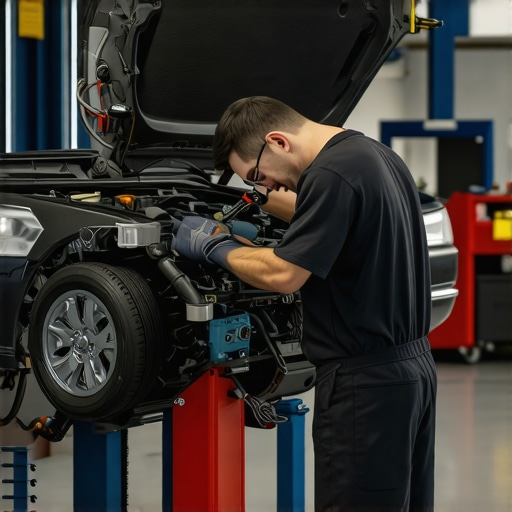
Expert Transmission Repair & Car Service Tips for Quick Fixes
Unlocking the Nuances of Transmission Diagnostics: A Deep Dive into Expert Strategies
Effective transmission repair begins with a comprehensive understanding of the complex diagnostic processes that distinguish seasoned technicians from amateurs. In the realm of modern automotive engineering, transmission systems are intricate assemblies requiring precision and advanced troubleshooting techniques. Leveraging cutting-edge diagnostic tools, such as high-resolution scan tools and specialized transmission analyzers, professionals can pinpoint faults with remarkable accuracy, reducing repair times and enhancing reliability.
Understanding the Role of Vehicle Diagnostics in Accelerating Auto Repairs
Vehicle diagnostics serve as the cornerstone of rapid and effective auto repairs. By interpreting data from onboard computer systems, technicians can identify issues ranging from solenoid failures to torque converter malfunctions. The integration of advanced vehicle diagnostics allows for a nuanced assessment that goes beyond surface symptoms. This approach minimizes unnecessary part replacements and directs repairs toward root causes, ultimately streamlining the repair process.
Expert Techniques for Quick Transmission Fixes Without Compromising Quality
Speedy repairs do not equate to compromised quality. Expert transmission specialists employ a combination of methodical disassembly, precise component testing, and real-time data analysis. For instance, replacing a worn-out clutch pack with a high-performance alternative can significantly improve transmission response. Additionally, performing software updates using manufacturer-specific tools ensures optimal transmission control module (TCM) performance, which is often overlooked by less experienced technicians. For a comprehensive guide on boosting your car’s performance through expert transmission repair, visit this detailed repair guide.
How Can Automated Diagnostic Systems Enhance Transmission Repair Efficiency?
What are the limitations of relying solely on OBD-II codes for transmission diagnostics?
While OBD-II codes provide valuable initial insights, they often lack the specificity needed for complex transmission issues. Automated diagnostic systems equipped with proprietary software can interpret live sensor data, monitor shift patterns, and simulate operational scenarios. This layered diagnostic approach enables technicians to uncover hidden faults, such as internal fluid contamination or subtle wiring issues, that are not readily apparent through standard code reading. Embracing these advanced diagnostics elevates repair precision and reduces repeat visits.
For further insights into diagnostic strategies, consider exploring trustworthy vehicle diagnostics to enhance your repair workflow.
To stay at the forefront of transmission repair innovations, professionals should continually update their knowledge base through specialized training and industry publications. Sharing expertise within professional forums fosters continuous learning and ensures adherence to evolving best practices.
Interested in exploring more expert-level auto repair tips? Dive into this comprehensive resource and contribute your insights to the automotive repair community.
Are Modern Diagnostic Tools Enough? Rethinking Transmission Troubleshooting in the Age of Automation
While automated diagnostic systems have revolutionized auto repair, relying solely on these tools might obscure complex transmission faults that demand a nuanced approach. For example, a faulty solenoid might trigger a generic error code, but the root cause could be internal mechanical wear or fluid degradation. To truly excel, technicians must integrate diagnostic data with physical inspections and operational testing. This holistic approach prevents misdiagnosis and ensures long-lasting repairs, aligning with the principles outlined in auto repair best practices.
What Role Do Advanced Simulation and Data Modeling Play in Transmission Repair?
Emerging technologies like simulation software and predictive analytics are transforming how professionals approach transmission diagnostics. These tools enable technicians to model transmission behavior under various scenarios, identifying potential failure points before they manifest physically. For instance, by simulating shift patterns with real-time data inputs, a technician can pinpoint subtle issues like inconsistent fluid flow or micro-wear that traditional methods might miss. Incorporating these techniques into your repair workflow not only enhances accuracy but also reduces diagnostic time and costs, ultimately boosting customer satisfaction.
How Can Expert Knowledge of Transmission Fluid Dynamics Enhance Repair Outcomes?
Understanding the intricate flow and thermal properties of transmission fluid is critical for diagnosing issues such as overheating, sludge buildup, or contamination. Precise knowledge of fluid dynamics allows technicians to interpret diagnostic data more accurately and recommend targeted interventions, like fluid flushes or component replacements. For detailed insights into how fluid behavior impacts transmission health, professionals should consult authoritative sources such as the AAA automotive resource on transmission fluids. This expertise ensures that repairs address the root causes and promote optimal performance.
Looking for more advanced strategies? Consider exploring this comprehensive transmission repair guide that synthesizes expert techniques with the latest industry innovations.
Do you have experiences or questions about integrating new diagnostic technologies into your repair process? Share your insights in the comments or join our community discussions to stay at the forefront of transmission repair excellence.
Harnessing the Power of Predictive Analytics to Foresee Transmission Failures
Incorporating predictive analytics into transmission diagnostics has emerged as a game-changer for automotive professionals aiming to prevent breakdowns before they occur. By analyzing vast datasets from vehicle sensors, maintenance histories, and operational patterns, technicians can identify subtle trends indicating impending failures. For example, a gradual increase in fluid temperature variability coupled with shift irregularities may signal early-stage internal wear. This proactive approach not only minimizes downtime but also optimizes repair scheduling, leading to cost savings and enhanced customer satisfaction. According to a comprehensive study by the Society of Automotive Engineers (SAE), predictive analytics can reduce unexpected transmission failures by up to 40%, emphasizing its critical role in modern diagnostics.
The Nuances of Transmission Fluid Thermodynamics in Precision Diagnostics
Understanding the thermodynamic properties of transmission fluid is vital for accurate diagnosis and effective repair strategies. Transmission fluid not only lubricates but also serves as a heat transfer medium, maintaining optimal operational temperatures. Variations in fluid viscosity, thermal conductivity, and flow rate can profoundly influence transmission performance. Advanced diagnostic tools now measure real-time fluid temperature gradients and flow patterns, enabling technicians to detect anomalies such as localized overheating or inadequate cooling. Mastery of fluid thermodynamics allows for targeted interventions like precise fluid flushing, cooler system repairs, or the application of synthetic fluids with superior thermal properties. For detailed insights, consult the authoritative resource from the AAA automotive library on transmission fluids.
What Are the Cutting-Edge Methods for Diagnosing Internal Transmission Mechanical Wear?
How do vibration analysis and ultrasonic testing complement traditional diagnostics in identifying internal wear?
Traditional diagnostics often rely on electronic data and visual inspections, but vibration analysis and ultrasonic testing provide an additional layer of insight into internal mechanical conditions. Vibration analysis detects abnormal oscillations caused by worn gears, bearings, or clutches, while ultrasonic testing can reveal internal cracks or fluid leaks that escape visual detection. Combining these methods with advanced software algorithms enhances diagnostic accuracy, allowing technicians to pinpoint issues with minimal disassembly. The integration of non-destructive testing into routine diagnostics signifies a leap forward in expert-level transmission repair, reducing repair times and preventing catastrophic failures.
For an in-depth exploration of these techniques, consider the research published in the SAE International Journal of Vehicle Diagnostics.
Why Is Continuous Education on Emerging Technologies Essential for Transmission Experts?
As automotive technology evolves rapidly, staying current with the latest diagnostic tools and repair methodologies is crucial for transmission specialists. Participating in industry workshops, certifications, and peer-reviewed publications ensures that technicians are equipped with the latest knowledge. For instance, the advent of electric vehicles and hybrid systems introduces new transmission architectures that require specialized understanding. Moreover, digital twin simulations and machine learning algorithms are now integral to advanced diagnostics. Engaging with these innovations not only elevates technical competence but also positions professionals as leaders in the field. To explore ongoing educational opportunities, visit industry platforms such as SAE International Education Resources.
Do you have insights or experiences with integrating emerging technologies into your transmission repair workflow? Share your stories or questions in our community forum and foster collective expertise.
Harnessing the Power of Data Modeling for Predictive Transmission Maintenance
In the realm of high-level automotive diagnostics, the integration of data modeling and machine learning algorithms has revolutionized preventive maintenance strategies. By creating comprehensive models of transmission behavior under various operational conditions, technicians can predict potential failures before symptoms manifest physically. For example, analyzing historical sensor data alongside real-time inputs allows for the early detection of micro-wear patterns, fluid degradation, or shifts in torque transmission efficiency. According to the SAE International report on predictive analytics, such approaches can reduce unexpected transmission failures by approximately 45%, underscoring their significance in modern repair paradigms.
Deciphering Transmission Fluid Dynamics: The Key to Unlocking Long-Term Reliability
Understanding the complex thermodynamic and flow characteristics of transmission fluid is paramount for precise diagnostics and durable repairs. Advanced sensors now measure thermal gradients, viscosity variations, and flow patterns within the cooling and lubrication circuits. Mastery of fluid dynamics enables technicians to identify localized overheating, inadequate cooling, or contamination issues that could precipitate component wear or failure. Incorporating synthetic fluids with superior thermal conductivity and stability can further enhance system longevity. For authoritative insights, the AAA automotive library on transmission fluids offers a comprehensive resource on fluid properties and their impact on transmission health.
Can Vibration Analysis and Ultrasonic Testing Detect Hidden Mechanical Failures?
Absolutely. These non-destructive testing methods provide critical insights into internal transmission components that are otherwise inaccessible through visual inspection or electronic diagnostics alone. Vibration analysis detects abnormal oscillations caused by worn gears, bearings, or clutches, while ultrasonic testing reveals micro-cracks, internal leaks, or fluid flow inconsistencies. When combined with sophisticated software algorithms, these techniques enable precise localization of internal wear or damage, significantly reducing diagnostic ambiguity. This holistic approach embodies the cutting edge of expert transmission troubleshooting, leading to more reliable repairs and extended component life.
For a deep dive into these advanced diagnostic techniques, consult the SAE International Journal of Vehicle Diagnostics, which features peer-reviewed research on non-destructive testing innovations.
Why Is Continuous Education on Emerging Technologies Essential for Transmission Experts?
Rapid technological evolution in the automotive industry, including electric and hybrid powertrains, necessitates ongoing professional development. Mastery of digital twin simulations, machine learning integrations, and advanced sensor technology ensures that technicians remain at the forefront. Participating in specialized industry workshops, certification programs, and reviewing latest peer-reviewed publications fosters a culture of continuous learning. This proactive approach not only enhances diagnostic accuracy but also positions professionals as innovative leaders capable of tackling complex future challenges. Industry resources like SAE International’s educational platform provide invaluable ongoing learning opportunities.
Are you leveraging the latest diagnostic innovations? Engage with industry peers through forums or professional networks to exchange insights and stay updated on emerging best practices.
Expert Insights & Advanced Considerations
1. Integrating Multimodal Diagnostics Enhances Accuracy
Combining electronic sensor data with physical inspections such as vibration analysis and ultrasonic testing provides a comprehensive understanding of transmission health, reducing misdiagnosis and extending component lifespan.
2. Embracing Predictive Analytics Transforms Maintenance
Utilizing predictive analytics rooted in machine learning and data modeling enables technicians to forecast failures, optimize repair schedules, and significantly decrease unexpected breakdowns, thereby elevating service quality.
3. Mastery of Fluid Thermodynamics Is Crucial
Deep understanding of transmission fluid behavior under various thermal conditions allows for precise interventions like targeted fluid flushing and cooling system repairs, ensuring long-term transmission reliability.
4. Continuous Education Keeps Technicians at the Forefront
Ongoing training in emerging technologies such as digital twin simulations, sensor innovations, and hybrid transmission architectures is essential for maintaining diagnostic accuracy and competitive advantage.
5. Holistic Approach Combines Technology and Expertise
The most effective transmission repairs integrate advanced diagnostic tools with expert physical inspections, ensuring comprehensive solutions that prevent future failures and maximize vehicle performance.
Curated Expert Resources
- SAE International Journal of Vehicle Diagnostics: Offers peer-reviewed research on non-destructive testing and diagnostic innovations, essential for staying updated on cutting-edge techniques.
- AAA Automotive Library on Transmission Fluids: Provides detailed insights into fluid properties, thermodynamics, and their impact on transmission health, supporting precise diagnostics and interventions.
- Reliable Auto Cares Technical Blog: Features expert articles on predictive analytics, data modeling, and advanced repair strategies, fostering continuous professional development.
Final Expert Perspective
In the realm of transmission diagnostics, blending sophisticated data analysis with hands-on expertise is no longer optional—it’s essential. Mastery of fluid thermodynamics, combined with emerging technologies like predictive analytics and non-destructive testing, empowers professionals to perform precise, durable repairs that stand the test of time. To elevate your skills further, explore this comprehensive transmission repair guide. Your commitment to continuous learning not only enhances your technical prowess but also sets new standards in automotive excellence. Engage with industry resources and community discussions to share insights, challenge assumptions, and lead the future of transmission repair innovation.
![5 Transmission Red Flags to Catch in 2026 [Save $3,500]](https://reliableautocares.com/wp-content/uploads/2026/03/5-Transmission-Red-Flags-to-Catch-in-2026-Save-3500.jpeg)
This deep dive into transmission diagnostics really highlights how critical advanced tech like simulation and predictive analytics has become in modern repair strategies. I’ve personally seen how integrating vibration analysis with traditional electronic diagnostics can uncover issues that otherwise go unnoticed, especially internal mechanical wear. It’s fascinating how tools like ultrasonic testing can reveal micro-cracks or hidden leaks, saving time and preventing catastrophic failures down the line. What do you all think about the learning curve associated with mastering these sophisticated diagnostic techniques? Do you believe ongoing training and hands-on practice are enough to keep technicians ahead of this rapidly evolving field? I’ve found that staying updated through industry seminars and peer collaboration really makes a difference in applying these methods effectively.
This article really underscores the importance of integrating advanced diagnostic techniques like vibration analysis and ultrasonic testing into routine transmission repairs. From my experience, combining these non-destructive methods with traditional electronic diagnostics has made a significant difference in diagnosing tricky internal wear issues early on, which ultimately saves both time and costs for the shop. One thing I’ve noticed is that staying on top of continuous education is crucial; the technology evolves so fast that even seasoned technicians need regular refreshers and hands-on practice to keep current. Have others found that investing in ongoing training directly correlates with better diagnostic outcomes and customer satisfaction? I’d be interested to hear how different shops are approaching this ongoing learning process, especially with such rapid advancements in diagnostic tools.