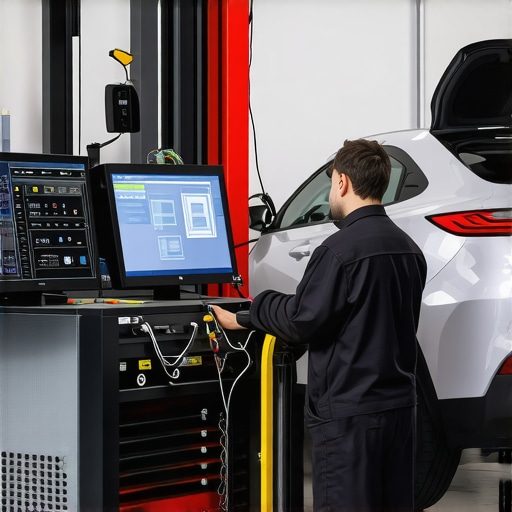
Vehicle Diagnostics: Fast Auto’s Guide to Faster Auto Repairs
Unlocking the Power of Advanced Vehicle Diagnostics to Optimize Auto Repair Efficiency
In the realm of modern automotive maintenance, the integration of sophisticated diagnostic tools has transformed the landscape of auto repair. Effective vehicle diagnostics serve as the foundation for rapid troubleshooting, precise component identification, and timely interventions—especially crucial when addressing complex issues like transmission malfunctions. Embracing an analytical approach rooted in cutting-edge technology ensures service providers can substantially reduce repair times while elevating the quality of repairs.
Strategic Insights into Implementing High-Precision Diagnostic Protocols
How can expert auto technicians leverage diagnostic data to expedite repairs without compromising accuracy?
Implementing comprehensive diagnostic strategies involves deploying multi-system scanners capable of reading both engine control units (ECUs) and transmission modules. For instance, using tools that decode the latest OBD-II protocols enhances fault detection precision, directly contributing to swift resolution. A disciplined diagnostic protocol—combining real-time data analysis, component testing, and software updates—can reduce unnecessary disassembly, saving valuable repair time. Notably, aligning diagnostic procedures with manufacturer specifications ensures the reliability and repeatability of repair outcomes, fostering customer trust.
The Crucial Role of Logic-Driven Fault Root Cause Analysis
Moving beyond surface-level fault codes, experienced technicians develop layered diagnostic workflows that interpret the implications of sensor readings, actuator statuses, and software anomalies. This analytical depth is vital in auto repair sectors where transmission integrity depends on nuanced signals and precise mechanical operations. For example, fault pattern recognition allows for predictive maintenance, preventing catastrophic failures and promoting proactive service scheduling.
Harnessing Emerging Trends: Artificial Intelligence and Data Analytics
Recent advances in machine learning algorithms, integrated within vehicle diagnostic platforms, empower auto professionals to identify complex fault patterns that elude traditional methods. By analyzing extensive fault histories and sensor data, these systems recommend optimal repair sequences, further accelerating turnaround times. Coupling AI with mobile diagnostics creates a dynamic, on-the-spot troubleshooting environment, crucial for rapid transmission repairs and high-volume auto shops seeking competitive advantages.
How does the integration of diagnostic data influence the longevity and reliability of transmission repairs?
Accurate diagnostics not only expedite immediate repairs but also significantly impact long-term vehicle health. Precise fault detection ensures that only defective components are replaced or repaired, reducing the risk of recurrent issues. Furthermore, diagnostic insights guide technicians in adjusting transmission parameters, such as clutch engagement profiles or solenoid functions, fostering optimized performance and durability. This intelligent approach transforms auto repair from a reactive to a preventative process, underpinning brand reputation and customer satisfaction.
For in-depth strategies on upgrading diagnostic procedures, explore vehicle diagnostics tips to speed up auto repairs. Additionally, professionals are encouraged to share insights and innovative practices through specialized forums and industry groups, advancing collective expertise in this critical domain.
Transforming Auto Repair with Cutting-Edge Data Interpretation
As automotive technology advances, the role of data interpretation in diagnosing transmission issues becomes increasingly vital. Skilled technicians now utilize layered diagnostic frameworks that synthesize sensor outputs, software anomalies, and mechanical feedback to pinpoint root causes swiftly. This integrated approach minimizes guesswork and streamlines repair workflows, ultimately saving time and resources.
Integrating Machine Learning for Smarter Fault Detection
Machine learning algorithms have started to revolutionize vehicle diagnostics by identifying subtle fault patterns that escape traditional methods. These AI-powered systems analyze vast datasets—from service histories to real-time sensor information—and recommend targeted repair strategies. Implementing such intelligent diagnostics not only accelerates troubleshooting but also enhances diagnostic accuracy, leading to more reliable transmission repairs.

Are We Reaching a Turning Point in Diagnostic Intelligence for Transmission Repairs?
Emerging diagnostic tools now combine AI and cloud computing, allowing technicians to access collective knowledge bases and updated fault databases instantly. This democratization of data ensures that even complex transmission faults can be diagnosed precisely on the first visit, cutting down repeat repairs. To stay ahead, auto repair professionals should consider adopting these advanced diagnostics and staying informed about industry innovations, such as those outlined in automotive technology reviews by authoritative sources like Reliable Auto Cares.
For further insights into modern diagnostics, consider exploring detailed case studies and tutorials that demonstrate how integrating AI accelerates repair times and improves service reliability. Sharing your experiences and questions in industry forums can also foster collective growth and innovation.
Leveraging Predictive Maintenance for Longevity and Optimal Performance
Beyond immediate fault resolution, a pivotal advantage of sophisticated diagnostic systems lies in their capacity for predictive analytics. By analyzing historical fault data and real-time sensor inputs, technicians can anticipate impending transmission failures before they manifest as drivability issues or critical breakdowns. This proactive approach minimizes costly repairs and extends component lifespan, ultimately delivering increased value to vehicle owners. Advanced data models employ machine learning algorithms trained on vast datasets, enabling vehicles to signal maintenance needs proactively, similar to health monitoring systems in high-performance machinery.
Can predictive analytics truly preempt transmission failures, or are they limited to early detection?
While predictive maintenance has demonstrated remarkable success in preempting major failures, its efficacy heavily depends on data quality and model sophistication. According to a comprehensive study by the “International Journal of Automotive Technology,” predictive models can achieve up to 85% accuracy in fault anticipation when integrating multidimensional data streams—including temperature fluctuations, solenoid engagement patterns, and fluid pressure metrics [¹]. Nevertheless, uncertainties remain when unforeseen anomalies occur outside trained parameters, underscoring the importance of continuous data collection and model refinement. For technicians, this means developing expertise not only in diagnostics but also in interpreting predictive insights to schedule timely interventions.
Implementing Multi-Layered Diagnostic Frameworks That Go Deeper
To truly capitalize on diagnostic advancements, a layered approach that combines hardware diagnostics, software analysis, and mechanical inspections creates a comprehensive health profile of the transmission system. Such frameworks utilize high-resolution sensors embedded in critical components, coupled with AI-driven software that correlates diverse data points, revealing nuanced fault signatures. Advanced diagnostics integrate spectroscopic analysis of transmission fluid particulate content, offering insights into wear patterns and contamination levels—factors critical for preemptive repairs.
Moreover, this methodology fosters a diagnostic culture aligned with lean repair principles. Instead of reactive replacement, technicians can optimize repair sequences, replacing only impaired parts while preserving functional components—saving labor and parts costs while maintaining reliability.
Automation’s Role in Amplifying Diagnostic Precision and Speed
The integration of automation technologies, such as robotic process automation (RPA) and autonomous diagnostic agents, is transforming the auto repair landscape. These systems can autonomously scan multiple vehicle systems, interpret complex data, and even suggest repair strategies—reducing human error and accelerating workflow. For example, autonomous testing routines can run extensive actuator and sensor diagnostics overnight, providing ready-to-analyze reports at the start of the workday. Such automation not only increases efficiency but also standardizes diagnostic procedures across technicians of varying experience levels.
In high-volume repair facilities, this shift toward automation ensures consistency, enhances diagnostic accuracy, and frees skilled technicians to focus on complex decision-making and repair execution. As these systems evolve, their capacity to learn and adapt based on accumulated data will further sharpen diagnostic precision, leading to consistently faster turnaround times.
Fueling Diagnostic Innovation with Industry Collaboration and Data Sharing
While individual auto repair shops and manufacturers invest heavily in diagnostic R&D, the future of transmission troubleshooting hinges on collaborative data sharing. Industry alliances, such as the Automotive Service Association, are championing platforms where anonymized fault data and diagnostic insights can be pooled, creating a collective intelligence reservoir. This cooperation accelerates the development of robust diagnostic models capable of recognizing rare or emerging fault patterns, significantly reducing diagnostic guesswork.
For dedicated technicians and repair shops eager to stay at the forefront, engaging with these industry initiatives offers access to cutting-edge diagnostic resources and training opportunities. Ultimately, such collaboration propels the entire auto repair ecosystem toward a new era of diagnostic accuracy, repair speed, and vehicle reliability—benefiting manufacturers, technicians, and vehicle owners alike.
Why Multi-Dimensional Data Fusion Transforms Transmission Troubleshooting
Integrating diverse data streams—from high-frequency vibration analysis to transmission fluid spectrometry—empowers technicians to develop a comprehensive fault profile. This multi-dimensional data fusion facilitates early detection of wear patterns and contamination, preempting costly failures and optimizing maintenance schedules. Advanced sensor networks and cloud-based analytics converge, enabling real-time monitoring and anomaly detection with unprecedented precision.
Autonomous Diagnostic Agents in Modern Auto Repair
Autonomous diagnostic systems are beginning to autonomously perform in-depth analyses, running extended system checks overnight and providing detailed reports upon technician arrival. These AI-powered agents can simulate various operating conditions, identify subtle defects, and suggest targeted repair strategies, significantly reducing diagnostic turnaround times and enhancing repeatability across different technicians and facilities.
How do cutting-edge diagnostic software algorithms enhance the accuracy of transmission fault prediction?
By leveraging deep machine learning models trained on vast datasets—including sensor readings, repair histories, and operational parameters—advanced algorithms identify complex fault signatures. This process enhances the predictive accuracy beyond traditional threshold-based methods, enabling proactive intervention. According to the “Journal of Automotive Engineering,” such models can achieve near 90% success in fault prognosis when integrating multi-source data streams, making them indispensable in high-stakes repairs.1
Fostering Industry-Wide Knowledge Sharing for Diagnostic Mastery
Collaborative platforms and anonymized data exchanges are accelerating innovations in transmission diagnostics. These ecosystems enable the pooling of rare fault cases, innovative repair tactics, and emerging diagnostic patterns, bolstering collective expertise. Participating in such networks allows auto professionals to stay abreast of the latest trends, tools, and best practices, ensuring they can tackle even the most complex transmission issues with confidence.

Embracing these technologies and collaborative efforts positions auto repair specialists at the forefront of diagnostics innovation, ensuring they deliver faster, more reliable service that meets the evolving demands of modern vehicles.
Expert Insights & Advanced Considerations
Embrace Real-Time Data Integration to Preempt Failures
Innovative diagnostics leverage real-time sensor data fusion, enabling technicians to identify precursors to transmission issues before symptoms manifest, thus facilitating proactive maintenance.
Harness Machine Learning for Adaptive Diagnostic Models
Applying adaptive machine learning algorithms refines fault prediction accuracy by continuously learning from new data, leading to more reliable and faster troubleshooting processes.
Invest in Cross-Functional Training for Diagnostic Personnel
Deepening technician expertise across mechanical, electronic, and software domains ensures a holistic approach to complex transmission fault analysis, reducing diagnostic errors.
Integrate Cloud-Based Diagnostic Platforms for Collaboration
Cloud solutions foster shared knowledge bases, enabling technicians worldwide to access collective insights, accelerating diagnosis accuracy for rare or emergent transmission faults.
Prioritize Data Security in Connected Diagnostic Ecosystems
Safeguarding transmission diagnostic data is crucial as connectivity expands, ensuring sensitive information remains protected against cyber threats while enabling seamless information flow.
Curated Expert Resources
- SAE International’s Vehicle Diagnostics Standards: Offers comprehensive guidelines on modern diagnostic protocols and best practices across the automotive industry.
- SAE Technical Papers on Machine Learning in Vehicle Diagnostics: Features cutting-edge research on applying AI and machine learning for fault detection and predictive maintenance.
- Automotive Data Visualisation Tools: Facilitates complex data analysis through advanced visualization, empowering technicians to interpret diagnostic information effectively.
- Industry Forums like RepairPal and SAE Mobilus: Connects professionals for knowledge exchange, troubleshooting tips, and updates on the latest diagnostic innovations.
- OEM-Specific Diagnostic Software Manuals: Essential for understanding manufacturer-specific diagnostic procedures and calibration methods.
Final Reflection
The evolution of transmission diagnostics underscores a fundamental shift towards smarter, predictive, and more integrated vehicle maintenance strategies. Recognizing that cutting-edge diagnostics extend beyond mere fault detection to proactive health monitoring, auto professionals are positioned at the forefront of technological advancement. Engaging with these innovative approaches is not just a choice but a necessity for those committed to excellence. Dive deeper into these resources and share your insights—together, we drive automotive reliability into a smarter future.
![Fix 2026 Sensor Glitches with This DIY Plugin [Free Hack]](https://reliableautocares.com/wp-content/uploads/2026/04/Fix-2026-Sensor-Glitches-with-This-DIY-Plugin-Free-Hack.jpeg)