Car Service & Vehicle Diagnostics: The Ultimate Auto Repair Guide
Unlocking the Complexity of Modern Vehicle Diagnostics: A Deep Dive for Automotive Experts
In an era where automotive technology is advancing at an unprecedented pace, car service and vehicle diagnostics have transcended basic troubleshooting to become sophisticated, precision-driven processes. As an industry professional, understanding the layered intricacies of diagnostic tools and repair strategies is essential for delivering optimal results and ensuring vehicle longevity. This comprehensive guide explores the multifaceted nature of auto diagnostics, emphasizing the importance of integrating cutting-edge technology with seasoned expertise.
The Evolution of Vehicle Diagnostics: From Mechanical to Digital Precision
Traditionally, auto repair relied heavily on mechanical intuition and manual inspection. However, the advent of electronic control units (ECUs) and onboard diagnostics (OBD) revolutionized this landscape. Today, advanced diagnostic scanners can decode complex error codes, provide real-time data, and even predict component failures before they manifest. For example, vehicle diagnostics tips now include leveraging bi-directional communication with vehicle modules, enabling technicians to perform active tests and calibrations with higher precision.
Integrating Advanced Diagnostic Protocols: Bridging Theory and Practice
Expert automotive diagnostics embrace a blend of hardware mastery and analytical acumen. Techniques such as oscilloscope analysis and signal pattern recognition allow for nuanced diagnostics of sensor failures, actuator malfunctions, and wiring issues. Moreover, the use of manufacturer-specific diagnostic software enhances accuracy, especially for complex systems like transmission control modules or hybrid powertrains. The challenge lies in interpreting voluminous data streams, requiring a nuanced understanding of vehicle architecture and failure modes.
What Are the Limitations of Standard Diagnostic Tools in Complex Vehicle Systems?
Can traditional OBD scanners sufficiently diagnose modern vehicles with advanced driver-assistance systems (ADAS) and hybrid powertrains?
While standard OBD scanners are invaluable, their capabilities can fall short when diagnosing highly integrated systems. Modern vehicles often contain multiple ECUs interconnected through high-speed networks like CAN and LIN buses. Specialized tools and knowledge are needed to interpret data from systems such as adaptive cruise control or electric drivetrain components. As vehicles evolve, so must our diagnostic approaches, emphasizing continuous training and investment in high-end diagnostic equipment.
The Future Trajectory of Vehicle Diagnostics: AI and Predictive Analytics
Emerging trends indicate a shift toward artificial intelligence (AI)-driven diagnostics, capable of predictive maintenance and real-time anomaly detection. These systems analyze vast datasets across fleets, identifying subtle patterns that precede component failures. Incorporating AI into diagnostic workflows will further elevate the precision and speed of auto repairs, but it requires a deep understanding of data science principles and integration strategies.
For those committed to mastering vehicle diagnostics, exploring authoritative insights such as the recent white paper by the IEEE on automotive AI applications can be profoundly beneficial.
How can auto repair professionals stay ahead in the rapidly evolving landscape of vehicle diagnostics?
Engaging in continuous professional development, investing in state-of-the-art diagnostic tools, and actively participating in industry forums are vital strategies. Sharing insights and experiences within professional communities fosters a collective intelligence capable of tackling complex diagnostics effectively.
Interested in deepening your expertise? Explore our top car service secrets to learn more about integrating diagnostics into your repair workflows and enhancing customer confidence.
Beyond the Basics: The Role of AI and Big Data in Modern Vehicle Diagnostics
As automotive technology continues its rapid evolution, the integration of artificial intelligence (AI) and big data analytics is transforming the landscape of vehicle diagnostics. These innovations enable technicians to move from reactive repairs to predictive maintenance, significantly reducing downtime and repair costs. AI algorithms analyze vast datasets collected from vehicle sensors, historical repair records, and real-time operational data to identify subtle patterns that signal impending failures. This proactive approach not only enhances repair accuracy but also deepens technicians’ understanding of complex vehicle systems.
Implementing Predictive Analytics: Practical Strategies for Technicians
Adopting AI-driven diagnostic tools requires a strategic approach. First, invest in platforms capable of aggregating data from various sources, including OEM-specific modules and aftermarket sensors. Second, develop a workflow that incorporates continuous data monitoring, enabling real-time alerts for anomalies. Third, leverage cloud-based solutions for scalable data storage and processing, ensuring your diagnostic capabilities evolve alongside vehicle technology. Integrating these systems with traditional diagnostics can be seamless, especially when utilizing trusted resources like vehicle diagnostics tips to optimize workflows.
How Can Diagnostic Professionals Leverage External Knowledge to Stay Ahead?
Staying at the forefront of diagnostic innovation involves engaging with authoritative sources such as the latest white papers from industry leaders and research institutions. For example, the IEEE’s recent publication on automotive AI applications provides valuable insights into emerging trends and best practices (IEEE, 2023). Continual learning from such resources ensures technicians are equipped with cutting-edge knowledge, enabling them to interpret complex data and implement advanced diagnostic strategies confidently.
If you’re eager to deepen your understanding, consider exploring our top car service secrets. These insights can help you integrate AI-driven diagnostics into your daily workflow, ultimately boosting your repair precision and customer satisfaction.
Harnessing the Power of Multilayered Diagnostic Frameworks for Complex Vehicle Systems
In the realm of modern automotive repair, a comprehensive diagnostic approach transcends traditional error code reading, incorporating layered analytical models that address the intricacies of interconnected systems. For instance, integrating data from multiple ECUs within a vehicle’s CAN network demands a systematic methodology, often employing model-based diagnostic algorithms that simulate expected behaviors and compare them with real-time sensor outputs. This advanced technique allows technicians to pinpoint root causes with unprecedented precision, especially in hybrid and electric vehicles where multiple power sources and control modules operate concurrently.
Emerging Paradigms: Diagnostic Data Fusion and Cross-Module Correlation
The next frontier involves fusion of diagnostic data streams from disparate modules, enabling a holistic view of vehicle health. By leveraging machine learning models trained on extensive datasets—such as operational logs, fault histories, and sensor signals—technicians can uncover hidden failure patterns that elude conventional diagnostics. According to a recent study by the Society of Automotive Engineers (SAE), data fusion techniques significantly improve fault detection rates in complex systems like advanced driver-assistance systems (ADAS) and electric drivetrains, leading to faster repairs and reduced diagnostic ambiguity.
What are the primary challenges in implementing AI-driven data fusion in automotive diagnostics?
Implementing AI-driven data fusion faces obstacles such as data quality, variability across vehicle models, and the need for extensive training datasets. Ensuring data integrity from diverse sensors and modules is critical; otherwise, false positives or negatives may occur. Moreover, vehicle manufacturers often restrict access to proprietary diagnostic data, complicating the development of universal AI models. Overcoming these challenges requires collaboration with OEMs, adherence to data standards like ISO 14229 (Unified Diagnostic Services), and investment in robust data preprocessing pipelines.
Strategic Integration of Augmented Reality (AR) for Advanced Diagnostics
Augmented Reality is transforming how technicians visualize complex electrical schematics and system states during diagnostics. By overlaying interactive, real-time data on physical components, AR tools facilitate quicker troubleshooting, especially for intricate wiring or embedded modules. For example, an AR headset can highlight a failed sensor wire while displaying live voltage readings, reducing diagnostic time and minimizing errors. Industry leaders like Bosch are pioneering AR applications that seamlessly combine diagnostic software with head-mounted displays, enabling a more intuitive repair process.
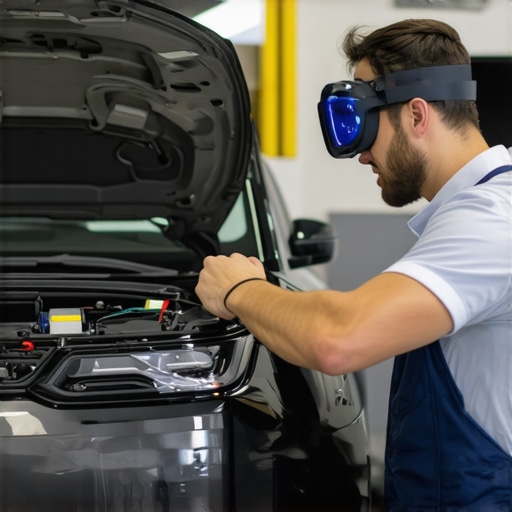
Image prompt: Technician using augmented reality headset to diagnose vehicle electrical system in a modern workshop, overlaying diagnostic data onto the vehicle.
Future Outlook: Integrating Blockchain for Diagnostic Data Security and Traceability
As diagnostics become more data-driven, ensuring the security and integrity of diagnostic records is paramount. Blockchain technology offers a decentralized, tamper-proof ledger for storing diagnostic histories, calibration data, and repair logs, fostering transparency and trust among repair shops, manufacturers, and consumers. This approach not only prevents data manipulation but also streamlines warranty claims and recalls by providing verifiable service histories. Pioneering initiatives in this space are exploring how blockchain can enhance the reliability of diagnostic data exchange across the automotive ecosystem.
How Can Automotive Professionals Embrace These Innovations for Competitive Advantage?
Staying ahead requires proactive engagement with emerging technologies through continuous education, collaboration with tech providers, and participation in industry consortia. Attending specialized workshops, subscribing to leading research publications like SAE Technical Papers, and experimenting with pilot projects can accelerate adoption. Embracing these advanced diagnostic methods positions professionals to deliver faster, more accurate repairs, ultimately elevating customer trust and satisfaction. Dive deeper into these topics and discover how to integrate them into your practice by exploring authoritative resources and industry case studies.
Harnessing Multi-Layered Diagnostic Architectures for Cutting-Edge Vehicle Analysis
In the realm of automotive diagnostics, the adoption of multilayered frameworks that integrate diverse data sources and analytical models marks a significant leap forward. These architectures leverage hierarchical diagnostic algorithms that synthesize sensor data, ECU outputs, and historical fault records, enabling a comprehensive understanding of vehicle health. For instance, model-based diagnostic algorithms utilize vehicle schematics and operational profiles to simulate expected behaviors, contrasting them with real-time data to identify discrepancies with pinpoint accuracy, especially in hybrid and electric vehicle systems.
Data Fusion and Cross-Module Correlation: Navigating Complexity with AI
The next frontier involves the fusion of heterogeneous diagnostic data streams, facilitating holistic failure analysis. By employing machine learning techniques trained on extensive datasets—including fault logs, sensor signals, and operational metrics—technicians can uncover subtle failure patterns that traditional methods might overlook. According to SAE research, such data fusion enhances fault detection rates in complex systems like ADAS and EV drivetrains, leading to faster diagnostics and reduced ambiguity.
What are the main challenges in deploying AI-powered data fusion in automotive diagnostics?
Implementing AI-driven data fusion confronts challenges such as ensuring data quality across diverse sensors, managing variability among vehicle models, and acquiring comprehensive training datasets. Data integrity is paramount; corrupted or inconsistent data can lead to false positives or negatives. Additionally, OEM restrictions on diagnostic data access complicate the development of universal AI models. Overcoming these hurdles necessitates collaboration with manufacturers, strict adherence to standards like ISO 14229, and robust data preprocessing pipelines.
Augmented Reality: Enhancing Diagnostic Precision through Immersive Visualization
Augmented Reality (AR) is transforming vehicle diagnostics by overlaying real-time, context-aware data onto physical components. AR headsets enable technicians to visualize electrical schematics, sensor outputs, and fault locations directly on the vehicle, significantly reducing diagnostic time and errors. Industry pioneers such as Bosch are integrating AR with diagnostic software to facilitate an intuitive troubleshooting process, especially in complex wiring and embedded module repairs.
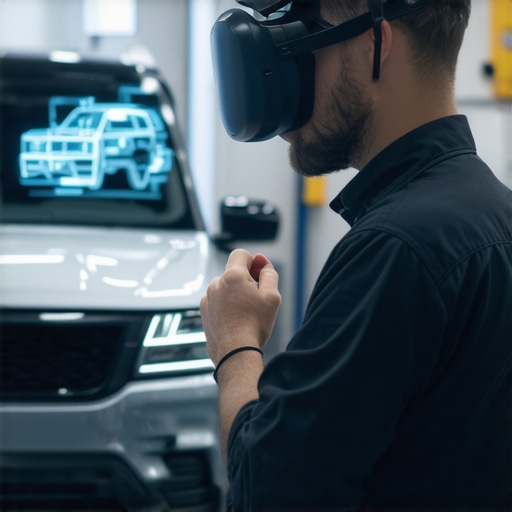
Image prompt: Technician using augmented reality headset in a repair shop, overlaying diagnostic data onto vehicle components for precise troubleshooting.
Securing Diagnostic Data with Blockchain for Trustworthy Maintenance Logs
As diagnostic data becomes increasingly digital and interconnected, safeguarding its integrity is critical. Blockchain technology offers an immutable ledger for storing diagnostic histories, calibration records, and repair logs, ensuring transparency and tamper-proof data exchange. This approach enhances trust among stakeholders, simplifies warranty claims, and streamlines recall processes by providing verifiable service records. Leading automotive service providers are exploring blockchain integration to establish secure, decentralized diagnostic ecosystems.
Embracing Innovation: Strategies for Automotive Professionals to Lead the Future
To remain competitive, diagnostics professionals must embrace continuous learning, invest in advanced diagnostic tools, and foster industry collaborations. Engaging with research publications such as SAE Technical Papers, participating in specialized workshops, and pilot testing emerging technologies like AI, AR, and blockchain can accelerate expertise. By positioning themselves at the forefront of diagnostic innovation, automotive technicians can deliver faster, more accurate repairs, elevating customer satisfaction and establishing industry leadership. Explore authoritative resources and case studies to deepen your understanding and practical application of these transformative technologies.
Expert Insights & Advanced Considerations
1. Embrace Multilayered Diagnostic Frameworks
Integrating hierarchical models that synthesize sensor data, ECU outputs, and fault histories enables a comprehensive vehicle health analysis, crucial for complex systems like hybrids and EVs.
2. Leverage Data Fusion & Cross-Module Correlation
Employ machine learning to fuse heterogeneous data streams, uncovering subtle failure patterns that traditional diagnostics might miss, thus enhancing fault detection in ADAS and electric drivetrains.
3. Incorporate Augmented Reality for Precise Troubleshooting
AR overlays real-time diagnostic data onto vehicle components, reducing troubleshooting time and errors, especially in wiring and embedded system repairs.
4. Secure Data Integrity with Blockchain
Implementing blockchain ensures tamper-proof diagnostic records, streamlining warranties and recalls, and establishing trust across the automotive ecosystem.
5. Invest in Continuous Education & Industry Collaboration
Stay ahead by engaging with SAE publications, industry workshops, and pilot projects related to AI, AR, and blockchain integration, positioning yourself as a leader in automotive diagnostics innovation.
This post offers a comprehensive overview of the rapidly evolving landscape of vehicle diagnostics. I especially appreciate the focus on integrating AI and predictive analytics, which I believe will revolutionize how we approach maintenance. During my recent projects, I’ve started using some AI-driven tools that analyze sensor data in real-time, helping to predict potential failures before they happen. It’s a game-changer for reducing downtime and enhancing customer trust. However, I’ve encountered challenges when dealing with OEM data restrictions that limit the effectiveness of some AI models. How are others managing data access issues while trying to implement these advanced diagnostic systems? I think collaboration with manufacturers and standardized data protocols will be vital to overcoming these hurdles. It’s exciting to see the industry moving toward smarter, more precise diagnostics, but it also underscores the need for continuous learning and adaptation. What strategies have worked well for other professionals in overcoming data limitations and staying ahead in this tech-driven environment? Looking forward to hearing some practical insights.
This is a really detailed overview of where vehicle diagnostics are heading. I’ve been working with hybrid vehicles for a few years now, and I can attest that integrating advanced diagnostic protocols like model-based algorithms has significantly improved how quickly and accurately we can diagnose issues. The challenge, of course, is the steep learning curve and the investment in specialized tools. One thing I’ve found helpful is participating in manufacturer-specific training programs, which often include insights into accessing data across vehicle networks. Also, I believe that the rise of AR in diagnostics can drastically cut down repair times, especially in complex wiring environments. However, the biggest hurdle seems to be data security and proprietary restrictions—how do we ensure the data we need is accessible without risking breaches or violating OEM policies? For others who have faced these issues, what workarounds or collaborations have you found effective? I’m eager to hear experiences that have helped push diagnostics forward without crossing sensitive boundaries.
Reading through this comprehensive guide, I appreciate how it underscores the importance of integrating emerging technologies like AI, AR, and blockchain into modern diagnostics. Having personally worked on hybrid and electric vehicles, I can say that mastering multilayered diagnostic frameworks is becoming increasingly essential. One aspect I find particularly interesting is data fusion—combining signals from various modules to identify failure patterns that could otherwise remain hidden. The challenge, however, often lies in data quality and the proprietary restrictions from OEMs, which can limit access to critical information. In my experience, establishing collaborative relationships with manufacturers and utilizing standardized protocols such as ISO 14229 has helped mitigate some of these issues. What are other professionals doing to navigate OEM data restrictions without compromising diagnostic accuracy? I believe ongoing training and industry partnerships are key to staying at the forefront of these developments. This post certainly sparks important discussions about advancing our diagnostic capabilities in a rapidly evolving automotive landscape.
This detailed overview really highlights how far vehicle diagnostics have come, especially with the integration of AI, AR, and blockchain. As someone who has worked extensively with hybrid systems, I totally agree that layered diagnostic frameworks and data fusion are crucial for accurate failure analysis. One challenge I’ve often faced is managing the vast amount of data from different modules, especially when OEM data access is restricted. In my experience, developing strong partnerships with manufacturers and staying updated with standards like ISO 14229 have been game changers. Honestly, I’m most excited about the potential of AR in speeding up diagnostics—it’s like having a digital assistant right there with you. Has anyone here incorporated AR tools into their workflow? How did it impact your repair times and accuracy? I think continuous learning and embracing these modern tools will be vital for staying competitive as vehicle complexity grows.
This article provides a fantastic overview of the rapid advancements in vehicle diagnostics, especially with the integration of AI, AR, and blockchain. From my experience working on hybrid vehicles, I’ve seen firsthand how multilayered diagnostic frameworks can dramatically improve fault detection accuracy. One thing I find particularly intriguing is the potential of data fusion—merging signals from multiple modules for a more comprehensive analysis. However, a common challenge I encounter is OEM data restrictions, which limit access to crucial diagnostic information. Building collaborative relationships with manufacturers and adhering to standards like ISO 14229 has helped, but I am curious about others’ strategies for navigating these hurdles without compromising diagnostic precision. Also, integrating AR solutions has been a game-changer in my shop, significantly reducing troubleshooting time, especially for complex wiring issues. How are fellow professionals balancing these emerging technologies with existing workflows? Any tips on leveraging these tools most effectively?
This post really hits home for me, especially the section on data fusion and AI analysis. In my experience working on electric vehicles, integrating multilevel data streams has unlocked a deeper understanding of system interactions. One thing I’ve noticed is that despite the advancements, a major hurdle remains the standardization of data formats across different OEMs, which complicates cross-module correlation. Have others found effective ways to address data heterogeneity to improve AI-driven diagnostics? Additionally, AR tools are proving to be a real time-saver for wiring diagnostics—being able to overlay live data directly onto components helps reduce errors and repair times significantly. I’m curious, how do other technicians incorporate AR into their daily workflows? Are there particular tools or practices that have made this transition smoother? I believe that ongoing training and sharing best practices within the community are key to mastering these innovative diagnostics, especially as vehicle complexity continues to evolve.