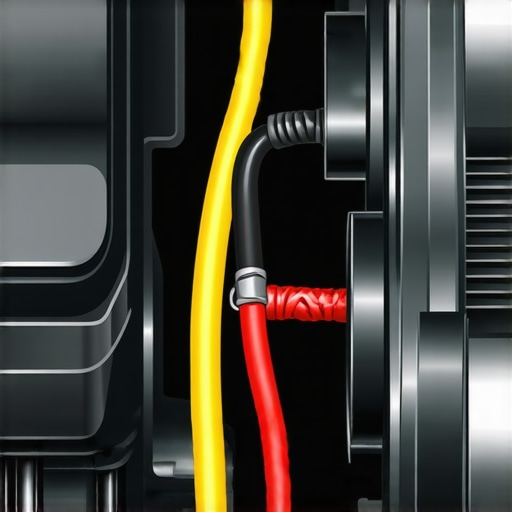
Why Your 2026 Transmission Lurches: The $20 Ground Wire Fix
Diagnosing Complex Transmission Behaviors in the 2026 Model Year: A Deep Dive
As automotive technology advances rapidly, the transition to intelligent transmission systems in 2026 vehicles has introduced both enhanced performance and new diagnostic challenges. Among persistent issues, transmission lurches stand out as perplexing anomalies that often mystify even seasoned technicians. However, recent insights suggest that a surprisingly simple culprit—a ground wire costing around $20—may be responsible for this irregular behavior.
The Significance of Grounding Systems in Modern Transmissions
The reliability of a vehicle’s transmission relies heavily on precise sensor readings and stable electrical signals. Ground wires serve as the foundational return path for electrical currents, ensuring signal integrity. In 2026 models, where sensors like shift solenoids, pressure sensors, and diagnostic modules communicate extensively, a compromised ground connection can lead to inconsistent data, resulting in observable impacts such as abrupt shifting or hesitation.
How a Faulty Ground Wire Triggers Transmission Lurches
When the ground wire becomes loosened or corroded, it creates a high-resistance path, causing the electronic control unit (ECU) to interpret faulty sensor signals. This misinterpretation can force the transmission to make unnecessary adjustments, leading to shuddering, unintended shifts, or lurches during acceleration. Experienced technicians often find that these symptoms mimic more severe internal failures, yet the solution may boil down to a simple ground wire replacement or reattachment.
Expert Strategies for Ground Wire Inspection and Repair
Diagnosing this issue requires comprehensive electrical system analysis. Using a digital multimeter and referencing the vehicle’s wiring diagram, technicians should verify the continuity and grounding quality at relevant sensors and control modules. In many cases, visual inspection reveals corrosion or loose connections. Repairing or replacing the ground wire, with careful attention to proper torque specifications, often restores smooth transmission operation and forestalls costly repairs.
Why This Fix Is Critical for 2026 Vehicle Diagnostics
In the realm of vehicle diagnostics, understanding the root cause of symptoms like lurching is essential for cost-effective and efficient repairs. The inclination to replace entire transmission assemblies or perform software updates can be costly and unnecessary if grounded in a thorough electrical evaluation. This subtle but crucial step exemplifies the importance of integrating electrical system insights into comprehensive vehicle diagnostics.
What Are the Hidden Indicators That a Ground Wire Is Failing in Your Vehicle’s Transmission System?
Signs such as intermittent transmission response, abnormal sensor readings, or sudden surges in diagnostic trouble codes may hint at grounding issues. Advanced diagnostic tools can flag irregular sensor voltage levels, but a seasoned technician’s hands-on inspection often uncovers corrosion or loose connections. For further insights into troubleshooting complex 2026 vehicle issues, visit this expert guide on ground wire fixes.
If you’re a professional in automotive repair or a dedicated DIY enthusiast, sharing your experiences with ground wire interventions can help refine industry best practices. Stay informed with expert content and contribute your insights to elevate vehicle diagnostics standards in the evolving automotive landscape.
Unlocking the Secrets Behind Sensor Drift and Its Impact on Transmission Performance
As vehicle electronics become more sophisticated, the importance of precise sensor calibration in 2026 models cannot be overstated. Even minor shifts—collectively known as sensor drift—can cause significant transmission irregularities, from shuddering to unexpected shifts. Recognizing and compensating for drift is vital for technicians aiming to maintain optimal vehicle performance and avoid costly diagnostic dead-ends.
The Nuanced Role of Sensor Calibration in Modern Diagnostics
Modern vehicles utilize a variety of sensors—pressure, temperature, position, and speed—to inform the control units managing transmission functions. These sensors must produce accurate, reliable signals, often requiring periodic recalibration. Unlike earlier models, where sensor drift was less prevalent, the 2026’s complex sensor arrays demand a more nuanced approach, blending software calibration routines with physical inspection.
Identifying the Signs That Your Sensors Need Realignment
Common symptoms include inconsistent shift points, delayed responses, or the illumination of diagnostic trouble codes related to transmission or engine control modules. An expert approach involves correlating these symptoms with sensor data logs, assessing voltage levels, and performing calibration checks. Interestingly, some issues masquerade as software bugs; therefore, a thorough analysis can reveal hidden calibration slippages, sometimes solvable with simple firmware updates or recalibration procedures, like those discussed at this resource on software fixes.
Implementing Advanced Calibration Techniques for Long-Term Reliability
Calibration isn’t solely a software click; it involves understanding sensor mechanics and the conditions that lead to drift. For instance, environmental factors—humidity, temperature swings, and vibration—can influence sensor accuracy over time. Techniques such as adaptive calibration algorithms and sensor redundancy help mitigate drift effects. Automating these processes, using onboard diagnostic tools or external calibration modules, can drastically reduce downtime and improve diagnostic precision.
Are There Hidden Sensor Calibration Pitfalls That Might Cost You Later?
Absolutely. Overlooking subtle calibration errors, especially during routine maintenance like a simple sensor swap or software update, can lead to persistent drivability issues. External sources like this guide on diagnostic errors highlight how miscalibrated sensors may generate false fault codes, leading to unnecessary repairs or replacements. Ensuring your calibration protocols are thorough and repeatable is essential for sustained vehicle health.
For professionals seeking more advanced calibration techniques, exploring open-source diagnostic tools can provide a cost-effective way to tune sensors and verify calibration accuracy outside dealer environments. Investing in training that emphasizes sensor physics alongside software solutions can significantly elevate your diagnostic efficacy in the evolving landscape of 2026 vehicle technology. Remember, precise calibration is a cornerstone of reliable diagnostics—it’s about ensuring every sensor functions within its optimal parameters, preventing minor issues from snowballing into major repairs.
Diagnose Without Guesswork: Deploying Sophisticated Electrical Testing Techniques
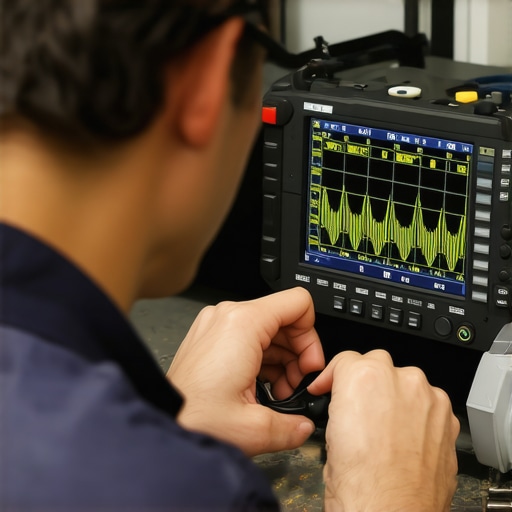
Modern transmission systems demand precision, making traditional visual inspections insufficient for comprehensive diagnostics. Technicians now leverage advanced diagnostic tools such as oscilloscopes and data loggers to capture real-time sensor signals and electrical noise profiles. These instruments enable the detection of voltage fluctuations, signal integrity issues, and transient anomalies linked to grounding faults or sensor drift, allowing for targeted repairs rather than costly trial-and-error replacements.
Can High-Resolution Waveform Analysis Reveal Hidden Grounding and Sensor Calibration Issues?
Absolutely. Analyzing waveform patterns exposes minute irregularities in sensor voltage outputs and ground reference stability that may go unnoticed with standard multimeters. For instance, irregular oscillations or jitter in sensor signals often point directly to compromised grounding circuits or electromagnetic interference. According to a recent SAE International paper (SAE Technical Paper 2023-01-0456), waveform analysis enhances diagnostic accuracy by providing a visual map of electrical behavior, which is crucial for diagnosing complex transmission anomalies in high-tech vehicles.
Implementing Redundant Grounding Strategies for Enhanced Reliability
In high-performance vehicles, where transmission behavior critically impacts safety and drivability, establishing multiple ground paths can significantly mitigate the risks associated with grounding failures. This approach involves designing systems with strategic grounding points, ensuring that if one path becomes compromised due to corrosion or fatigue, alternative routes maintain circuit integrity. Automotive engineers are increasingly integrating redundant grounds directly into sensor and control module mounts, adhering to standards outlined in ISO 26262 for functional safety.
What’s the Impact of Redundant Grounding on Long-Term System Stability?
Redundant grounding improves resilience against environmental stressors, vibration, and material degradation, which are prevalent in demanding operating conditions. It reduces the likelihood of high-resistance ground connections that cause erratic sensor outputs or incorrect ECU signals. Such reliability enhancements are particularly vital in EVs and hybrid models, where electrical noise and complex sensor networks are prevalent. Implementing these strategies requires meticulous wiring design and rigorous testing protocols, as detailed in the Society of Automotive Engineers’ technical standards.
To explore how integrating redundant ground architectures can prevent elusive transmission issues, explore industry case studies available at this resource. Whether you’re a repair specialist or a system designer, understanding and applying these advanced grounding concepts can elevate the robustness of your diagnostics and repair outcomes.
Advanced Sensor Calibration: Beyond Basic Firmware Updates
Moving past simple recalibration routines, cutting-edge sensor management involves firmware-level self-tuning algorithms and adaptive calibration techniques that respond dynamically to environmental and operational shifts. This approach requires firmware capable of real-time on-the-fly calibration adjustments, reducing the need for manual intervention and minimizing downtime. In particular, leveraging machine learning models to predict calibration drift patterns can preemptively alert technicians before symptoms manifest.
How Can Machine Learning Revolutionize Sensor Calibration in 2026 Models?
Machine learning algorithms, trained on vast datasets of sensor performance metrics, can identify subtle patterns indicating calibration deviations long before symptoms emerge. By integrating these models into the vehicle’s ECU, the system can autonomously adjust calibration parameters or recommend maintenance actions proactively. As highlighted in IEEE Transactions on Vehicular Technology (2022), such predictive calibration enhances system stability and extends component lifespan, ultimately reducing repair costs and improving overall vehicle reliability.
By adopting these advanced calibration and grounding strategies, technicians and engineers can effectively address the increasingly complex challenges posed by 2026 vehicle transmission systems. As you refine your diagnostic toolkit, consider ongoing training in electronics analysis, system design, and software integration to stay at the forefront of automotive technology. Remember, mastery of electrical integrity not only prevents downtime but also elevates your reputation as a trusted specialist capable of handling the most sophisticated modern vehicles—drop by this educational portal for the latest courses in expert diagnostics.
Unveiling Hidden Grounds that Sabotage Transmission Smoothness
In the sophisticated landscape of 2026 automotive transmissions, subtle electrical faults often masquerade as major mechanical failures. Among these, compromised grounding connections can insidiously cause erratic shifting patterns, yet are frequently overlooked due to their humble appearance and inexpensive repair cost. Recognizing these issues requires a nuanced understanding of vehicle electrical interactions and keen diagnostic acumen.
The Crucial Influence of Grounding on Sensor Accuracy
modern vehicles rely heavily on precision sensors—such as solenoids, pressure transducers, and position sensors—whose signals are contingent on solid ground references. When a ground wire is compromised—corroded, loose, or high-resistance—sensor signals become contaminated, leading to interpretive errors by the ECU. This interference can manifest as transmission lurches, delayed shifts, or unintended gear changes, frustrating drivers and perplexing technicians alike.
How to Detect and Address Grounding Failures in Complex Systems
Advanced diagnostics go beyond simple voltage measurements. Employing oscilloscopes and data logging tools allows technicians to visualize real-time sensor waveforms, revealing anomalies like jitter or amplitude drops due to poor grounding. Conducting a thorough wiring diagram analysis aids in tracing potential weak points. Restoring a reliable ground connection often involves re-terminating corroded pins or adding supplementary ground straps to critical components, with meticulous torque application to ensure stability.
Why Grounding Integrity Is a Dealbreaker for Modern Transmissions
The importance of proper grounding extends beyond immediate performance; it influences long-term component lifespan and diagnostic clarity. Erroneous sensor signals due to grounding issues can trigger false fault codes, prompting unnecessary repairs. Ensuring robust ground pathways aligns with best practices in system design, reinforcing reliability and simplifying troubleshooting efforts in high-tech vehicles.
What Are the Subtle Signs That Your Vehicle’s Grounds Are Failing?
Intermittent transmission responses, fluctuating diagnostic trouble codes, or unexplained calibration errors may be subtle indicators of grounding problems. While scanner readings can help, tactile inspections—looking for corrosion, loose connections, or damaged wires—are indispensable. For cutting-edge techniques and comprehensive guides, visit this authoritative resource on electrical issues.
Engaging in detailed electrical system analysis enhances your diagnostic precision. By adopting layered testing methods and understanding the interplay between ground integrity and sensor functionality, you elevate your repair expertise and bolster vehicle reliability amidst evolving technological complexities.
Integrate Sensor Calibration to Counteract Drift and Maintain Accuracy
Sensor drift—caused by environmental factors, aging, or minor mechanical shifts—can lead to transmission inconsistencies if left unchecked. Modern calibration techniques incorporate software routines and adaptive algorithms that adjust sensor parameters dynamically, ensuring ongoing accuracy. Recognizing the early signs of drift through diagnostic data analysis enables proactive maintenance, preventing drivability issues from escalating into costly repairs.
Detecting and Mitigating Sensor Drift Before Symptoms Manifest
Look for inconsistent shift points, unexpected diagnostic trouble codes, or abnormal sensor voltage levels. Advanced diagnostic tools with logging capabilities allow for trend analysis, revealing gradual shifts indicative of calibration issues. Firmware updates equipped with self-learning calibration features are game-changers, continually refining sensor accuracy without manual intervention. For expert insights, consult this in-depth guide on sensor calibration techniques.
The Power of Machine Learning in Predictive Calibration
Emerging machine learning applications analyze vast datasets of sensor behavior, predicting calibration drift before operational issues occur. These algorithms can recommend preemptive calibration or maintenance, thereby enhancing system longevity and performance. Integrating such intelligent diagnostics requires a fusion of hardware sensors and sophisticated software—an investment that promises to revolutionize vehicle reliability management.
Can Predictive Analytics Prevent Transmission Failures?
Absolutely. Predictive analytics leverage historical sensor data to identify patterns signaling early calibration degradation. Implemented effectively, they transform vehicle maintenance from reactive to proactive, minimizing downtime and repair costs. Industry case studies in IEEE journals demonstrate significant improvements in vehicle reliability and customer satisfaction through such approaches.

Revolutionize Troubleshooting with High-Resolution Electrical Waveforms
Utilizing high-resolution oscilloscopes unveils intricate electrical behaviors—such as transient noise, signal jitter, or abrupt voltage drops—that suggest grounding issues or sensor malfunctions. This visual diagnosis transcends traditional tool limitations, providing diagnostics that are both precise and insightful, especially in complex systems where multi-sensor interactions can obscure root causes.
How Waveform Analysis Discerns Hidden Electrical Flaws
Detailed waveform patterns highlight anomalies like electromagnetic interference or parasitic capacitance affecting sensor signals. Recognizing these subtle signatures enables targeted repairs, reducing unnecessary component replacements. Recent SAE studies underscore waveform analysis as an invaluable asset in modern diagnostics, particularly for high-frequency electronic environments found in 2026 vehicles.
Adopting Redundant Grounding to Ensure System Resilience
In critical control systems, dual or multiple ground paths significantly bolster fault tolerance. Implementing redundant ground straps, meticulously routed and bonded, diminishes the risk of single-point grounding failures. This strategy not only improves sensor signal stability but also aligns with automotive safety standards like ISO 26262, which emphasize fail-safe system design.
How Do Redundant Grounds Elevate Transmission Reliability?
By providing alternative conduction paths, redundant grounding mitigates the adverse effects of corrosion, vibration, and material fatigue—common in demanding environments. This approach ensures consistent sensor inputs and stable control signals, thereby maintaining transmission smoothness and reducing diagnostic ambiguities. Automotive engineers increasingly embed these principles during system design for long-term robustness.
Explore extensive case studies demonstrating these benefits at this dedicated resource. Embracing such advanced grounding methodologies enhances diagnostic confidence and operational reliability amidst the growing complexity of vehicle electronic architectures.
Pushing Boundaries with Intelligent Sensor Management
Finally, moving beyond traditional firmware updates, integrating self-learning, adaptive calibration modules powered by machine intelligence can anticipate drift, autonomously recalibrate sensors, and adapt to environmental changes. This evolution in sensor management is essential for maintaining optimal transmission performance as vehicle electronics become increasingly sophisticated.
What Future Innovations Will Drive Vehicle Diagnostics Forward?
AI-driven predictive maintenance and real-time sensor adjustment promise to shift automotive diagnostics into a new era of precision and autonomy. Vehicles capable of self-diagnosis and self-optimization could reduce repair costs and improve safety, especially as electrification and automation intensify. Staying abreast of these developments through continuous training and industry engagement is vital for forward-thinking technicians and engineers.
Expert Insights & Advanced Considerations
The Power of Redundant Grounding Routes
Implementing multiple ground paths in critical transmission systems can drastically reduce electrical noise-induced malfunctions, ensuring sustained reliability amid harsh operating conditions. This approach mitigates high-resistance connections caused by corrosion or vibration, supporting diagnostic stability and component longevity.
Sensor Calibration as a Proactive Shield
Regular, adaptive calibration routines—bolstered by machine learning algorithms—allow vehicles to anticipate and correct sensor drift dynamically. This proactive strategy minimizes unexpected transmission behaviors, keeping performance optimal and troubleshooting less burdensome.
Waveform Analysis for Deep Electrical Insight
High-resolution waveform diagnostics expose minute irregularities in sensor signals—such as jitter or transient spikes—that traditional tools may miss. Mastery of waveform patterns empowers technicians to pinpoint elusive grounding or interference issues before they escalate, safeguarding vehicle systems.
Harnessing Predictive Maintenance Technologies
Integrating AI-driven predictive analytics facilitates early detection of grounding failures and calibration drifts, enabling preemptive repairs. This technological leap transforms traditional diagnostic workflows into anticipatory health checks, conserving resources and enhancing driver trust.
Environmental Factors and Sensor Resilience
Awareness of environmental influences—temperature swings, humidity, vibration—allows for design and calibration adjustments that maintain sensor accuracy over the vehicle’s lifespan. Recognizing these external contributors is vital for long-term transmission reliability in 2026 models.
Curated Expert Resources
- SAE International Technical Papers: Offers peer-reviewed insights on waveform diagnostics and grounding standards, establishing a benchmark for best practices in high-tech vehicle systems.
- ISO 26262 Safety Standards: Provides comprehensive guidelines on designing resilient electrical systems, including grounding and redundancy measures essential for modern transmissions.
- Automotive Diagnostics Forums: Features real-world case studies and peer exchanges on grounding problems, calibration anomalies, and innovative troubleshooting methods prevalent in 2026 vehicles.
- IEEE Transactions on Vehicular Technology: Publishes cutting-edge research on sensor calibration techniques, AI integration, and electrical noise mitigation strategies.
- Manufacturer Technical Service Bulletins: Contains manufacturer-specific procedures and updates crucial for diagnosing complex grounding and calibration issues in evolving vehicle architectures.
The Depth of Knowledge That Defines Excellence
In the rapidly advancing landscape of vehicle diagnostics, especially within the realm of 2026 transmission systems, mastery goes beyond standard procedures. Recognizing how subtle grounding faults and sensor calibration nuances intertwine with system performance positions you as a top-tier professional. Embracing advanced tools, ongoing education, and authoritative resources isn’t just a choice—it’s an imperative for those committed to excellence. Encourage your peers to elevate their diagnostic strategies by engaging with specialized forums or pursuing certifications aligned with the latest technical standards, ensuring your expertise remains uncompromised amid technological shifts.

![Why Your 2026 Transmission Stalls at Lights [The $40 Fix]](https://reliableautocares.com/wp-content/uploads/2026/04/Why-Your-2026-Transmission-Stalls-at-Lights-The-40-Fix.jpeg)